


Pothugadda, now streaming on ETV Win, is a Telugu political thriller that mixes a love story with a high-pressure election backdrop. Directed by Raksha Veeram, the film features Aadukalam Naren, Shatru, Prudhvi Dandamudi, and Vismaya Sri in key roles.
At around 111 minutes, it sticks to a tight setup, with most scenes unfolding inside a bus during one tense night. This single-location idea aims to build a trapped, suspenseful mood. The film starts with a strong concept and some gripping sequences, but the emotional side of the story feels undercooked, and the overall narrative ends up feeling too familiar.
Story: Personal Love vs Political Ambition
The plot takes place in the Pothugadda constituency in Kurnool, right before an important election. Sitting MLA Samudra (Aadukalam Naren) is a dominant, power-obsessed politician who will do whatever it takes to keep his seat. His opponent, Madduri Bhaskar (Shatru), is just as determined. Bhaskar secretly arranges ₹50 crore in bribe money to sway voters and tilt the election in his favour.
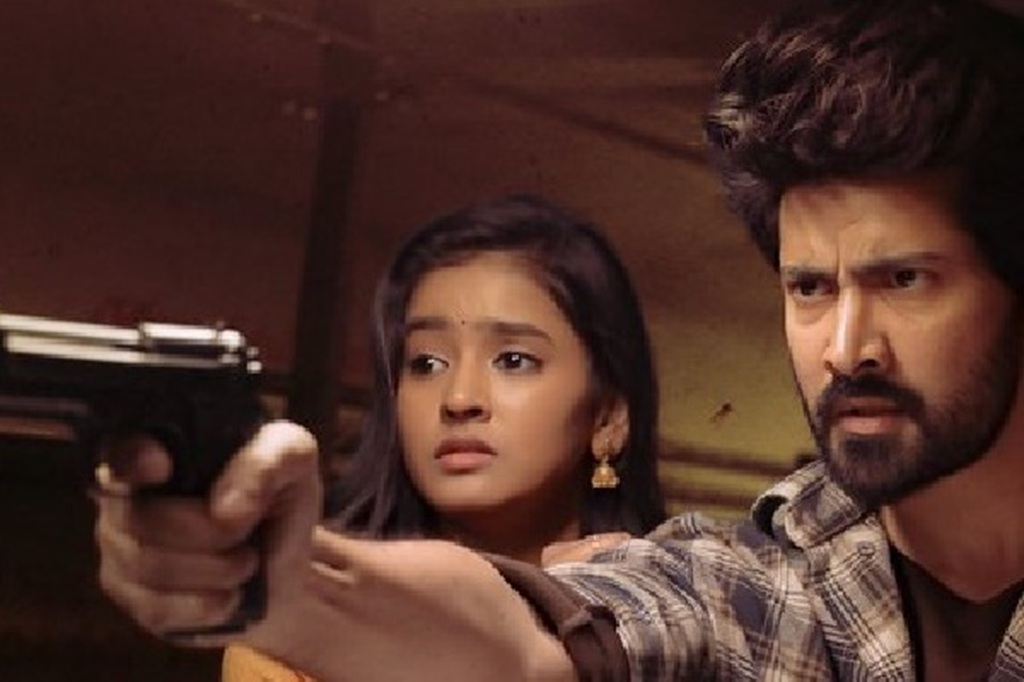
In the middle of this fight for power is Samudra’s daughter, Geetha (Vismaya Sri). She feels ignored and trapped in a house where everything comes second to politics. Geetha finds comfort and love with Krishna (Prudhvi Dandamudi), a young man far removed from her father’s world. Knowing Samudra will never accept their relationship, the couple decides to run away.
The turning point arrives when Geetha and Krishna board a bus to Rayachoti. Unknown to them, this is the same bus carrying Bhaskar’s illegal cash. When Samudra learns that Geetha has eloped, his ego and pride take a serious hit. His concern is less about his daughter’s happiness and more about how her actions might affect his public image before the election.
Samudra orders his loyal aide, Venkat (Prashant Karthi), to hunt the couple down, kill Krishna, and bring Geetha back before any scandal breaks. From this moment, the film turns into a tense road story, with the bus becoming a common point for different motives and dangers.
Inside that moving bus, several threads collide. The innocent lovers are hoping to start a new life, the political henchmen are chasing them, and a group of ordinary passengers who have no idea they are seated next to a fortune in black money. The film sets up a clear race against time, built around who reaches the village border first, and whether the cash, the couple, or the political masks survive the journey.

Pothugadda Performances: Strong Antagonists, Weak Emotional Core
The standout work in Pothugadda comes from the actors who play the political heavyweights. Aadukalam Naren, as MLA Samudra, is impressive and controlled. He brings out the arrogance, calculation, and cold logic of a leader who thinks only in terms of power. At the same time, you see a father who has buried his softer side under layers of ambition and ego. This mix of pride and buried emotion gives the character some depth and lifts the political thread.
Shatru, as Bhaskar, matches him well. His performance as a desperate, sharp, and corrupt opponent provides a strong counter-force. Bhaskar’s willingness to win at any cost, including using massive bribes, keeps the political tension believable.
On the other hand, the younger leads, Prudhvi Dandamudi and Vismaya Sri, do not leave as strong an impact. They share a pleasant on-screen chemistry, and their performances are honest, but the script does not give them enough emotional detail. Krishna and Geetha’s love story feels thin, more like a trigger for the political drama than its beating heart.
Because of this, the audience may not feel fully invested in their struggle or fear for their safety as much as the film expects. The story often treats their bond as a plot requirement instead of building it as a real, heartfelt relationship. This weakens the main conflict between love and power.

Direction and Technical Work
Director Raksha Veeram makes a smart choice by keeping the story mostly confined to one setting, the bus, over a single night. This limited space naturally adds tension and helps build a sense of unease. The one-location thriller style is one of the film’s strengths and keeps the viewers focused.
Rahul Shrivatsav’s cinematography suits this plan well. The nighttime visuals, the tight shots inside the bus, and the use of darkness give the film a gritty look. Streetlights and the dim interior lighting help create a moody and slightly uneasy feel. This visual style supports the suspense and gives the bus journey a real sense of danger.
The film has mixed results in the editing and music departments. SJ Shivakiran’s editing keeps the film moving at a decent pace. Scenes do not drag for too long, and the story shifts from one set of characters to another with reasonable flow.
The background score by Marcus M, however, feels quite standard. The music tries to build tension and highlight the stakes, but it rarely stands out. Many key moments, such as chases or emotional confrontations, could have used a more striking and memorable score. A stronger soundtrack might have added more energy and emotion to these scenes.

Final Thoughts: Engaging Setup, Average Payoff
Pothugadda starts with a compelling idea but settles into a fairly routine thriller. The main theme, the clash between a private love story and ruthless political ambition, has strong potential. The film, however, puts more weight on the mechanics of the political plot and less on the growth of the couple’s relationship.
The political material works better. The film shows how rough and cynical local elections can be, with money, muscle power, and ego pushing aside any sense of fairness. Corruption, misuse of authority, and a casual attitude towards violence all appear in the story and feel grounded.
Where Pothugadda falls short is in blending this political harshness with the romantic plot. The emotional moments often feel forced, and the love story rarely drives the film in a meaningful way. As a result, the movie stays on the surface and does not deliver the emotional punch it promises.
In the end, Pothugadda is built on a strong base, a couple’s elopement colliding by accident with a dangerous political scheme, but it lacks an engaging emotional centre. It works best as a simple, contained thriller, held together by the solid performances of Aadukalam Naren and Shatru. It is a fair one-time watch on OTT for viewers who enjoy political dramas set in a single location, but it does not offer enough memorable moments to stay with you for long.
iBomma Rating: 3.5/5