
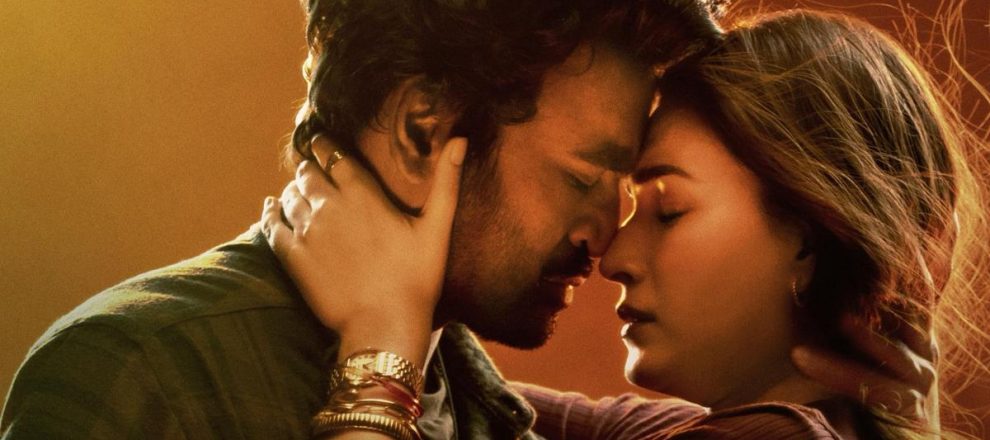
Tere Ishk Mein (meaning “In Your Love”) is a 2025 Hindi-language musical romantic drama film. It has drawn attention for its intense depiction of affection, sacrifice, and deep emotion. Directed by Aanand L. Rai, the movie is a standalone sequel to the 2013 favourite Raanjhanaa. This project reunites Rai with actor Dhanush, following their previous work on Raanjhanaa and Atrangi Re. Dhanush stars opposite Kriti Sanon in a new pairing praised for its raw intensity.
Director Aanand L. Rai consistently shines when showing the intense, complicated, and often sad nature of North Indian love stories. His films, from the charming small-town chaos of Tanu Weds Manu to the destructive, one-sided fixation in Raanjhanaa, focus on faulty main characters driven by impossible relationships. His newest film, Tere Ishk Mein, marks a much-awaited reunion with Dhanush.
It promises a “spiritual spin-off” intended to update themes of self-sacrifice and ruinous passion for a younger audience. The film features Dhanush as the volatile Shankar and Kriti Sanon as the driven academic, Mukti. This sprawling, nearly three-hour melodrama tries to examine the connection between love and violence.
However, even with a polished look, a sensational soundtrack by A.R. Rahman, and compelling performances from the lead cast, Tere Ishk Mein ultimately struggles. The major issues are problems with the story’s consistency and a central theme that feels significantly flawed. The film feels both grand in scope and frustratingly behind the times in its main message. By the end of its long-running time, it leaves viewers feeling disturbed and quite tired. It works well as high-energy drama but utterly fails to provide a morally sound or coherent story.
Act I: The Hook and the College Setting
The film starts in the troubled present, not the past. We meet Flight Lieutenant Shankar (Dhanush), an Indian Air Force pilot stationed in the perilous, high-altitude terrain of Ladakh, near the border conflicts. Shankar is more than brave; his commanders call him “outstanding, outrageous, and out of hand.” After an impulsive, disobedient interaction with an enemy aircraft, he is grounded and required to have a mental assessment.
This is where the main plot device comes in: the military psychologist assigned to him is Dr. Mukti Behniwal (Kriti Sanon). The surprise meeting immediately sends the story back into a long flashback. This section establishes the origin of their explosive relationship seven years earlier.
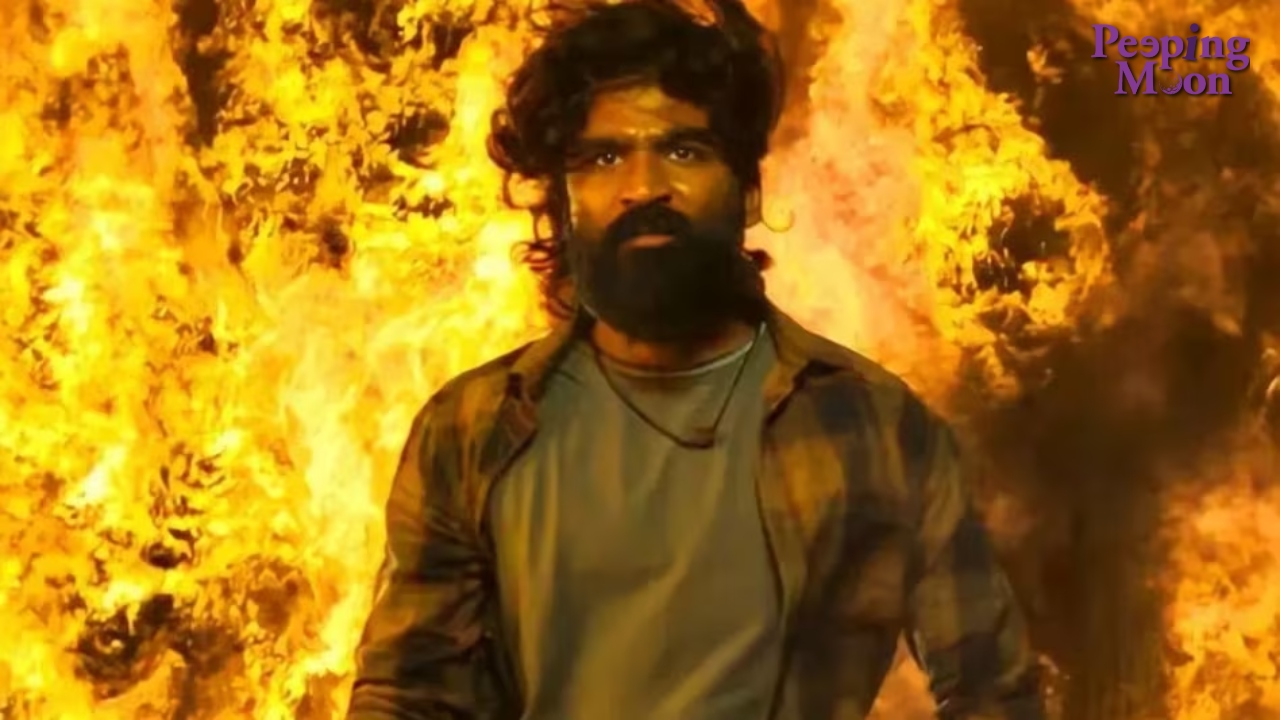
We go back to the lively, tense world of Delhi University politics. Shankar is the DUSU President here. He is a working-class boy fuelled by sharp resentment and fierce loyalty, known for his violent outbursts and his ability to “break bones.” Mukti is a privileged, motivated PhD student trying to complete a controversial dissertation. Her thesis suggests that violent men aren’t inherently broken. Instead, they can be changed through love, empathy, and counselling. She believes violence is like an “appendicitis, having no real use but causing immense pain.”
In a classic movie meet-cute, distorted by Rai’s signature intensity, Mukti chooses the volatile Shankar as her research subject.
This initial concept is certainly gripping. The tension between a careful academic treating a man as an experiment and a passionate, working-class man who instantly interprets her focus as unconditional love creates powerful conflict. Dhanush, playing his younger role, brings a familiar, yet deeper, version of his Raanjhanaa character, Kundan. His Shankar is coiled tightly, vulnerable yet quick-tempered, and deeply fixated. He doesn’t just fall in love; he completely gives in, changing his behaviour for her. He is convinced that she alone holds the key to his redemption.
Kriti Sanon plays a character who is arguably more complex, though she is written frustratingly. She carries the needed intellectual seriousness but struggles with the moral complications of her own experiment. She states clearly that this is professional work, not love. However, she allows Shankar to believe what he needs to, essentially misusing his deepest feelings for academic success.
Sanon’s performance is strong as the emotionally distant scientist. Still, the script fills her character with contradictions. For a psychologist, Mukti seems surprisingly naive and reckless. She starts a connection she knows is an emotional disaster waiting to happen. The sheer toxicity of a woman using a man’s love to earn a doctorate is the film’s first major hurdle; it makes audiences question both her ethics and her judgment.
Act II: Social Barriers and The Cost of Success
The core of the story soon moves from academic manipulation to a more classic, yet equally destructive, examination of social class differences. This is a theme Rai explores with powerful, raw emotion.
Shankar deeply respects his father (Prakash Raj gives a brilliant, heartbreaking performance as a vulnerable notary lawyer). However, Shankar’s working-class background sharply contrasts with Mukti’s high-society upbringing. Her father, an IAS and Joint Secretary (Tota Roy Chowdhury), acts as the main obstacle in their past. His condescending insults towards Shankar’s father intensify Shankar’s existing anger and insecurity. The film uses these class tensions to explain Shankar’s subsequent downfall. His aggression is portrayed not just as innate volatility but as a response to systematic disrespect.
Their central relationship reaches its devastating peak when Mukti finishes her thesis. She abruptly ends the relationship, agreeing to marry a man chosen by her family. For Shankar, this is more than rejection; it is the ultimate betrayal. He realises his love, vulnerability, and attempt at reform were nothing more than data points. His self-destructive tendencies reappear with frightening fury.
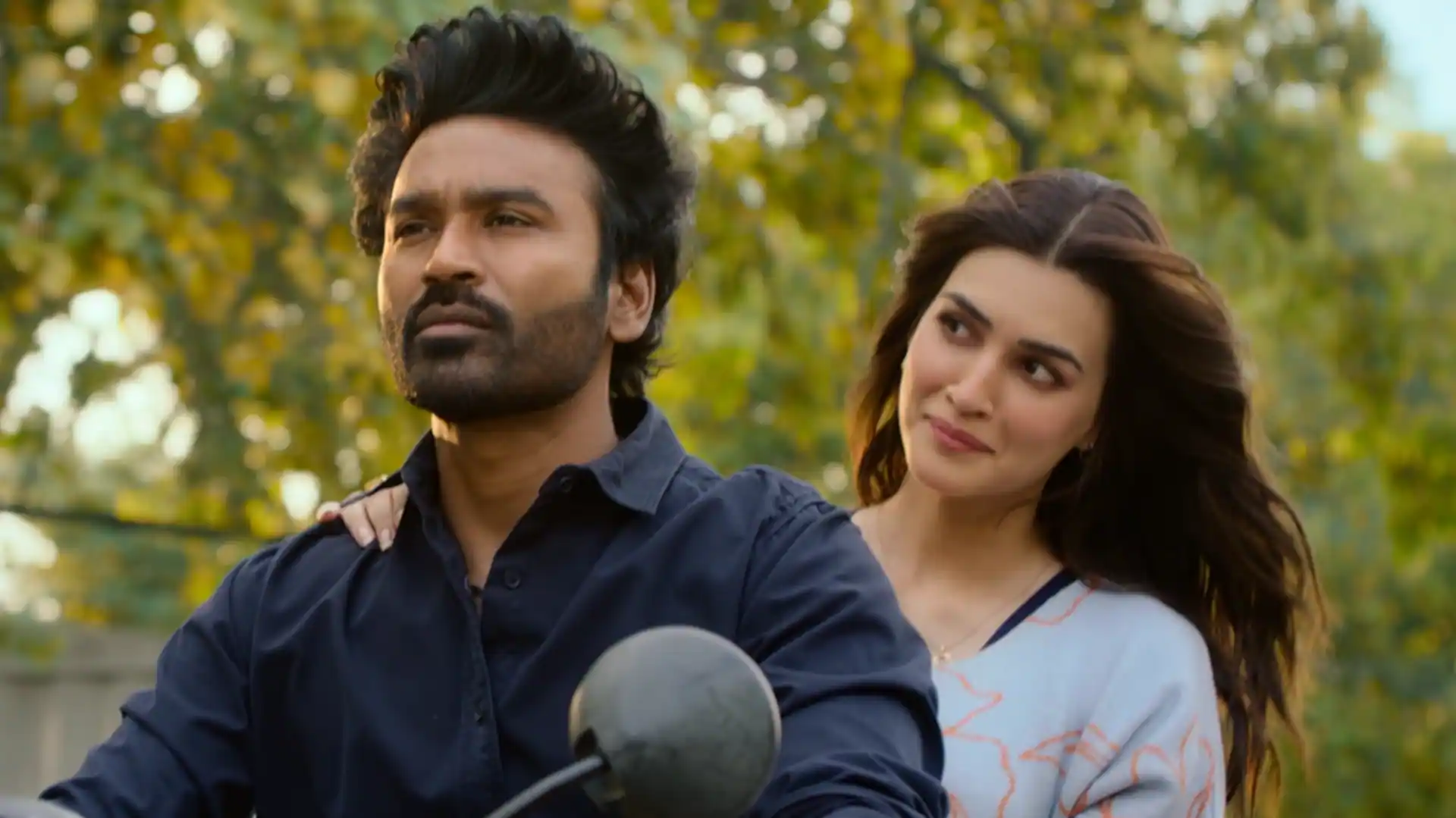
This leads to scenes of shocking, unstable violence, including an unbelievable attack on Mukti’s family residence. The film doesn’t hide the horrifying truth of a man “who cannot handle rejection.” This firmly establishes Shankar as the classic problematic Bollywood main character.
This whole section, while highly emotional, feels complicated in its storytelling. Screenwriters Himanshu Sharma and Neeraj Yadav include almost every possible conflict: parental opposition, attempted violence, a sudden disappearance, and a three-year gap where Shankar must ‘reform’ himself. He is motivated not by internal choice but by external pressure.
The sequence where Shankar, driven by betrayal, decides to completely change his life and join the Indian Air Force with the help of a motivating priest (a scene that feels pushed into the story) challenges belief. While his desire to prove himself is clear, the ability of a hot-headed, violently unstable, and presumably older college politician to suddenly become a Flight Lieutenant strains credulity. This is a typical Bollywood plot leap. It sacrifices real-world logic for dramatic flair, setting the stage for the explosive current-day events.
Act III: The Confrontation in Ladakh
Seven years later, the unavoidable confrontation is set in Ladakh. Shankar is a respected, yet grounded, pilot. Mukti is a high-ranking military psychologist. She is emotionally and mentally fragile. She appears pregnant, anxious, suffering from addiction, and taking medication.
The present-day story tries to examine the consequences of their past. Here, the film feels most fractured. The wartime environment in Ladakh, with its serious political implications, feels like an empty background. It is a grand, high-gloss stage used for an intensely private, toxic emotional battle. Shankar’s refusal to forgive Mukti, even years later, becomes the heart of the conflict. He doesn’t want her redemption (her name literally means ‘salvation’); he wants her to deeply regret her actions.
Dhanush’s performance in this part is perhaps the film’s saving grace. His older Shankar is a display of controlled, simmering resentment. The raw rage from his college days is replaced by a cold, unsettling anger. He is a man constantly fighting a war, both outside and inside. Dhanush portrays this sense of damage with a complex understanding, his eyes showing years of unfulfilled desire and pain.
The film’s most significant failing, however, is how it treats Mukti in the second half. Her addiction and anxiety are mainly used as plot tools to gain sympathy and explain her past decisions. This ultimately fails her as an independent character. The writers seem to pull back the power she had in the first half, reducing her to a woman broken by the very emotional pain she caused.
The initial promise of a complex woman struggling with ambition and morality vanishes into a confused mess of guilt and self-destruction. All of this validates Shankar’s suffering. Even when she finally offers her critical explanation for her life choices, it leaves the audience wondering, “Why, why did she do that?” Her character is poorly written. It creates a harmful story that suggests an educated, ambitious woman must eventually be punished for choosing her career over the ‘true’ love of an obsessive man.
Tere Ishk Mein Technical Successes and Story Missteps
Technically and visually, Tere Ishk Mein is a success in large-scale filmmaking. Director Aanand L. Rai meticulously creates striking visuals. The camerawork beautifully captures the film’s contrasting atmospheres: the dusty, energetic confusion of college-era Delhi and Varanasi (a clear reference to Raanjhanaa) and the cold, severe, snow-covered intensity of Ladakh. Visual metaphors, especially the repeated image of fire, in funeral pyres, Diwali fireworks, and Shankar’s homemade bombs, highlight the film’s passionate intensity and self-destructive themes.
A.R. Rahman’s Outstanding Soundtrack
If there is one aspect of the film that is universally praised and faultless, it is the music composed by A.R. Rahman. The soundtrack is a major success, standing out as one of the best Hindi film albums of 2025. Rahman’s powerful, percussive, and soaring melodies offer the necessary emotional connection to bridge the film’s largest logical and narrative issues. The title track, which was a hit long before the film’s release, and other moving songs give the melodrama an authentic, deep feeling of sadness and longing that the script often fails to earn. The music is not just background noise; it is the emotional core that reminds the viewer of the potential of the failed romance, even when the characters’ actions are inexcusable.
The Screenplay’s Structural Weaknesses
Despite Rai’s engaging direction and the actors’ dedication, the screenplay by Himanshu Sharma and Neeraj Yadav is the film’s weakness. At nearly three hours, the pace is irregular, and the story feels disjointed and redundant. It keeps shifting between past and present without always serving a coherent purpose.
More importantly, the film’s willingness to accept, even praise, Shankar’s extremely violent and obsessive behaviour (explaining it away with childhood trauma and class humiliation) feels old-fashioned and morally irresponsible in 2025.
The film attempts to surprise the audience by presenting flawed characters. Still, it ultimately sticks too closely to the conventional Bollywood tragedy where the aggressive, angry, dominant man is positioned as the one true, great lover. After films like Kabir Singh and Animal, this genre of romanticising toxic masculinity has been rightfully criticised. Tere Ishk Mein takes a clear step backward, trying to sell a man dousing a rival with petrol as ‘passion.’
Intense, Flawed, and Divisive
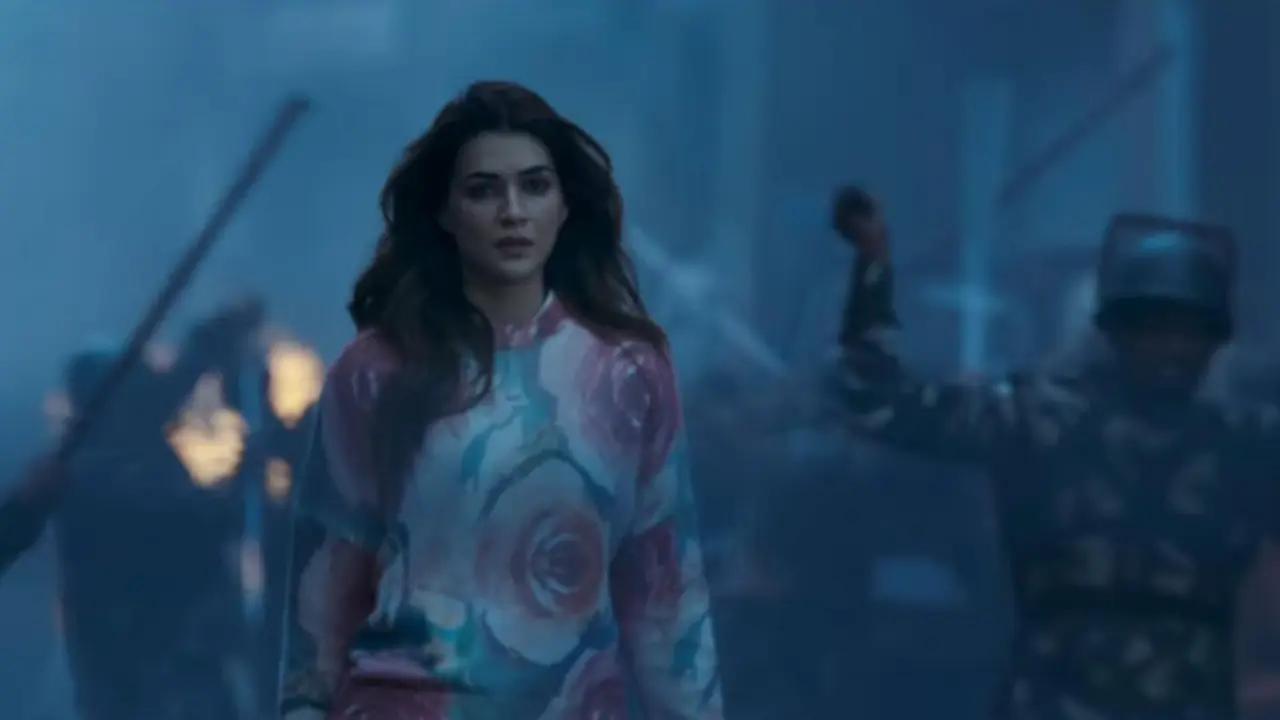
Tere Ishk Mein is exactly the type of film that will divide audiences. It is an intense love story supported by truly memorable dramatic moments, strengthened by A.R. Rahman’s incredible score. It is anchored by the raw, multilayered performances of Dhanush and Kriti Sanon, who pour their emotional depth into their complex roles. Prakash Raj also delivers a moving performance that forms the film’s emotional centre.
However, the film’s structural problems, including its overly long runtime, the logical inconsistencies (especially in the Air Force plotline), and the confusing characterisation of Mukti, severely limit its overall effect. Most significantly, the film’s central argument, that obsessive, toxic love is romantic when backed by passion, feels like a regression for Hindi cinema. It leaves a sour taste, suggesting the only way for a broken man to find ‘salvation’ is by destroying the woman who dared to challenge him.
Ultimately, Tere Ishk Mein is visually impressive, musically rich, and a powerfully acted emotional journey. However, its outdated moral perspective and messy narrative stop it from achieving the quality of modern, sophisticated romantic cinema. It’s a film demanded viewing for its performances and its music, but viewers should approach its message with extreme care.
iBomma Rating: 2.5/5 stars
Key Details:
| Aspect | Information |
|---|---|
| Release Date | November 28, 2025 (theatrical release worldwide) |
| Director | Aanand L. Rai |
| Writers | Himanshu Sharma and Neeraj Yadav |
| Cast | – Dhanush (lead role as Shankar) – Kriti Sanon (lead role as Mukti) – Supporting cast includes familiar faces from Rai’s ensemble films (full credits available on IMDb) |
| Genre | Musical Romantic Drama, Action elements |
| Runtime | 169 minutes |
| Languages | Primarily Hindi; also available in Tamil |
| Music | Composed by A.R. Rahman, lyrics by Irshad Kamil; soundtrack released October 18, 2025, via T-Series (9 tracks, available on Spotify) |
| Cinematography | Tushar Kanti Ray |
| Editing | Hemal Kothari |
| Sound Design | Resul Pookutty |
Box Office Performance (As of November 30, 2025)
The film has had a stellar start, marking Dhanush’s biggest Hindi opening to date and surpassing his 2025 Tamil hits like Kuberaa and Idli Kadai. Here’s a quick snapshot of early collections:
| Day | India Net (₹ Crore) | Overseas (₹ Crore) | Worldwide Gross (₹ Crore) |
|---|---|---|---|
| Day 1 (Nov 28) | 17.93 | 1.34 | 19.27 |
| Day 2 (Nov 29) | ~15-18 (estimated) | ~1.5 (estimated) | ~32-35 (cumulative est.) |
If you’re planning to catch it this weekend (it’s still fresh in theatres as of November 30, 2025), grab tickets soon—word-of-mouth is building fast! For more, check the official trailer on YouTube or stream the album on Spotify. What aspect are you most curious about—cast, songs, or spoilers?