

Some films build a world so lived-in that it feels less like watching a story and more like walking into it. This Rangasthalam movie review stays spoiler-free and focuses on what makes the 2018 Telugu action drama stand out: its 1980s village setting, sharp local politics, and performances that don’t lean on star power alone.
Set in a fictional Andhra village, Rangasthalam is known for grounded conflicts that grow into something much bigger. It’s a good fit for first-time viewers curious about modern Telugu classics, Ram Charan fans looking for his most committed work, and anyone who likes rural dramas where relationships matter as much as revenge.
Quick verdict tease: it’s a long film, but for viewers who enjoy slow tension and strong character work, the final stretch lands hard without needing cheap tricks.
Rangasthalam movie review in brief: what the story is about (spoiler-free)
Rangasthalam opens in a village where everyone knows everyone, and power has a familiar face. Chittibabu is a young man who supplies water for a living. He’s warm, stubborn, quick to smile, and he lives with partial hearing loss, which shapes how he moves through daily life. People underestimate him; some tease him, but he doesn’t shrink.
The village rhythm changes when his older brother, Kumar Babu, returns from Dubai. Kumar is educated, practical, and less willing to accept things just because “that’s how they are.” He comes home expecting comfort and family time, but he finds a place run by fear, favors, and quiet pressure.
At the center of the conflict is the village president and a cooperative society that’s supposed to help locals. Instead, it becomes a machine that traps poor villagers through fake accounts, manipulated records, and unfair interest. The harm is not flashy. It’s slow, paperwork-based, and cruel in a way that feels real. Money disappears, dignity goes with it, and people learn to keep their heads down.
That’s where the brothers come in. One has the courage of instinct, the other has the courage of planning. Their bond is the engine of the story. As Kumar begins pushing for change, the village’s power structure pushes back, and the cost of speaking up starts rising.
Setting and tone: why the 1980s village world feels real
The film’s biggest strength is how convincingly it sells everyday life. The village isn’t treated like a postcard. It’s dusty roads, crowded lanes, gossip that travels faster than buses, and a public life where privacy barely exists. Even the small routines, fetching water, bargaining, fixing things, and sitting outside at night, build a sense of place.
Local politics also feel familiar. The president’s power isn’t just about violence. It’s social control: who gets help, who gets punished, who is allowed to feel safe. The film shows how influence can look “normal” when it has ruled for decades.
The tone moves in waves. There’s humor that comes from personality, not forced punchlines. There’s romance that adds warmth without hijacking the plot. And there’s tension that keeps tightening, like a rope pulled a little more in each scene. For basic film background and credits, the Rangasthalam film overview on Wikipedia gives a clean snapshot without forcing spoilers.
What makes the plot engaging: brotherhood, fear, and standing up to power
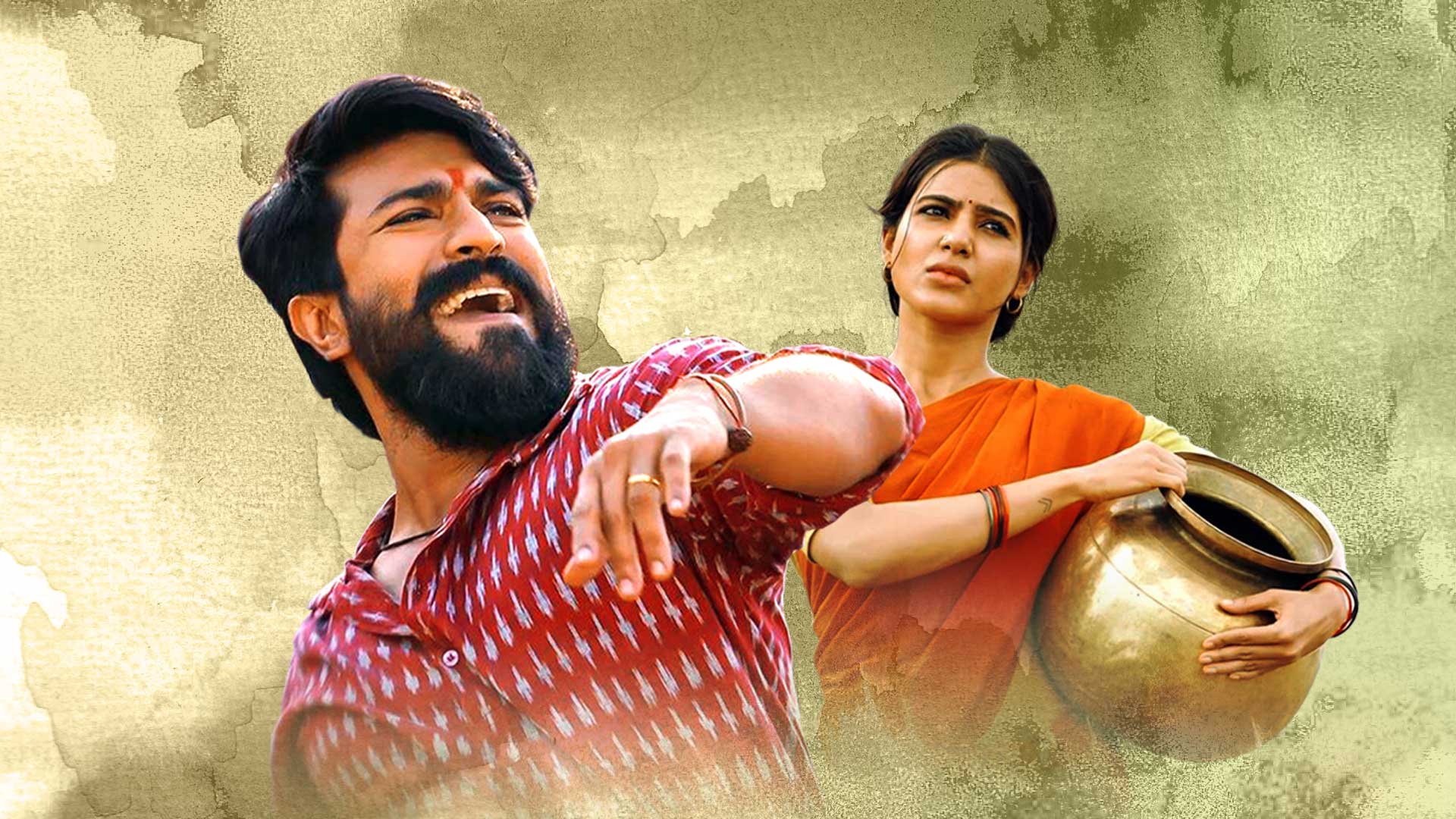
The emotional hook is simple: two brothers trying to protect each other while walking into danger from opposite directions. Chittibabu wants peace, but he also has a temper when pushed. Kumar wants reform, but he learns that logic alone doesn’t move a village ruled by fear.
As elections and public pressure rise, so do the stakes. The story does a solid job of showing how resistance spreads, one conversation at a time. It’s not portrayed like a sudden uprising. It’s more like a cracked wall that finally starts giving way.
The film also keeps viewers alert by letting consequences linger. A threat isn’t forgotten after one scene. It becomes part of the air characters breathe. That steady pressure is what makes the film’s later turns feel earned, even for viewers who usually predict commercial cinema beats.
Acting and characters: Ram Charan, Samantha, and the villain who raises the stakes
This is an ensemble film, but it runs on performance. The acting style is physical and grounded. Characters don’t announce what they feel; they show it through posture, pauses, and the way they look at people when no one’s watching.
Dialogues often carry the flavor of village life, with teasing, provocation, and pride baked in. The cast sells that texture, which matters because Rangasthalam spends a lot of time on relationships before it tightens into heavier conflict.
The villain role is also treated with care. He isn’t a cartoon. He’s dangerous because he’s believable. He knows the rules of the village, and he knows how to bend them without getting his hands dirty every time.
Ram Charan as Chittibabu: a career-best performance
Ram Charan’s Chittibabu works because the performance doesn’t beg for sympathy. The partial hearing loss isn’t used as a gimmick or a constant “look at this” detail. It’s folded into daily behavior: how he reads faces, how he responds when someone speaks from behind, how annoyance flashes when he can’t catch a word but refuses to look weak.
The film also finds natural humor in the situation without turning it cruel. Small misunderstandings land like real-life moments, quick and awkward, then gone. When the story turns serious, the same trait becomes emotional weight because it shapes how Chittibabu hears threats, love, and betrayal.
More than anything, he feels like a person who belongs to that village. He’s lovable without being soft. He’s stubborn without being heroic in a glossy way. When he’s brave, it looks like a choice made in the moment, not a speech written for applause.
That authenticity is why many viewers still point to this as his defining performance. It’s not about looking “different.” It’s about becoming someone specific.
Samantha, Aadhi Pinisetty, and Jagapathi Babu: strong support around the lead
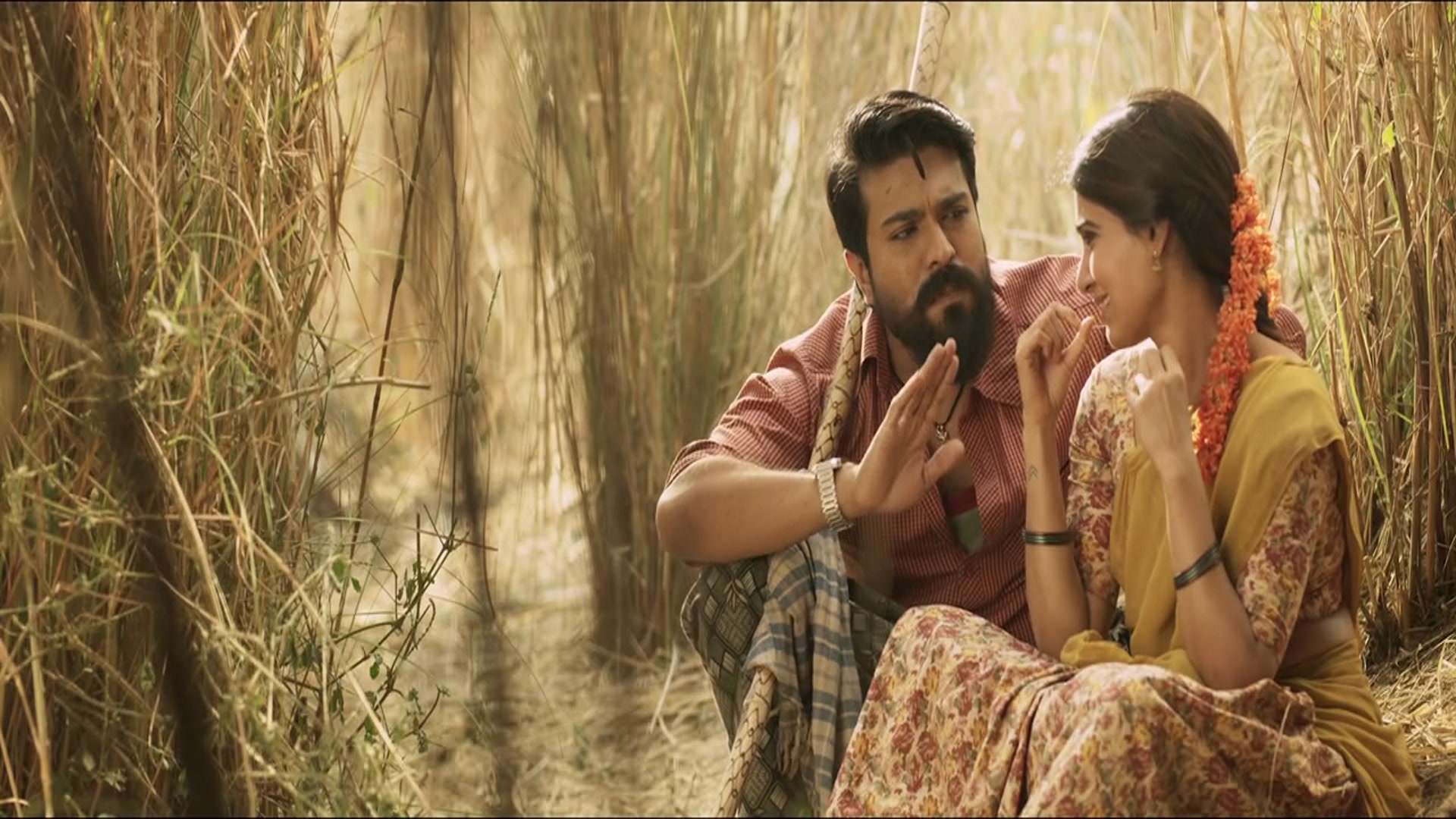
Samantha plays Ramalakshmi with spark and bite. The character doesn’t exist just to admire the hero. She has pride, sharp instincts, and a way of speaking that fits the village setting. The romance brings relief from the political tension, but it also adds stakes. When affection is built on everyday trust, danger feels closer.
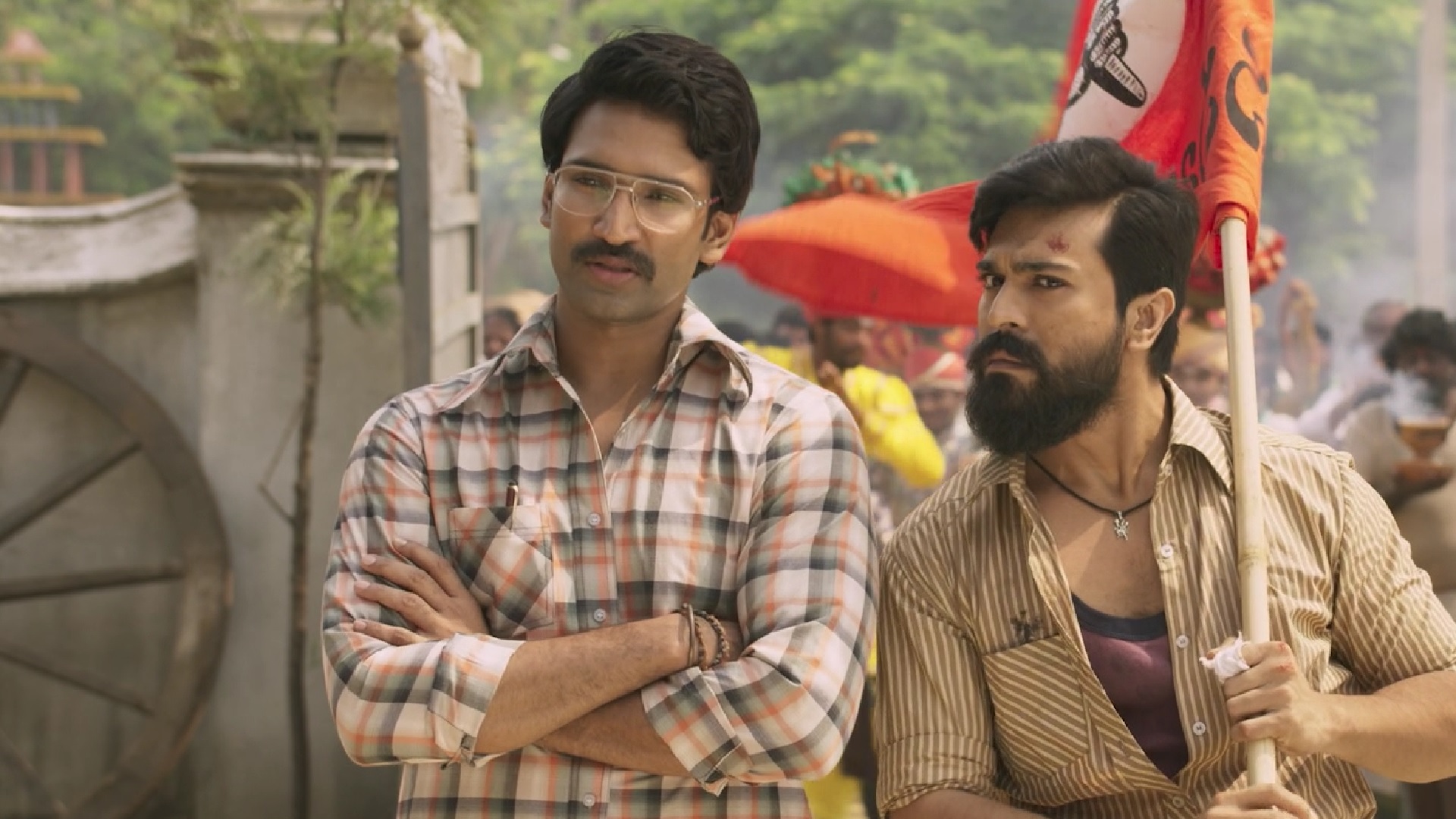
Aadhi Pinisetty, as Kumar Babu, gives the story its moral spine. He plays the “returned outsider” without making him arrogant. Kumar’s frustration makes sense: he sees the village with fresh eyes, then realizes it’s not only about bad leadership. It’s about how fear trains people to accept unfairness. His scenes with Chittibabu are among the film’s best, because they show love and disagreement living in the same room.
Jagapathi Babu’s villain performance is controlled and threatening. He doesn’t need constant shouting to dominate. He feels like the kind of leader who has built a system around himself, where even silence can be punishment. His grip on the village shapes everything: who speaks up, who stays quiet, and who gets crushed in between.

Direction, music, and pacing: what works best, and what may not
Director Sukumar stages Rangasthalam like a character-first commercial film. The story has “mass” moments, but they usually grow out of personality and pressure, not random slow-motion swagger. That approach makes the emotional beats hit harder because the film earns them through buildup.
The craft supports the period setting. Production design and costumes feel used, not new. The village spaces feel tight and real, which helps the politics feel like something happening across actual streets, not generic sets.
A clear note for viewers planning a watch: the runtime is close to three hours. Some sources list it at about 2 hours 50 minutes, while many cuts and listings place it around 2 hours 54 minutes. Either way, it’s a long sit, and patience matters.
Sukumar’s filmmaking: commercial highs with character-driven writing
Sukumar’s biggest win is how he ties the theme to the character. Corruption isn’t shown as an abstract evil. It’s shown through how it changes daily choices. People lie because they must. People flatter because it’s safer. People stay silent because they’ve seen what happens when someone doesn’t.
The writing also respects village politics. Power isn’t only physical. It’s social, financial, and psychological. The cooperative society angle gives the conflict a grounded base, which makes the growing anger feel justified instead of random.
When the film leans into big moments, it usually does so after setting up why a person finally breaks. That cause-and-effect rhythm keeps the story from feeling hollow, even when it turns louder.
Songs, visuals, and pacing: nearly 3 hours, so patience helps
The music supports the rural mood, with songs placed to carry emotion and local flavor. The background score is effective in tension scenes, often nudging anxiety rather than drowning the moment.
Visually, the film is strongest in crowd scenes and outdoor sequences. It frames the village like a living organism, with people watching from doorways and corners, reacting before they speak.
The pacing is where some viewers may struggle. The first half takes its time with comedy, romance, and daily life. For some, that will feel immersive. For others, it will feel slow. The payoff works best for viewers who let the film stack its bricks before it asks for fire.
Final verdict: Is Rangasthalam worth watching today?
Yes, Rangasthalam is still worth watching today, especially for viewers who like rural dramas with political tension and character-driven emotion. It’s not a quick watch, but it’s a rewarding one when viewed as a slow-burning story that builds pressure carefully.
A simple rating-style take: 4.5 out of 5 for performances and world-building, with points off for length.
Top strengths, spoiler-free:
- Ram Charan’s performance as Chittibabu, physical, funny, and emotionally sharp
- Authentic 1980s village atmosphere, from costumes to behavior to politics
- A strong villain and a clear conflict, with stakes that feel personal
- Good supporting cast, especially Samantha and Aadhi Pinisetty
Who should watch: fans of Telugu cinema, village-set stories, revenge dramas that don’t rush, and viewers who value acting over nonstop action.
Who might skip: anyone who dislikes long runtimes, slower first halves, or films that spend time on mood before plot acceleration.
For US viewers, streaming availability changes often. Checking a live listing like Rangasthalam on JustWatch (US) can save time before starting a movie night.
Conclusion
This Rangasthalam movie review comes down to one clear point: the film succeeds because it treats its village and its people like they matter. Strong performances, a believable setting, and a conflict rooted in everyday exploitation make it more than a standard star vehicle. The biggest drawback is the long runtime, which requires patience early on. For viewers who stick with it and stay spoiler-free, the ending is best experienced fresh, with no hints and no shortcuts.