

“Ramam Raghavam”: A Father’s Pain and a Son’s Fall
A Dark Take on a Father-Son Bond
Dhanraj Koranani makes his directorial debut with “Ramam Raghavam,” a heavy family drama that looks at a deeply damaged father-son relationship. The film digs into love, guilt, selfishness, and the search for redemption after unforgivable acts.
Samuthirakani plays Dasaradh Ramam, a principled father, while Dhanraj takes on the role of Raghava, his misguided son. Their clash forms the heart of the story, where a father’s sacrifice collides with a son’s greed. The movie builds a strong emotional core and delivers a powerful climax, but an uneven screenplay and thin character setup in the first half keep it from reaching its full potential.
The Setup: An Honest Father and a Lost Son
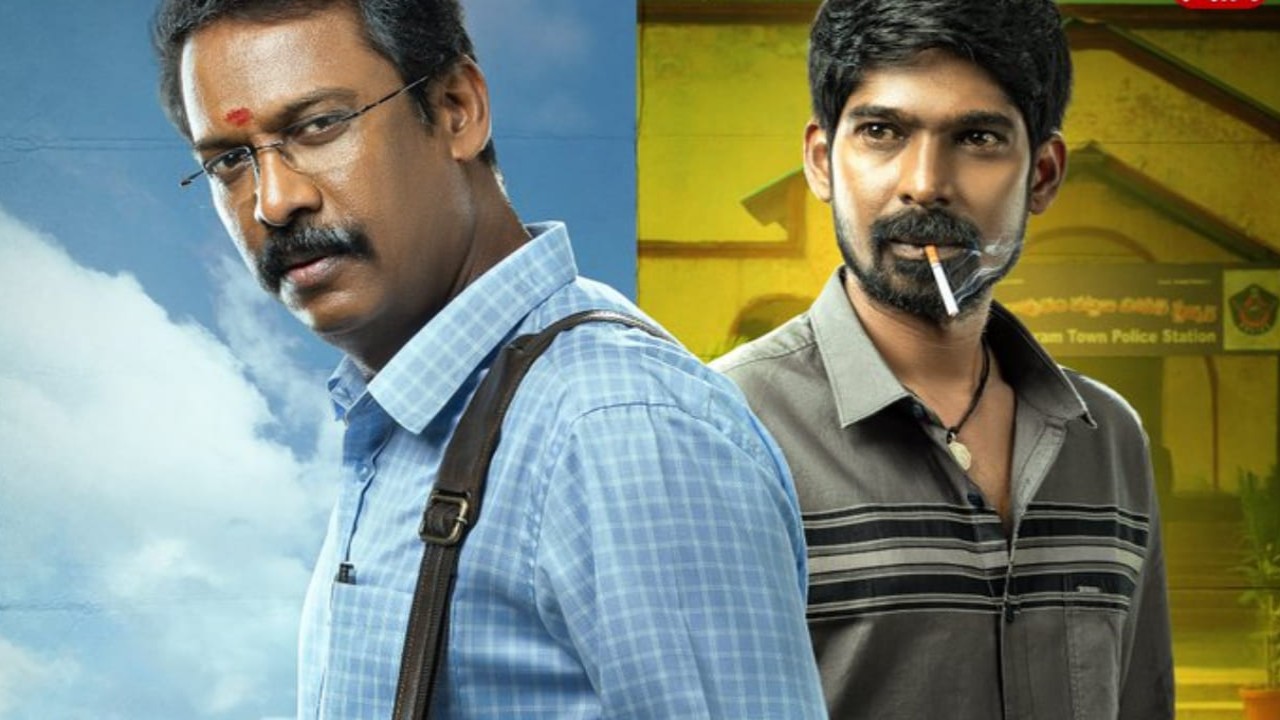
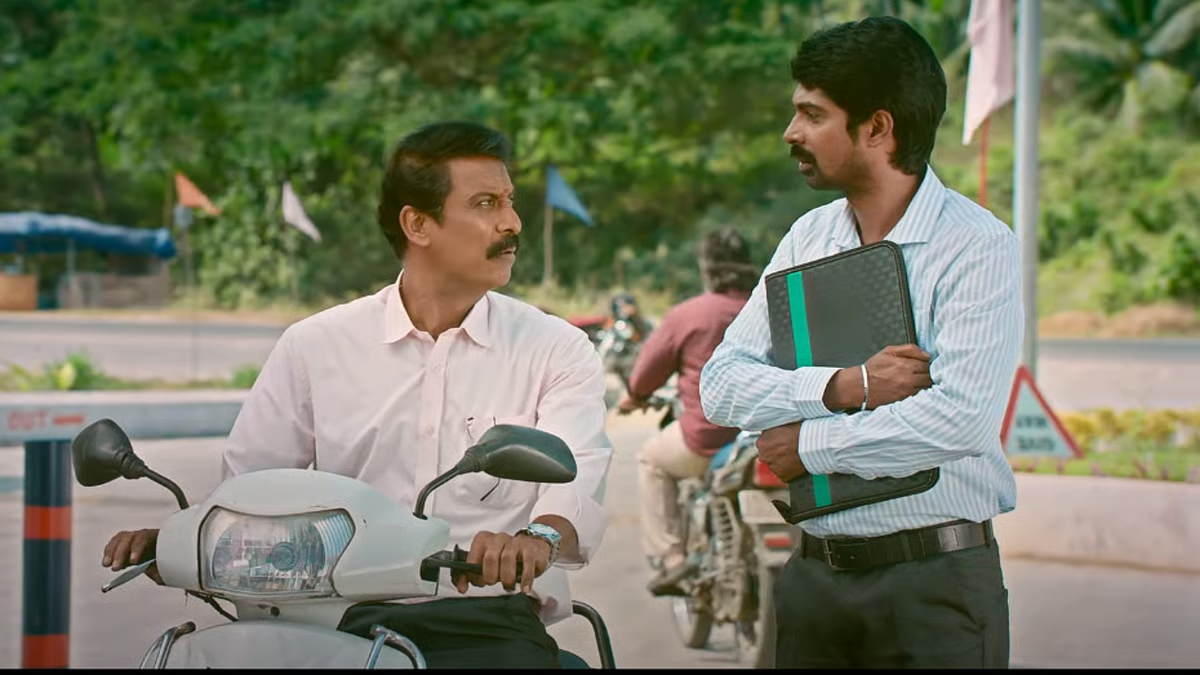
Dasaradh Ramam (Samuthirakani) is a sincere government employee who holds on tightly to honesty and family values. He lives a simple life and cares deeply for his wife and son. His son Raghava (Dhanraj) is the complete opposite.
Raghava is addicted to bad habits like gambling and betting, and he refuses to stick to a steady path. His choices drag him into debt and constant trouble. The film quickly sets up the key conflict: a disciplined, loving father stuck with a son who seems beyond repair.
Samuthirakani brings quiet strength and weight to Dasaradh Ramam. He shows the silent pain of a man who gave everything to raise his child, only to see him spiral out of control. His performance holds the film together. Through small expressions and controlled outbursts, he shows both deep love and crushing disappointment.
Betrayal and a Shocking Plan
The story takes a sharp turn when Raghava, desperate for quick money, crosses a line that shatters his father’s trust. He forges his father’s signature, staining the clean record that Dasaradh Ramam has protected for years. This act cuts so deep that the father finally throws his son out of the house.
What follows is the film’s boldest move. Instead of learning from his mistake, Raghava sinks further into anger and self-pity. Consumed by jealousy and frustration, he decides to plot his own father’s murder. His goal is cold and selfish. He wants the government job that would come to the family, the insurance money, and control over the family property.
At this point, “Ramam Raghavam” steps away from regular family drama and moves into darker territory. Raghava is not a confused hero but a morally rotten lead character who plans something truly horrifying.
Performances: Strong Acting in a Flawed Setup
Dhanraj, who directs and also plays Raghava, handles the emotional intensity with confidence. His portrayal shows Raghava’s weakness, envy, and slow slide into cruelty. The character is meant to make viewers angry, and he succeeds at that, which shows how convincing his performance is.
Harish Uthaman enters the story as Deva, Raghava’s friend and partner in crime. His presence adds another face to the moral decay, but the writing does not fully use his character. There are hints that Deva could have added more depth to the story, but the film keeps him on the surface.
Pramodini, who plays the mother caught between husband and son, delivers one of the most touching performances. She stands in the middle of a war she never asked for. Her scenes in the final stretch are especially moving, as she carries the emotional weight of both love and loss.
Writing Issues: A Weak First Half
The film aims for intense emotional drama, but the writing in the first half holds it back. The early portions that show Raghava’s bad behavior feel stretched and familiar. We see him drink, gamble, and pick fights, and after a point, it starts to feel repetitive.
The key problem is the lack of clear reasons for Raghava’s extreme hatred toward his father. The script by Siva Prasad Yanala drops the audience into the middle of the conflict without fully building the backstory.
We never really understand how things went so wrong.
Why did Raghava grow so bitter in a home where he was loved?
When did Dasaradh Ramam stop believing his son could change?
Without these answers, Raghava comes across more like a flat villain than a damaged, confused man. His plan to kill his father feels cruel, but we do not get enough emotional groundwork to see how he reached that point.
A Small-Scale Story With Limited Scope
The movie mostly stays within a small space, focusing on three main characters under one roof. This close setting sometimes works in its favor, since it keeps attention on the emotions and relationships. At the same time, it also makes the story feel restricted and a bit closed off.
On the technical side, the film is competent but not very memorable. Durga Prasad Kolli’s cinematography has a grounded, realistic feel, which suits the simple middle-class setting. It supports the story without trying to draw too much attention to itself.
The music by Arun Chiluveru does not leave a strong mark. The songs, including the romantic track with Mokksha, feel ordinary and do not add much to the main emotional thread. They slow down the flow instead of deepening the impact.
A Powerful Second Half and a Gut-Wrenching Climax
Despite the shaky start, “Ramam Raghavam” gathers strength in the second half. Once Raghava’s horrifying plan comes into focus, the tension rises. The final portions deliver some of the most effective scenes in the film.
The way the father reacts to his son’s plan is both shocking and deeply moving. Dasaradh Ramam chooses a form of sacrifice and punishment that hits like a punch to the chest. It is not a simple act of forgiveness, and it is not a normal form of revenge. It sits somewhere in between, and that makes it haunting.
The climax gives the film a strong philosophical layer. It shows the limits of unconditional love, along with the permanent scars that betrayal leaves behind. The ending is tragic but carries a strange sense of release. There are no neat resolutions or easy comfort, but it leaves the viewer shaken and thoughtful.
Final Verdict: Strong Emotions, Uneven Writing
“Ramam Raghavam” is a heartfelt but inconsistent emotional drama. Its biggest strengths are the intense performances by Samuthirakani and Dhanraj, and a bold, well-staged climax that stays in your mind.
The major weakness lies in the undercooked first half and the lack of deeper insight into Raghava’s inner world. Because of that, the moral struggle does not fully hook the audience until the story reaches its latter part.
For viewers who enjoy character-driven stories with strong emotional payoffs, this film is worth a watch. You may come away moved by its final act, but you might also feel that with sharper writing and richer character work, “Ramam Raghavam” could have been something truly unforgettable.