
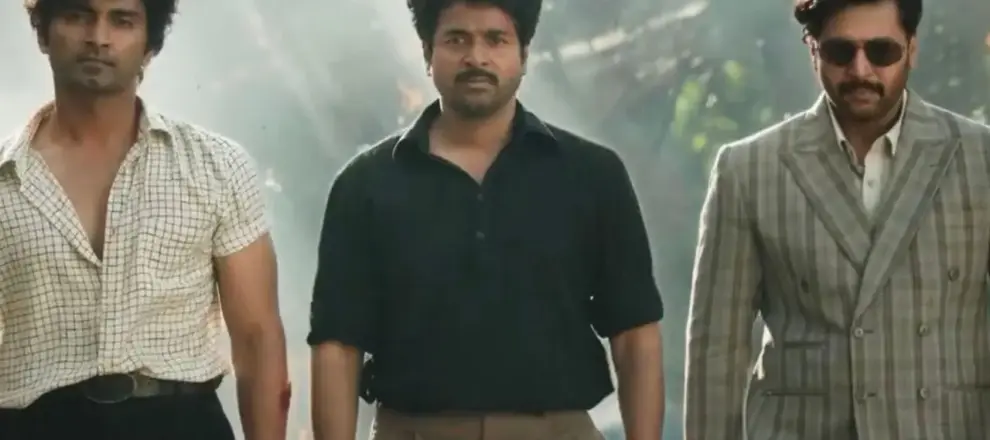
How can a black-and-white film from 1952 still feel like a raised voice in a crowded street? Parasakthi does, because it doesn’t treat suffering as a backdrop. It puts pain, hunger, shame, and anger right in the center, then asks what kind of society creates them.
This Parasakthi movie review covers a spoiler-free story setup, the performances that made history, the themes and controversy that followed, the music and pacing, and why the film still matters in January 2026. It’s widely treated as a landmark release in Tamil cinema, and it’s also the kind of movie that can start arguments long after the credits.
Modern viewers should also come prepared for the length. The runtime is about 3 hours and 8 minutes, and the dialogue is dense. For anyone watching outside Tamil, subtitles aren’t optional. They’re the key that unlocks what the film is trying to say.
What the Story Is About (Spoiler-Free), and Why the Stakes Feel So Real
Parasakthi begins with a family split by forces bigger than them. Against a World War II backdrop, three brothers are living away from home in Rangoon (then Burma). News from Tamil Nadu pulls them back toward Madurai, where their sister Kalyani is meant to be married. The plan is simple: get home, stand together as a family, and keep their dignity intact.
Then the world interferes. Travel is uncertain, money is tight, and timing turns cruel. Only one brother, Gunasekaran, manages to make the journey, and even that arrives with delays and chaos. By the time he reaches home, the life he imagined has shifted. The people he loves are in danger, and the systems around them don’t offer help. They offer rules, lectures, and exploitation.
The stakes feel real because the film keeps returning to basics: food, shelter, safety, and reputation. Poverty here isn’t a single bad day. It’s a trap. And the story’s tension doesn’t come from mystery; it comes from survival while trying not to lose the last scraps of self-respect.
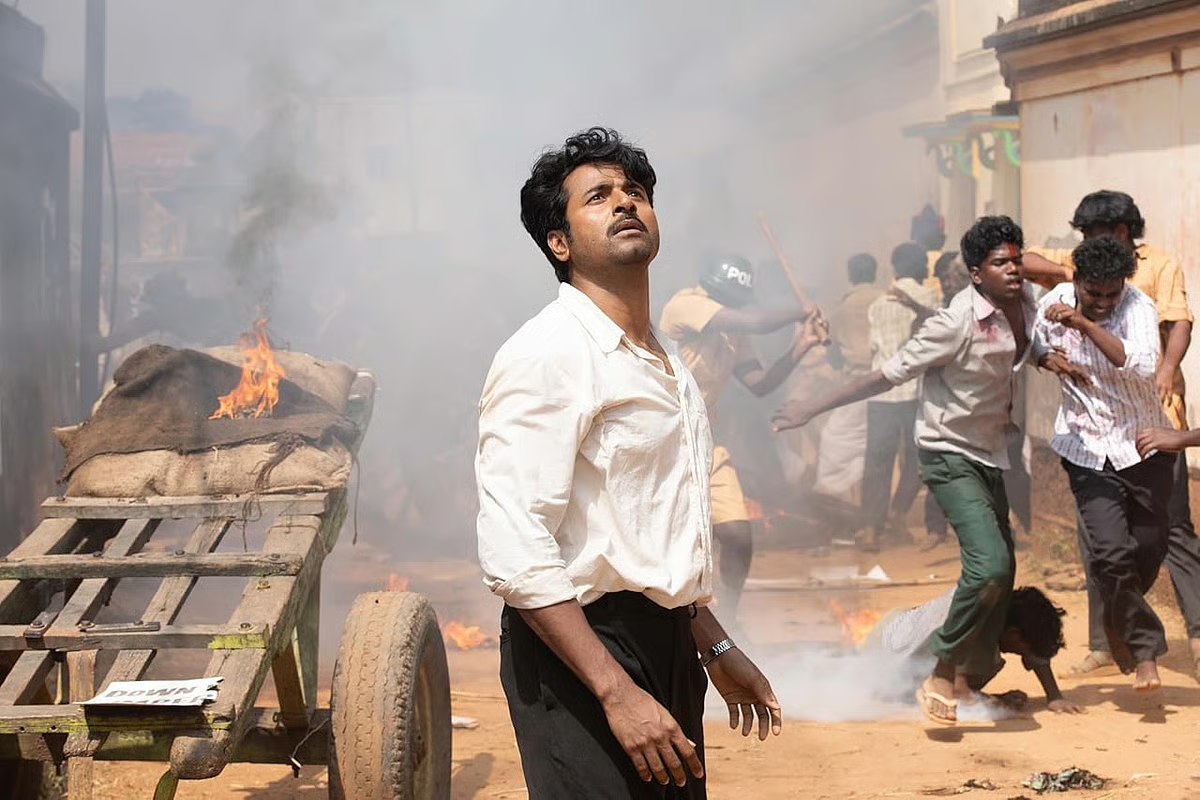
Gunasekaran’s journey from hope to anger
Gunasekaran starts as a man with a clear goal: get home for his sister’s wedding, show up like a brother should, and keep the family’s name steady. That early hope matters, because the film later uses it like a measuring stick. It shows how quickly optimism can break when someone keeps getting pushed down.
What Gunasekaran finds back home is not one villain waiting in a dark corner. It’s a chain of humiliations. Doors close in his face. People take advantage of his confusion. Kindness is conditional, and often fake. The movie makes his anger feel earned, not theatrical, because it’s tied to repeated shocks: seeing hunger up close, watching the weak get blamed for being weak, and realizing that the “respectable” world often survives by stepping on the desperate.
Viewers don’t just watch him suffer. They watch him change. The shift from patient to furious becomes the engine of the film, and it also becomes the voice for its social criticism.
Kalyani’s struggle, and why the film feels fearless about women’s safety
Kalyani’s storyline is where Parasakthi stops being only a family drama and becomes something sharper. The film shows how quickly a woman can become vulnerable when protection disappears, money runs out, and society decides she’s easy to judge.
The threats around her are shown with restraint, but without comfort. There’s pressure, intimidation, and the sense that help may come with a price. The movie also makes a clear point about the lack of safety nets. People who should defend her often look away, or they speak in moral language while doing nothing useful.
What makes this portion “fearless” is not shock value. It’s the refusal to pretend these dangers don’t exist. Kalyani isn’t treated as a symbol only. She’s treated as a person, and the film asks the audience to sit with what happens when a society polices women’s honor but won’t protect women’s bodies or futures.
Performances and Craft: The Acting, Dialogues, and Direction That Carry the Film
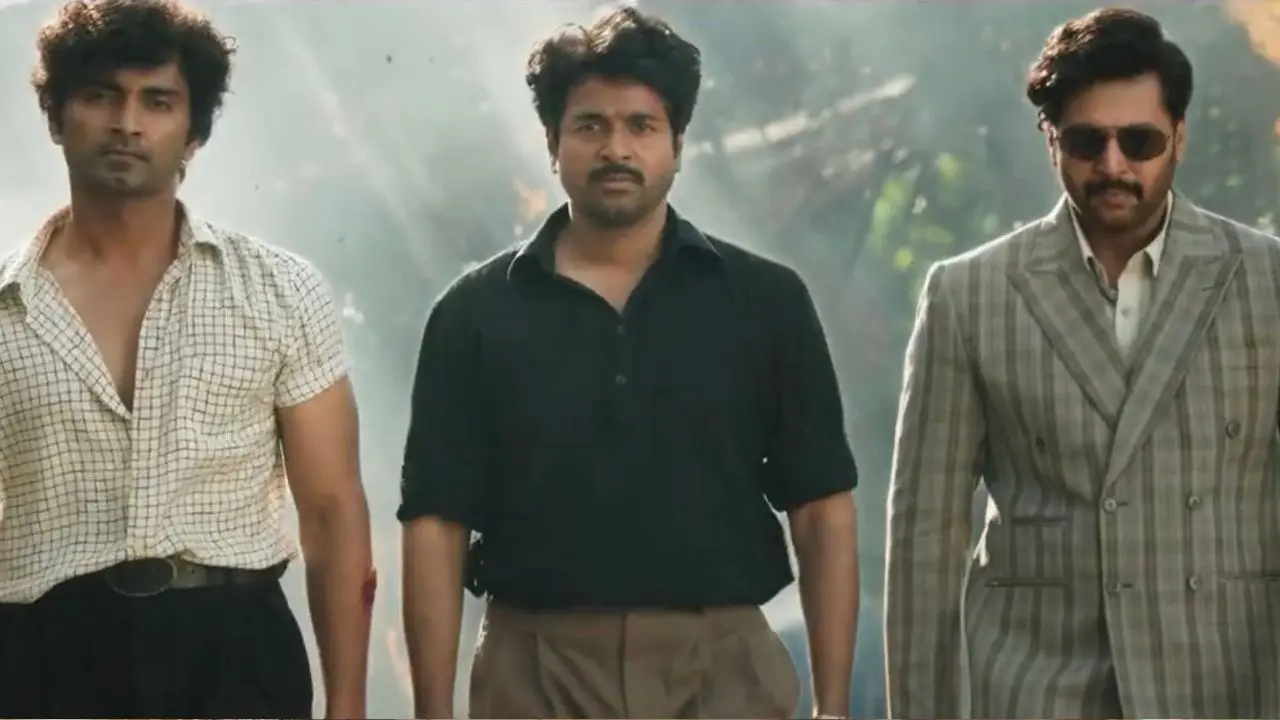
The film is directed by R. Krishnan and S. Panju (the Krishnan-Panju duo), and it’s adapted from Pavalar Balasundaram’s play. It’s also famous for speech-driven writing that sounds like it was built for the stage, then pointed straight at the audience. That style can feel old-fashioned, but it also explains why the movie hit so hard in its own time.
For basic production facts and credits, viewers often start with the film’s reference pages, including the Parasakthi (1952) entry on Wikipedia. Those details matter because the craft is tightly linked to the film’s intent: long dialogue blocks, moral confrontations, and scenes designed to land like public arguments.
A note on producer talk: conversations around Parasakthi often pull in A. V. Meiyappan, the founder of AVM Studios, because AVM has long been associated with Tamil film history and, more recently, with public disputes around the Parasakthi title. The 1952 film’s credited production history is tied to its original banner and release structure, but Meiyappan’s name still comes up when people discuss the film’s legacy and how it continues to echo in modern debates.
Sivaji Ganesan’s breakout impact as Gunasekaran
Sivaji Ganesan’s screen presence is the movie’s loudest instrument. As Gunasekaran, he performs like someone trying to force the world to listen, even when the world keeps walking away. His voice work is a major part of it, with careful shifts from warmth to sarcasm to fury. Even for viewers who don’t understand Tamil, the emotional temperature is clear.
What stands out is how committed he is to extremes. When Gunasekaran is kind, it’s open and direct. When he’s angry, it’s not a quick flare-up. It’s a sustained burn, the kind that comes from being cornered again and again. The performance helps the film land its most speech-heavy moments, because it keeps them connected to pain rather than just ideology.
Some gestures and line deliveries are big by today’s standards. Still, the intensity has a purpose. It makes Gunasekaran feel like a human alarm bell, and the film wants that sound to carry.
The supporting cast, especially Sriranjani as Kalyani, and what they add
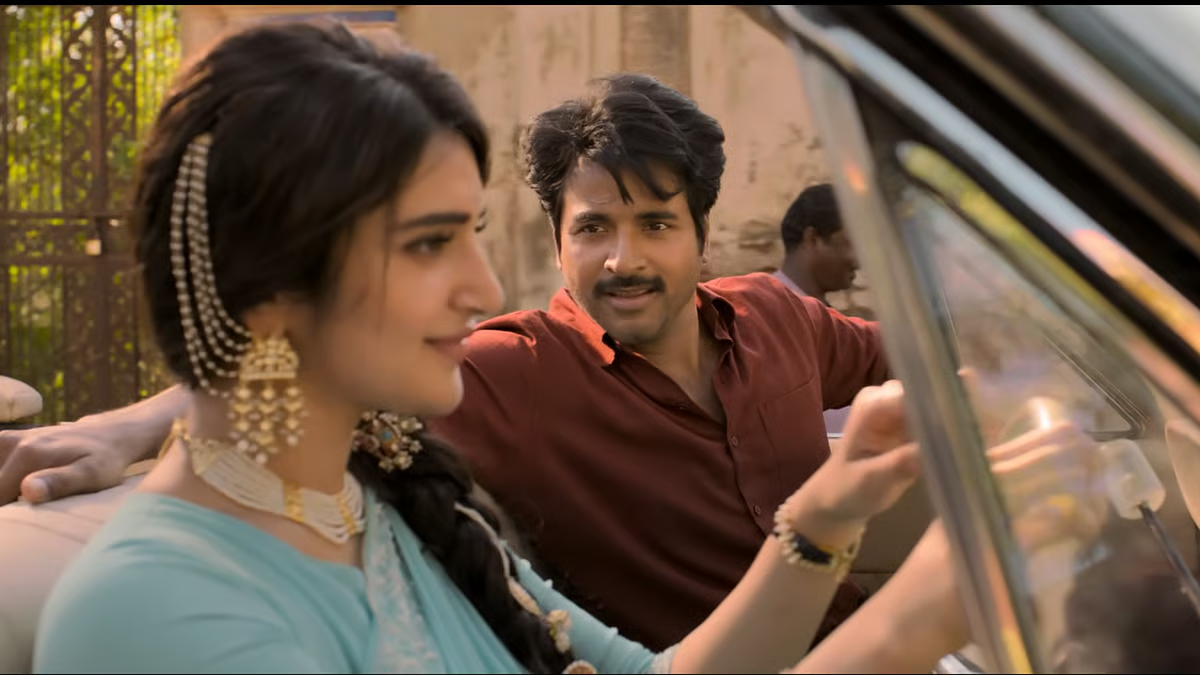
The supporting cast gives the film its emotional weight, and also keeps it from becoming a one-man lecture. Sriranjani as Kalyani brings a grounded sadness that holds the story together. Her performance communicates fear and endurance without turning her into a passive figure. When the film asks viewers to care about the cost of social cruelty, she’s the reason it works.
Pandharibai adds a different energy, bringing steadiness and a sense of lived-in hardship. Her scenes help the film feel like it’s happening in a real neighborhood, not just in symbolic spaces.
Doraiswamy (among others) supports the film’s broader portrait of a community shaped by gossip, pressure, and survival instincts. Even smaller roles often feel like they represent types of people viewers still recognize: the moral scolder, the opportunist, the bystander who avoids trouble.
Together, they make the world feel crowded, which matters, because the movie’s argument is partly about crowds. About what people accept as normal when they look away.
Themes, Politics, and Controversy: What Parasakthi Was Really Arguing About
It’s hard to separate Parasakthi from its message. The film attacks social injustice at street level: hunger, homelessness, exploitation, and the way the poor are treated like they deserve their suffering. It also challenges caste and class bias, corruption, and gender inequality, without pretending these problems are rare accidents.
The movie also has a clear political flavor that aligned with Dravidian movement ideas and DMK-style messaging in cinema. In simple terms, it pushes rational thinking, questions inherited authority, and argues that respect should be based on humanity, not status. That mix of story and argument is exactly why the film became controversial, with reports of serious pressure and calls to stop it.
In January 2026, that tension feels alive again. Real-time discussion has been stirred by a newer film using the Parasakthi name and by renewed political arguments around cinema and history. The old film’s reputation as a troublemaker is part of why the title still carries heat.
Why the film’s criticism of superstition and hypocrisy shocked audiences in 1952
One of the movie’s boldest moves is how it portrays superstition and public piety. It questions whether ritual automatically equals goodness, and it suggests that faith can be used as a mask for control. Scenes involving temples, religious figures, and moral preaching carry a sharp edge: the film shows how easily “holiness” can be turned into business, and how quickly blame gets pushed onto the vulnerable.
A famous kind of idea expressed in the film is that a deity can be reduced to stone in a pointed moment, not as a casual insult, but as a challenge to blind belief. For 1952 audiences, that wasn’t mild criticism. It touched identity, tradition, and power structures all at once.
Even now, the material can spark debate because it doesn’t speak softly. It doesn’t ask for permission. It talks like someone who has seen too much suffering to stay polite.
A film that supports family bonds while calling out a broken system
Parasakthi can sound furious, but it isn’t anti-family. In fact, family loyalty is one of its strongest emotional anchors. The story keeps returning to siblings trying to protect each other, even when they’re separated and stripped of security.
That’s the film’s balancing act. It values love, duty, and dignity at home, but it refuses to romanticize the society outside the door. The message is not “family will solve everything.” The message is that family becomes a battlefield when systems are unfair, and the burden often falls on women and the poor first.
This blend is why the film doesn’t feel like a pamphlet for three hours. The personal pain gives the political anger a face. It’s not anger floating in the air. It’s anger rooted in a sister’s fear, a brother’s shame, and a community’s silence.
Music, Runtime, and How to Watch It Now (With Subtitles)
The runtime is long, and the pacing reflects its era. Scenes are allowed to breathe, speeches run longer than modern audiences expect, and emotion is expressed through extended confrontations. Some viewers will admire that patience. Others will want breaks. Watching in two sittings can help, especially for first-timers.
The soundtrack supports the drama and helps shape the mood shifts, from sorrow to resolve. Even when the filmmaking feels stage-bound, the musical cues help keep the emotion moving. The film’s sound and dialogue matter more than flashy visuals, so audio clarity is important.
For US viewers checking availability in January 2026, listings can change, but guides like Parasakthi on JustWatch (US) are useful because they also note subtitle language details on some platforms.
What modern viewers may find dated, and what still feels fresh
Some things will feel dated right away:
- The acting style can be theatrical, with long, forceful speeches.
- The scenes can run long, with fewer quick cuts.
- The moral arguments are stated plainly, not hinted at.
Yet plenty still feels fresh because the emotions are real:
- The film’s moral urgency doesn’t fade with time.
- The writing stays focused on power and hypocrisy, not personal grudges.
- The performances keep the pain close to the surface, so the message doesn’t float away.
Subtitle tip (add subtitles): choose a version with clear English subtitles and clean audio, then turn subtitles on from the start. The film’s meaning often lives inside the dialogue rhythm, not just the plot points.
Conclusion
Parasakthi remains a landmark because it treats cinema like a public square, not just a pastime. It’s heavy, message-driven, and often heartbreaking, but it’s also alive with conviction. The film rewards viewers who care about acting, dialogue, and social themes, and it’s especially valuable for anyone curious about Tamil cinema history. Watching it today works best with subtitles and enough time to absorb its long scenes. After the credits, the biggest question it leaves behind is simple: what changes when a society stops looking away?