

Oka Brundavanam is a 2025 Indian Telugu-language drama that mixes family emotions, personal growth, and feel-good storytelling. Directed by first-time filmmaker Satya Botcha (also credited as Botsa Sathya), it looks at dreams, hidden pasts, and how people come together while dealing with their own problems. The film has a light, breezy tone with emotional depth in the way characters interact. It also touches gently on social topics like womanhood and family pressure, though many reviewers felt the final act leans on familiar clichés.
You just pinged the group chat asking if Oka Brundavanam is worth your weekend OTT watch. As the unofficial movie researcher of the gang, I spent way too long checking reviews, scrolling through X (Twitter), and reading that one thoughtful Reddit post. The common take is simple: this is a warm, slightly predictable comfort movie. It tries to be different for most of its runtime, pulls it off for about three-fourths of the film, then suddenly remembers standard Telugu movie rules and throws in a rushed romance before the end.
This is not a giant spectacle like Baahubali or other big-scale epics. It is a small, character-focused film, and that is its biggest strength, at least until the climax. Most reviews are positive but not glowing, sitting around an average of 3 out of 5 stars. People praise its easygoing, feel-good mood and the confidence in Satya Botcha’s direction.
The Times of India even called it a “heart-touching family drama that speaks volumes with its silence,” which is strong praise for a film that tries to step away from the usual formula. At the same time, almost every critic points to the predictable ending as a major drawback. It feels like getting a perfect handcrafted coffee and then dumping too much sugar in it at the end.
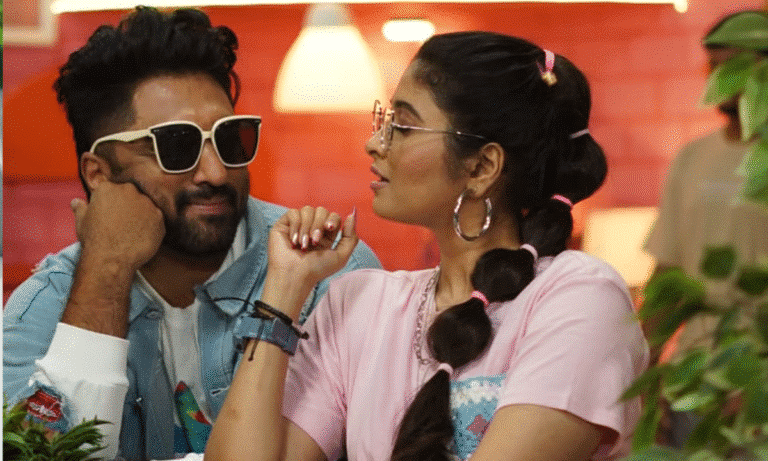
Vikram is a dreamer
First is Maha (Shinnova), a spirited young woman with a clear goal. She wants to complete her late mother’s dream by shooting a documentary about untold stories of womanhood. That goal shapes her as driven, stubborn, and intense. At the same time, she has to deal with her own messy home life, including her father’s attempt to remarry and the tension that creates.
Next is Raja Vikram (Balu), a struggling cameraman. Vikram is a dreamer, but his main obsession is going to the US for higher studies. His focus on this plan blinds him to the financial and emotional burden on his parents. He is a flawed character, but Balu gives him a grounded performance that keeps him human and believable. Maha hires him to shoot her documentary, and that decision sparks the main journey.
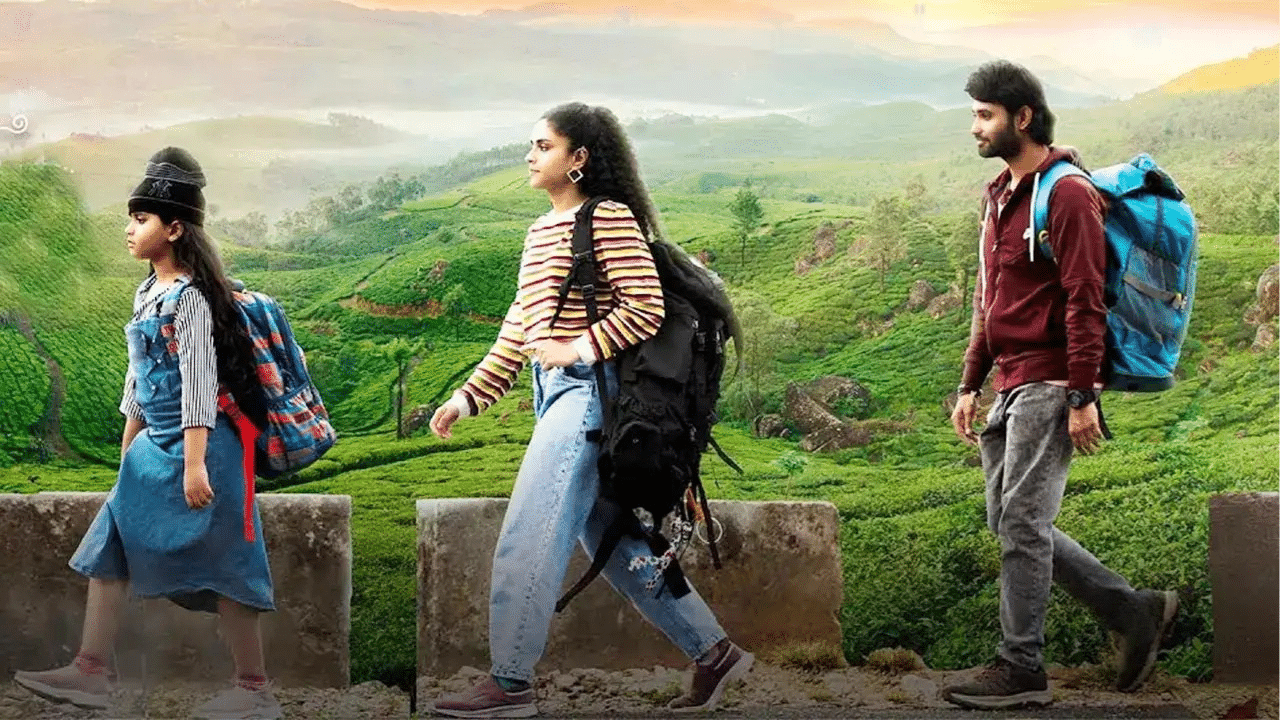
The third major character, and the one many viewers find most moving, is Nainika (Sanvitha). She is a grumpy, curious 10-year-old orphan who runs away from her home to search for a man named Joseph (played by Subhalekha Sudhakar). Joseph sends her Christmas gifts every year but has never met her in person, which creates a quiet mystery around him.
From here, the film turns into a road-trip drama. Maha and Vikram travel with Nainika to help her find Joseph. While doing this, they also shoot the documentary and start to uncover things about themselves. In simple terms, it becomes a “finding home and purpose” story, lifted by the modern, real-life problems each character carries.
Where Oka Brundavanam Works: Gentle Direction, Honest Characters
Many reviewers, and even casual viewers, appreciate how the first two acts avoid loud melodrama. Satya Botcha, along with writer Chetan Bandi, makes some bold but grounded choices in how the characters are written.
The film doesn’t try to make its leads perfect or always likable. Maha’s conversations with her grandmother and father are initially quite harsh and blunt. Vikram is so focused on leaving for the US that he ignores how hard his parents work to support him. This willingness to show the leads as flawed, selfish, and sometimes unpleasant sets Oka Brundavanam apart from sugary, over-sentimental Telugu dramas. When the emotions hit later, they feel earned instead of forced.
On the technical side, the film aims for a simple, natural style. Raj K. Nalli’s cinematography is clean and serviceable, with an eye for calm, everyday visuals. The real highlight is the music by Sunny-Saketh. The background score and songs do not overpower the film; they sit in the background and slowly build the mood. The montages, which Satya Botcha seems to enjoy using, gain a pleasant rhythm thanks to the music.
Several reviews highlight a brief but strong sequence where Maha interviews a trans woman for her documentary. The scene supports Maha’s mother’s dream of giving space to unheard voices. It also shows the film’s honest interest in stories that usually stay on the margins.
The bond between Maha and Vikram is at its best when it stays focused on Nainika and the documentary. They are two flawed adults trying, in their own messy ways, to do something kind for a child. That shared effort, more than any romantic thread, is the film’s most effective emotional line.
Where It Falls Short: A Safe, Formula-Based Climax
Here comes the warning label for your watchlist: the third act does not match the promise of the first two.
Reviewers almost agree on this point. The film, which had been fresh and grounded, suddenly slips into a very standard ending. The main issue, as critics like B. H. Harsh point out, is the sudden push for a full-on romance between Maha and Vikram. For nearly two hours, their relationship grows in a quiet, mature way through teamwork and mutual respect. When the film suddenly tries to turn that into a big romantic payoff, it feels forced and unnecessary.
Their bond was powerful because it was based on their shared care for Nainika and their project. Turning that into a typical love-story climax makes the final stretch feel less honest and more like a box that needed to be checked.
The emotional subplots also do not reach their full potential. Maha’s strained connection with her father, and Vikram’s relationship with his parents, start with promise but do not get the time or writing they deserve. These threads could have deepened the central idea of home, belonging, and responsibility. Instead, they remain half-baked.
Joseph, played by Subhalekha Sudhakar, is another missed chance. Since Nainika’s entire journey is built around meeting him, his character needed a more layered and touching resolution. The payoff, while not bad, feels lighter than it should, given how important he is to Nainika’s life.
By the time the film reaches its final 20 minutes, the emotional core is still there, but it is not strong enough to overcome the predictability. The ending feels “fine” rather than truly satisfying.
Should You Watch Oka Brundavanam On OTT?
If you want a calm, two-hour-and-five-minute watch that feels warm and easygoing, Oka Brundavanam is a solid choice. It avoids loud fights, forced comedy, and over-the-top drama, which already sets it apart from a lot of commercial films. The standout performance comes from child actor Sanvitha as Nainika, who carries much of the emotional weight. Balu and Shinnova also give steady, understated performances that suit the film’s tone.
If your top priority is a bold, unpredictable ending, then you might feel a bit let down. The final phase of the story falls back on safe, familiar tropes. Even so, the sincerity in the writing and performances, especially in the first half and parts of the second, make it a memorable watch.
iBomma Rating: 3 out of 5 stars.
Recommendation: Ideal for a quiet family evening on OTT. Watch it for Nainika’s journey, the simple but affecting moments on the road, and the fresh feel of the early portions. Just be ready to sigh or roll your eyes when the expected romantic twist shows up near the end. It is not perfect, but it is a gentle and honest attempt at feel-good storytelling.