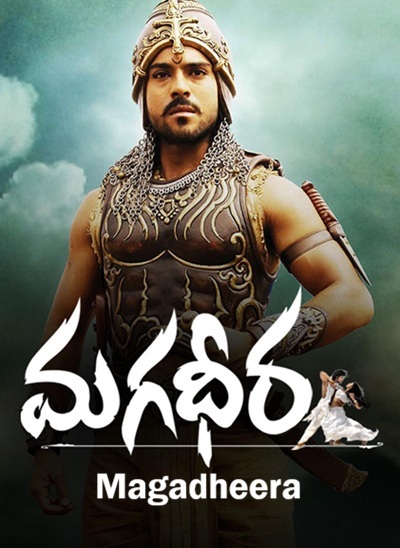
Magadheera
Fun Facts of Movie
Magadheera: A Love Story That Outruns Time
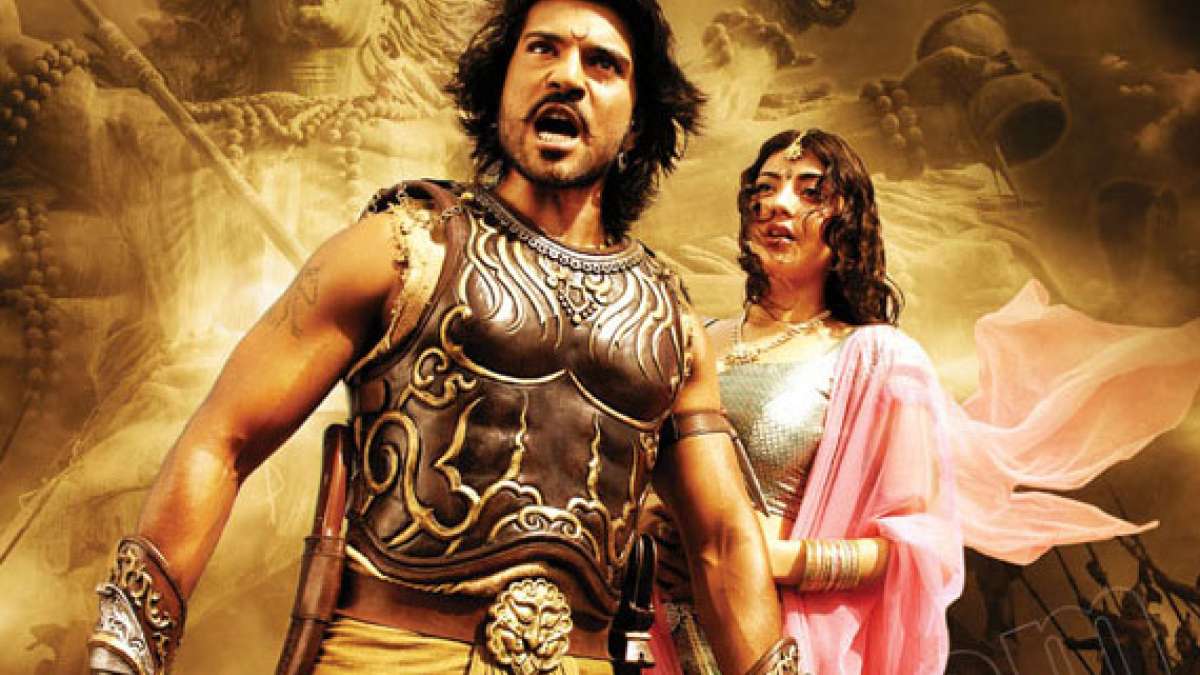
Before Baahubali or RRR became global names, S.S. Rajamouli delivered a film that shifted expectations for Indian cinema. Magadheera feels bigger than a typical romance or action movie. It blends history, fantasy, and a love story that stretches across 400 years. At its core, it’s about love and justice that refuse to fade, even after life ends.
The Plot: One Love, Two Lifetimes
The story starts with Harsha, a present-day guy who lives for bike racing. Everything changes after a brief moment with a young woman named Indu. When he touches her hand, he’s hit with flashes of a life he can’t explain. Those memories won’t let go.
The film then jumps back 400 years, to Udaigarh in 1609. In that era, Harsha was Kala Bhairava, a fearless warrior sworn to protect the royal family. Indu was Mithravinda Devi, the princess he loved. Their bond was strong, but it was never allowed to grow in peace.
A power-hungry cousin, Ranadev Billa, wanted both the princess and the throne. He turned on his own kingdom and teamed up with the emperor Sher Khan. The betrayal leads to a brutal battle on a cliffside, where Bhairava and Mithravinda meet a tragic end, leaving their story unfinished.
Back in the present, those same four souls return. Harsha must keep Indu safe from the reborn threat and help her reconnect with the truth of who she once was.
Why It Works: Rajamouli’s Big-Scale Storytelling
What makes Magadheera click is how smoothly it moves between two timelines. The modern scenes bring speed, stunts, humor, and songs. Still, the emotional core lives in the historical flashback, where the stakes feel life-and-death in every moment.
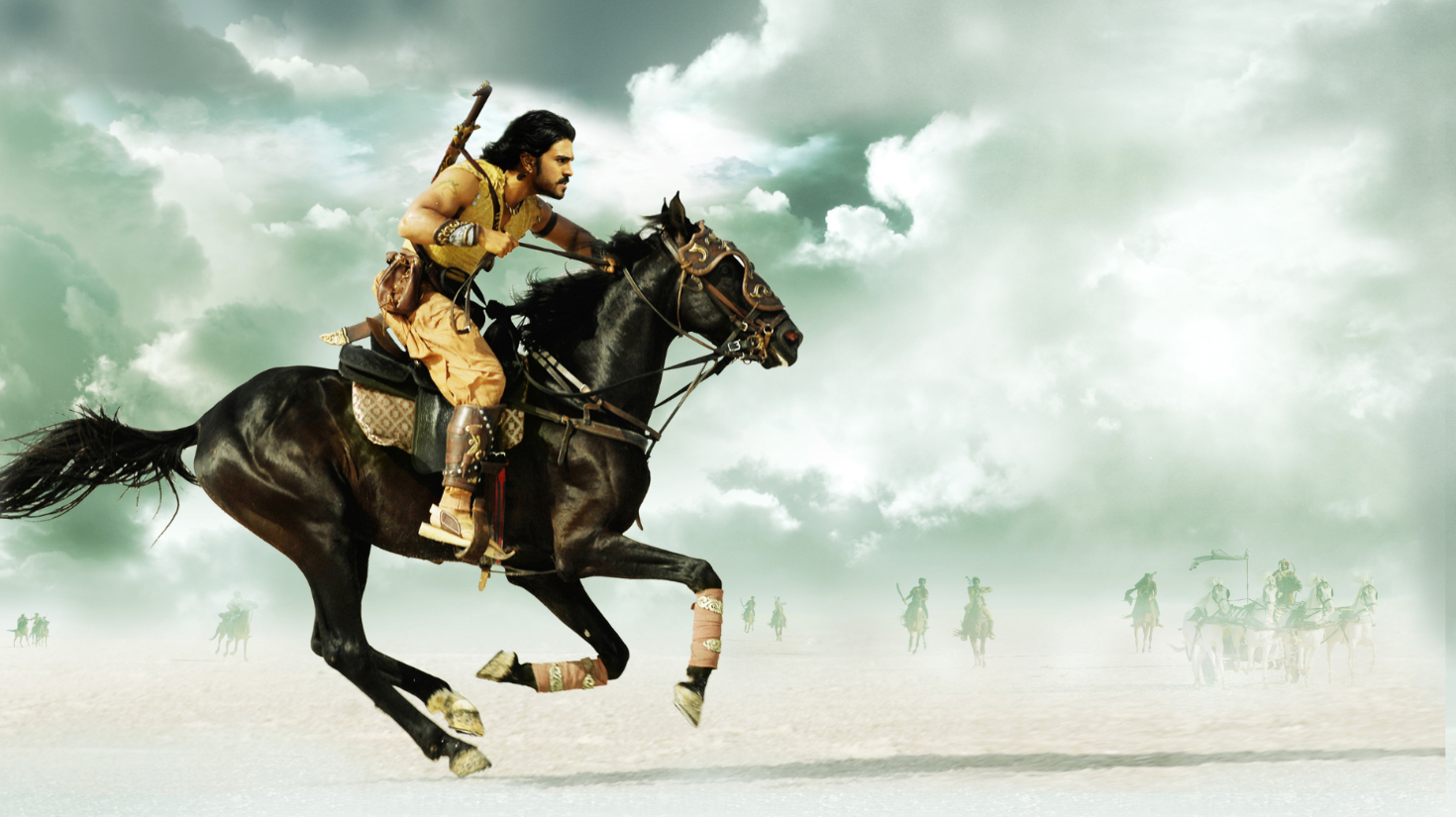
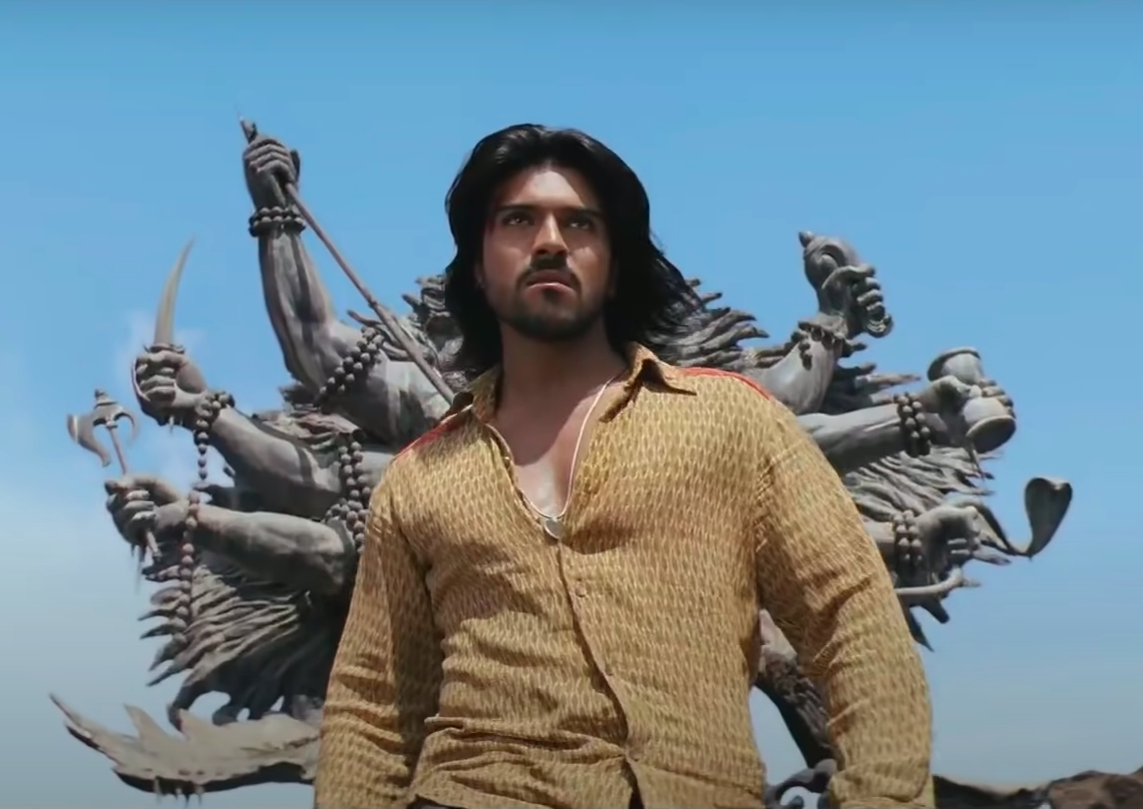
Rajamouli also makes the world feel massive. From towering visuals like the Lord Shiva statue to wide desert shots, the film keeps the scale high. Even for a 2009 release, many scenes still hold up better than you’d expect.
One of the film’s best-known sequences is the “100 Warriors Battle.” Kala Bhairava fights a hundred soldiers alone to protect the princess. The scene works because it’s not just action for show. It’s driven by courage, loyalty, and the refusal to surrender.

The Acting
Ram Charan makes a strong mark early in his career. As Harsha, he’s relaxed and likable. As Kala Bhairava, he shifts into a tougher, more intense presence. His physical work, especially in the action and horse-riding scenes, adds a lot to the character.
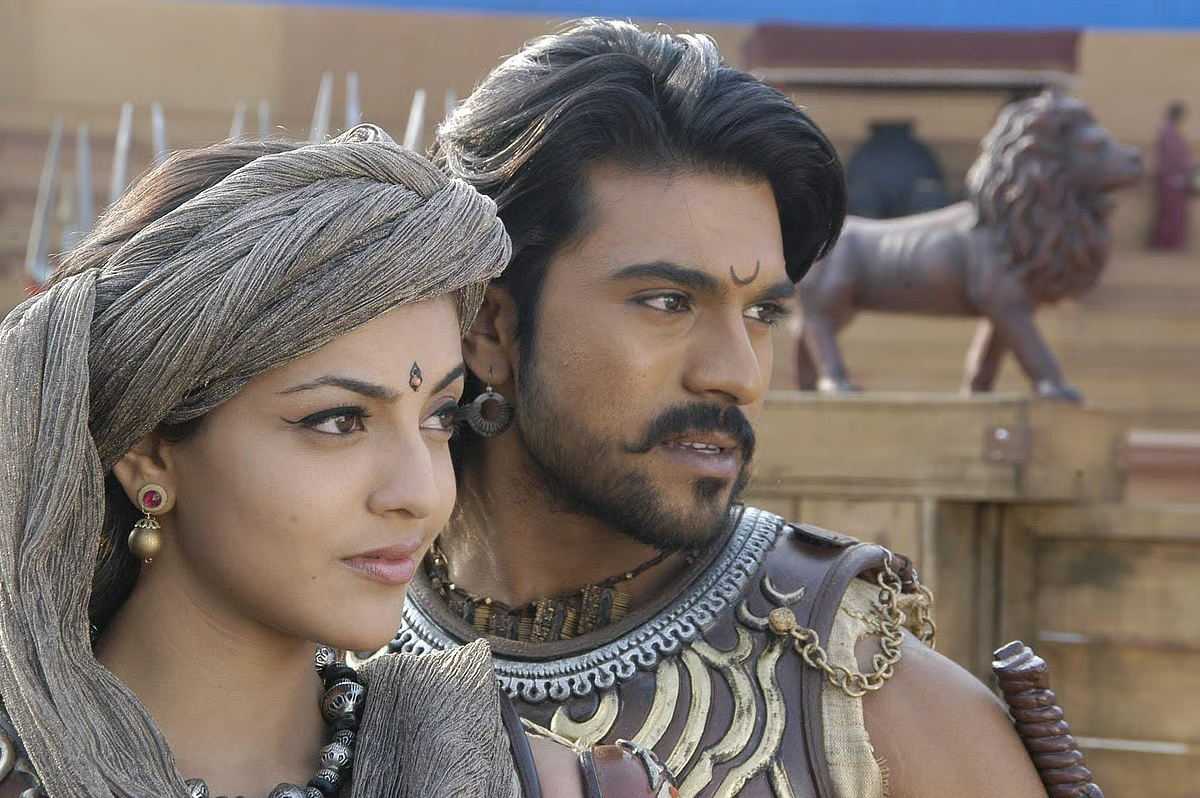
Kajal Aggarwal fits both sides of her role well. She carries royal poise as Mithravinda and brings a lighter, modern vibe as Indu. The connection between the leads keeps the love story grounded, even when the film goes big with scale and spectacle.
Srihari stands out as Sher Khan. He isn’t written as a one-note villain. He’s a warrior who respects strength and honor. His bond with Kala Bhairava becomes one of the film’s most emotional threads. On the opposite end, Dev Gill plays the villain with wild intensity, making him easy to hate and hard to ignore.
Music and Craft
The soundtrack by M.M. Keeravani is a big reason the film stays memorable. “Panchadara Bomma” lands as soft and romantic, while “Dheera Dheera” brings the weight and scale the story needs. The background score lifts key emotional beats and adds tension to the action.
Cinematographer K.K. Senthil Kumar gives the past a rich look through strong color and lighting. The visual effects were a major step forward for Indian cinema at the time, and they helped prove that large fantasy action stories could be pulled off on a big screen in India.
Closing Take
Magadheera is an easy recommendation if you enjoy epic Indian films. It mixes action, romance, comedy, and fantasy without losing its emotional thread. It also carries a simple idea through every timeline: real love doesn’t disappear, and fate has a long memory.
The film also helped lay the groundwork for the big “Pan-India” releases that followed. If you want to see where this modern wave of large-scale Indian filmmaking began, Magadheera is a great place to start.
Cast and Crew
| Role | Name |
|---|---|
| Director | S.S. Rajamouli |
| Lead Actor | Ram Charan (as Harsha / Kala Bhairava) |
| Lead Actress | Kajal Aggarwal (as Indu / Mithravinda Devi) |
| Villain | Dev Gill (as Raghuveer / Ranadev Billa) |
| Supporting Actor | Srihari (as Solomon / Sher Khan) |
| Music Director | M.M. Keeravani |
| Cinematographer | K.K. Senthil Kumar |
| Producer | Allu Aravind |
| Story Writer | V. Vijayendra Prasad |
Trending Movies:
Eega Movie Review: A Fly-Sized Revenge Story That Still Works in 2026
Baahubali: The Beginning Review: Why It Still Holds Up in 2026