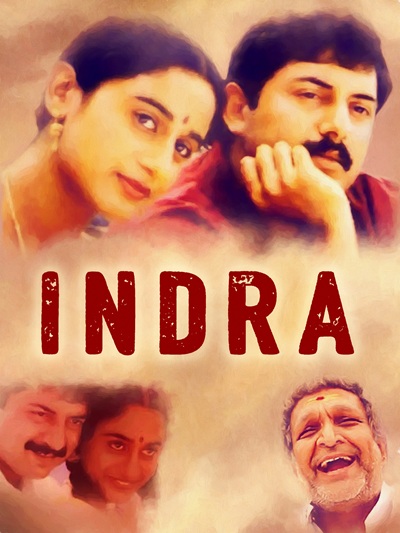
Indra
Fun Facts of Movie
INDRA Movie – A brooding man seeks justice while caught in crime and betrayal

The 2002 Telugu blockbuster Indra still stands tall as a prime example of mass masala entertainment. Director B. Gopal teams up with the legendary Chiranjeevi for one of his most remembered roles. It arrived when larger-than-life heroes ruled South Indian cinema, and it gave fans everything they wanted: big action, strong family emotion, catchy songs, and a hero built for whistle-worthy moments.
Even after 20-plus years, Indra holds up as a go-to commercial entertainer, mixing rural faction fights, revenge, romance, and a social message into one crowd-pleasing ride.
Plot Overview: Rival Clans, Second Chances, and the Promise of Rain
The story is set in the dry, tense region of Rayalaseema. Two rival families, led by Bharathasimha Reddy and Veera Siva Reddy, have been at war for generations. The fight isn’t just about pride. Water shortage adds fuel, turning everyday life into a constant power struggle.
Then comes Indrasena Reddy (Chiranjeevi). At first, he shows up as Shankar Narayana, a simple taxi driver in Varanasi who also sings classical music. He seems calm and grounded. But he’s hiding a past. He’s tied to the same feud, separated from his roots as a child during a violent chapter.
When Shankar, who is also Indra, returns to his village, he finds the bloodshed still going strong. He steps in with a bold plan to stop it, a marriage between the two sides. He even agrees to marry a woman from the rival family to prove his point. From there, the story moves into familiar territory for this genre: betrayal, brutal clashes, heated face-offs, and secrets from the past coming to light.
Along the way, the film mixes personal revenge with bigger themes like unity and fairness. It also brings in a message about water conservation, shown through Indra’s rain-related yagna. The pacing shifts from lighter city scenes to heavy rural confrontations. The hero-focused structure is easy to spot, but the punchy dialogue, clean comedy timing, and loud action beats keep it moving.
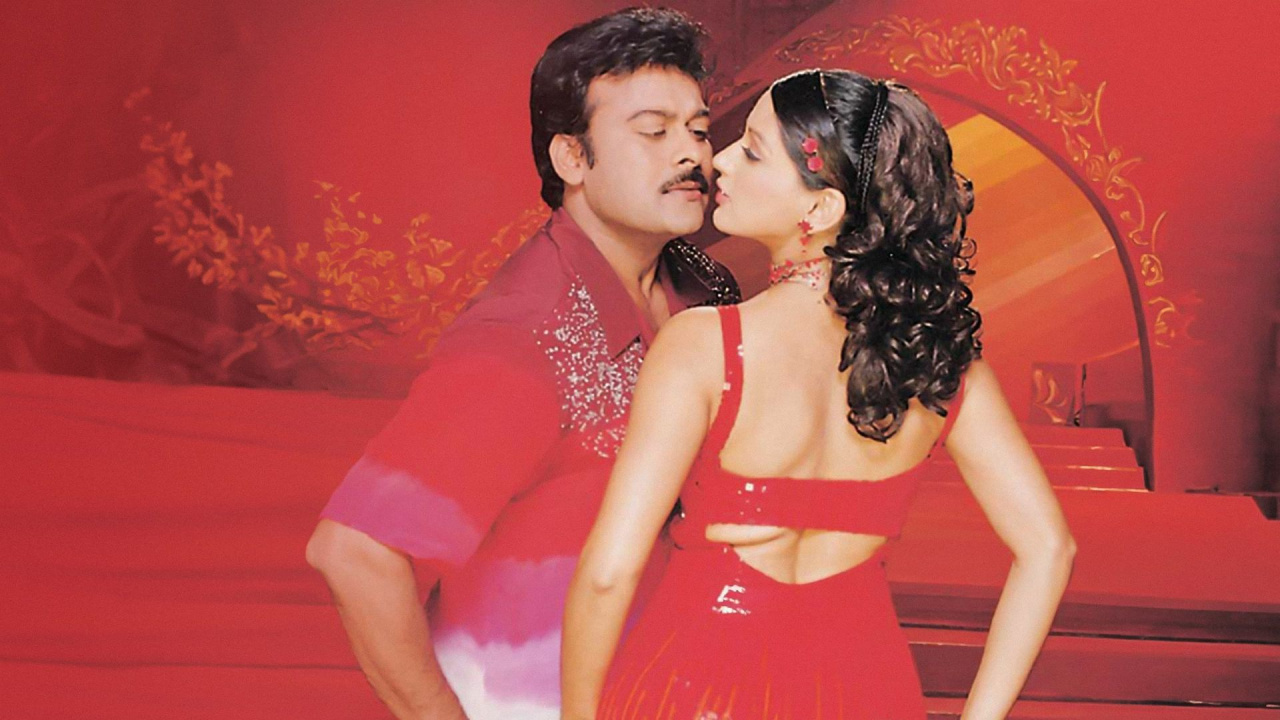
Chiranjeevi at Full Force: A Star Performance That Carries the Film
Indra runs on Chiranjeevi’s screen power. He plays two shades of the same man, the strong and feared Indra, and the softer Shankar. He switches between calm charm and raw anger without losing control of either side. His entry moments land hard, his dances have spark, and the fights are built to get a reaction. The rain yagna sequence became a signature scene for a reason. It blends faith, drama, and hero worship in a very Telugu cinema way.
He also shines in the emotional beats. When he speaks against faction violence, he sounds convincing. When the film shifts into romance, he stays easy and natural. His physical presence, from running across harsh terrain to taking on groups with whatever is nearby, reminds you why he earned the “mega star” tag. He won the Nandi Award for Best Actor and the Filmfare Award for Best Actor – Telugu, and fans still return to this film mainly for him.
The supporting cast adds plenty. Aarthi Agarwal plays Snehalatha with a sweet, innocent energy. Sonali Bendre brings poise to an important role. Prakash Raj gives the villain real weight, cold, intense, and hard to ignore. Mukesh Rishi and others strengthen the faction storyline. The comedy scenes with Brahmanandam and team bring relief, even if a few bits feel old-school now.
Direction, Music, and the Film’s Big-Scale Feel
Director B. Gopal keeps a wide story under control. The first half packs in action, romance, and comedy in a way that fits the commercial format. The second half leans harder into drama and big confrontations. The interval punch and the late twists follow classic Telugu mass movie rules, and that’s part of the appeal.
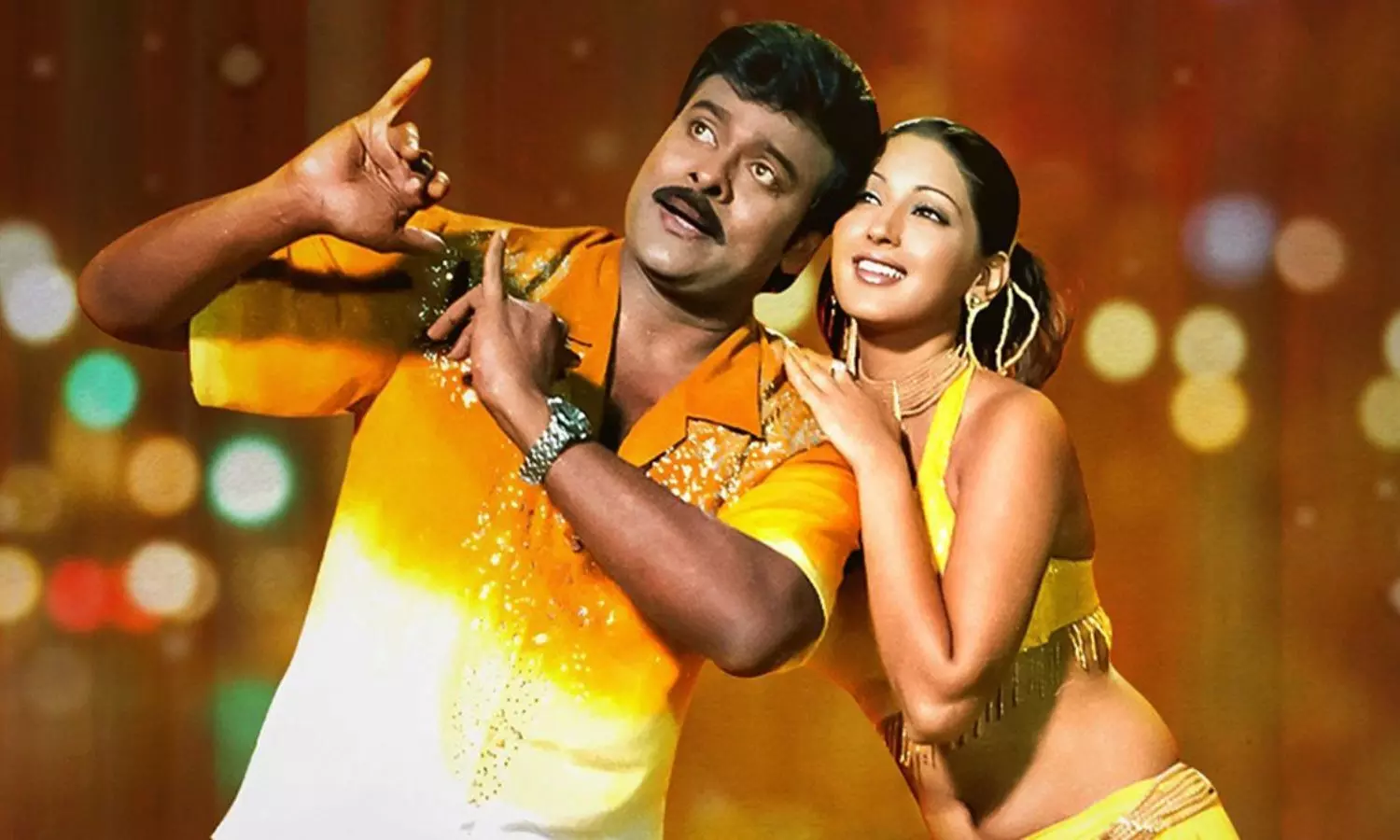
Mani Sharma’s music is a major reason the film stayed popular. Tracks like “Dhir Dhir Dhir Dhiri Dhir” and the title song became staples. The choreography is built around Chiranjeevi’s style and energy. The background score does a lot of work too, pushing the fights higher and making the family scenes hit harder. The visuals capture Rayalaseema’s harsh look well. The rain effects and action VFX, strong for 2002, still have a certain charm today.
The film speaks out against faction violence and supports smarter water use. The message is clear, even though it comes wrapped in larger-than-life hero moments.
What Works Best, and Where It Shows Its Age
Indra succeeds because it knows what it is. Its biggest strengths include:
- Hard-hitting action that feels loud and physical.
- Quotable dialogue that fans still repeat.
- Strong emotion tied to family, loss, and redemption.
- Big visuals, with grand scenes and energetic dance numbers.
A few weak spots come with the genre. The hero worship goes over the top at times. Some comedy stretches run long. The story beats can feel predictable if you know the formula. The second half may drag for some viewers, but the payoff in the final stretch is built to satisfy.
Legacy: A Defining Telugu Blockbuster
When it was released, Indra became a major box-office hit and ranked among the biggest Telugu films of 2002. It helped lock in Chiranjeevi’s star status before he stepped into politics. With dubbed versions in Hindi and other languages, it also found a wider audience.
Looking back, Indra works like a template for Telugu commercial cinema: hero-driven storytelling, big emotions, memorable songs, and no shame about going large. Today’s films may lean more realistic, but this one reminds you why mass entertainers last. They’re made to pull cheers, tears, and loud reactions in a packed theater.
If you love Chiranjeevi or classic Telugu hits, it’s a must-watch. If you’re new to the genre, it’s an easy entry point into the full flavor of mega masala cinema.
Trending Movies:
Arya Movie Review (2004): A Loud, Lovable Romance