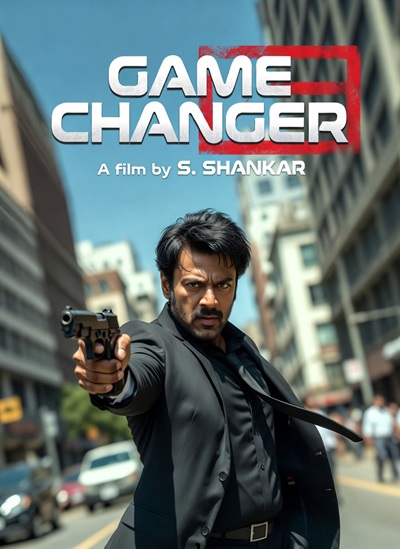
Game Changer
Fun Facts of Movie
Game Changer, Big Scale, Familiar Political Drama
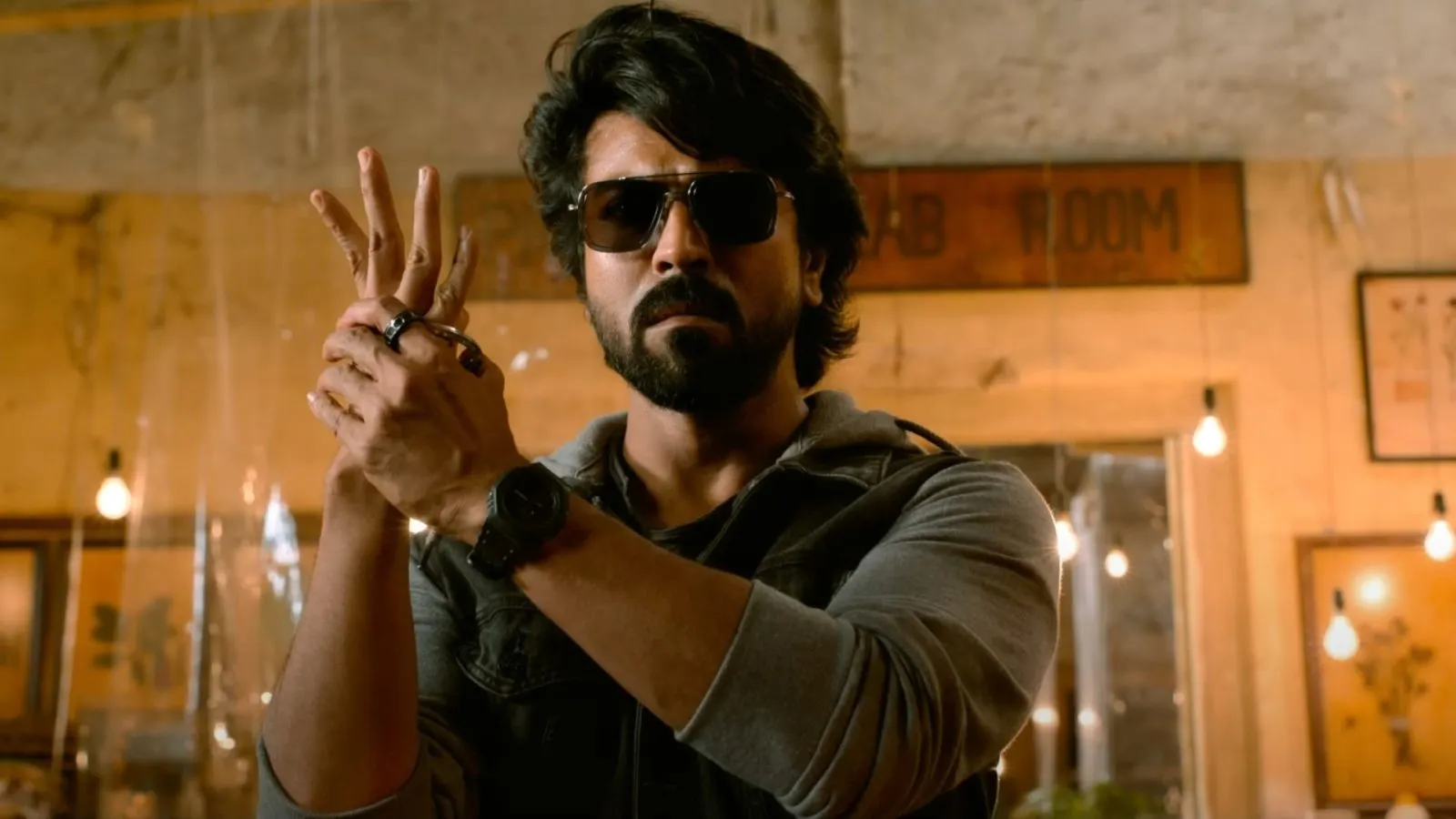
Director S. Shankar has a clear style; he makes large, message-driven films about public issues. Game Changer stays on that track. With Ram Charan in the lead, the film mixes election reform, personal revenge, and full-on commercial action. It looks great, and the lead performance is a major plus, but the story often feels like a remix of ideas Shankar and others have used before.
The Plot: One Family’s War, Two Timelines
The film follows Ram Nandan (Ram Charan), a smart, short-tempered young man who becomes an IAS officer. He’s strict about rules and wants cleaner elections. This isn’t just a job for him, though; it’s tied to his past.
A long flashback introduces Ram’s father, Appanna (also Ram Charan). Appanna is a simple village leader who stutters, stands up for the poor, and tries to build an honest political movement. His own circle turns on him. The betrayal leads to a devastating end for Appanna and his wife, Parvathy (Anjali).
Back in the present, Ram Nandan faces the next generation of the same rotten system. His biggest obstacle is Mopidevi (S.J. Suryah), a ruthless politician who’ll cross any line to become Chief Minister. The title fits the idea of Ram using his authority in the election process to corner his enemies and complete what his father couldn’t.

Ram Charan Carries It, Twice
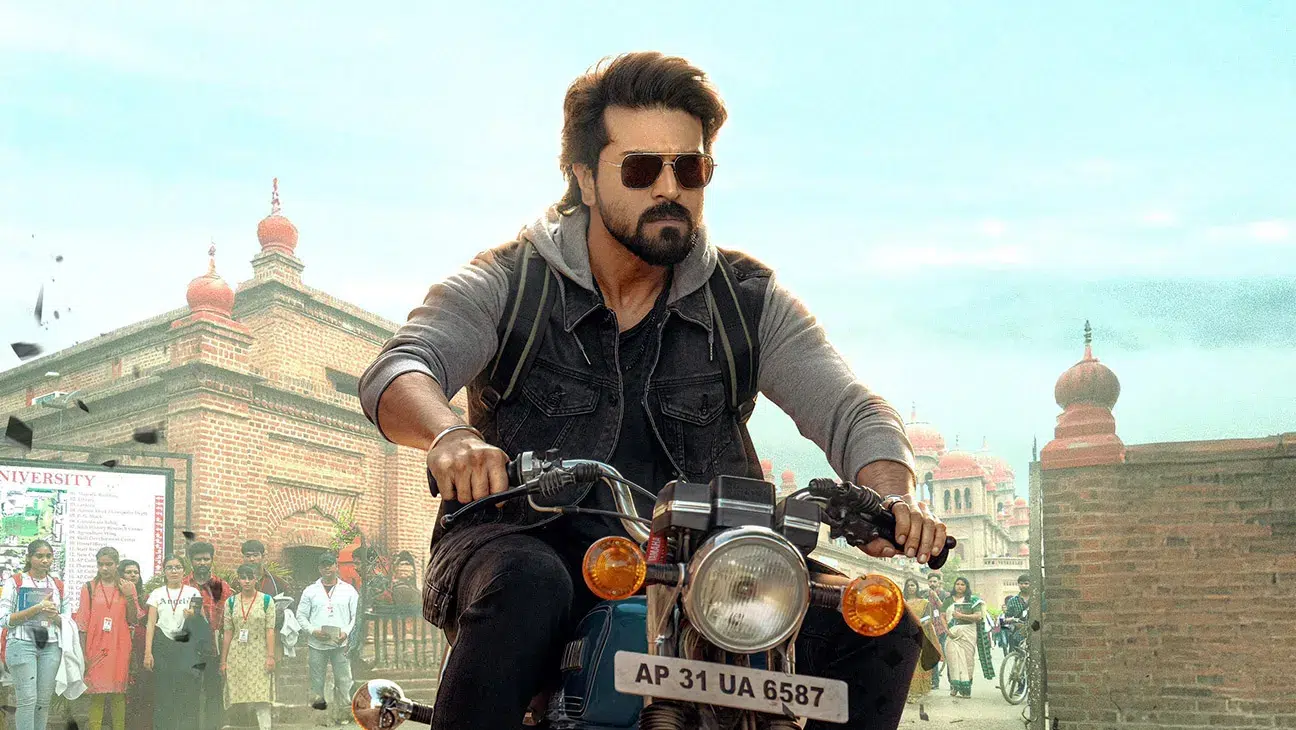
The strongest reason to watch Game Changer is Ram Charan. After RRR, expectations are high, and he does a lot of heavy lifting here. Playing two roles can feel like a gimmick, but he makes them different in tone and body language.
- As Ram Nandan: He’s sharp, confident, and intense. The action blocks suit him, especially when the film leans into the “one-man army” mode.
- As Appanna: This is the more affecting role. He brings warmth and a quiet pain to Appanna. The stutter doesn’t feel like a prop; it feels lived-in, and his scenes carry the heart of the film.
The romance is uneven. Anjali is excellent as Parvathy and grounds the flashback with real emotion. Kiara Advani, as the present-day love interest, mostly appears for songs and style. She looks great and dances well, but the writing doesn’t give her much weight in the political storyline.
Villains and Supporting Roles
A political action film needs a strong opponent, and S.J. Suryah delivers. He goes big, loud, and smug in the best way. Mopidevi is the kind of villain you love to hate. The problem is that the script doesn’t add many layers to the bad guys; greed is basically the only motive. Still, Suryah’s presence keeps the conflict lively.
The supporting cast includes Srikanth, Samuthirakani, and Nassar, and they do steady work. Some roles feel underused, though. Sunil pops up, but the comedy portions don’t land as often as they should, and his track doesn’t add much.

Shankar’s Look and Scale
If you’ve watched Shankar films like Indian (Bharateeyudu) or Mudhalvan (Oke Okkadu), the vibe here won’t surprise you. He goes big on everything: massive sets, huge crowds, loud staging, and expensive song sequences.
Tirru’s cinematography is a highlight. He shoots rallies with real scale and gives the village portions a rough, grounded feel. Thaman S keeps the energy high with a punchy score. The songs may not stick like Shankar’s older classics, but the background music helps during confrontations and key political moments.

Where It Falls Short
The main issue is the screenplay. At close to three hours, Game Changer feels longer than it needs to. Some scenes drag, and parts of the comedy and early romance feel stuck in an older formula.
A few choices also hurt the tone. Ram Nandan’s “anger meter” visual is distracting, and it feels silly in a film that wants to be taken seriously. The movie also goes for simple fixes to complex problems, leaning hard on the idea that one fearless hero can repair the whole system. It’s satisfying in the moment, but it’s not new.
Final Take
Game Changer works as a big commercial entertainer, even if the politics and plot beats feel familiar. It’s a stronger outing for Shankar compared to his recent work, but it doesn’t match his best films.
For Ram Charan fans, it’s an easy recommendation. He’s the film’s backbone, and his double role gives it real drive. If you want glossy visuals, strong face-offs, and a clear message about honesty in politics, this one delivers.
iBomma Rating: 3/5 Stars
The Good: Ram Charan’s dual performance, large-scale visuals, and S.J. Suryah’s villain act.
The Bad: Predictable story beats, long runtime, and weak comedy.Trending:
Jersey (2019): A Timeless Triumph of Dreams and Redemption