
Eega
Fun Facts of Movie
Small Hero, Big Sting: Why Eega is a Masterpiece of Imagination
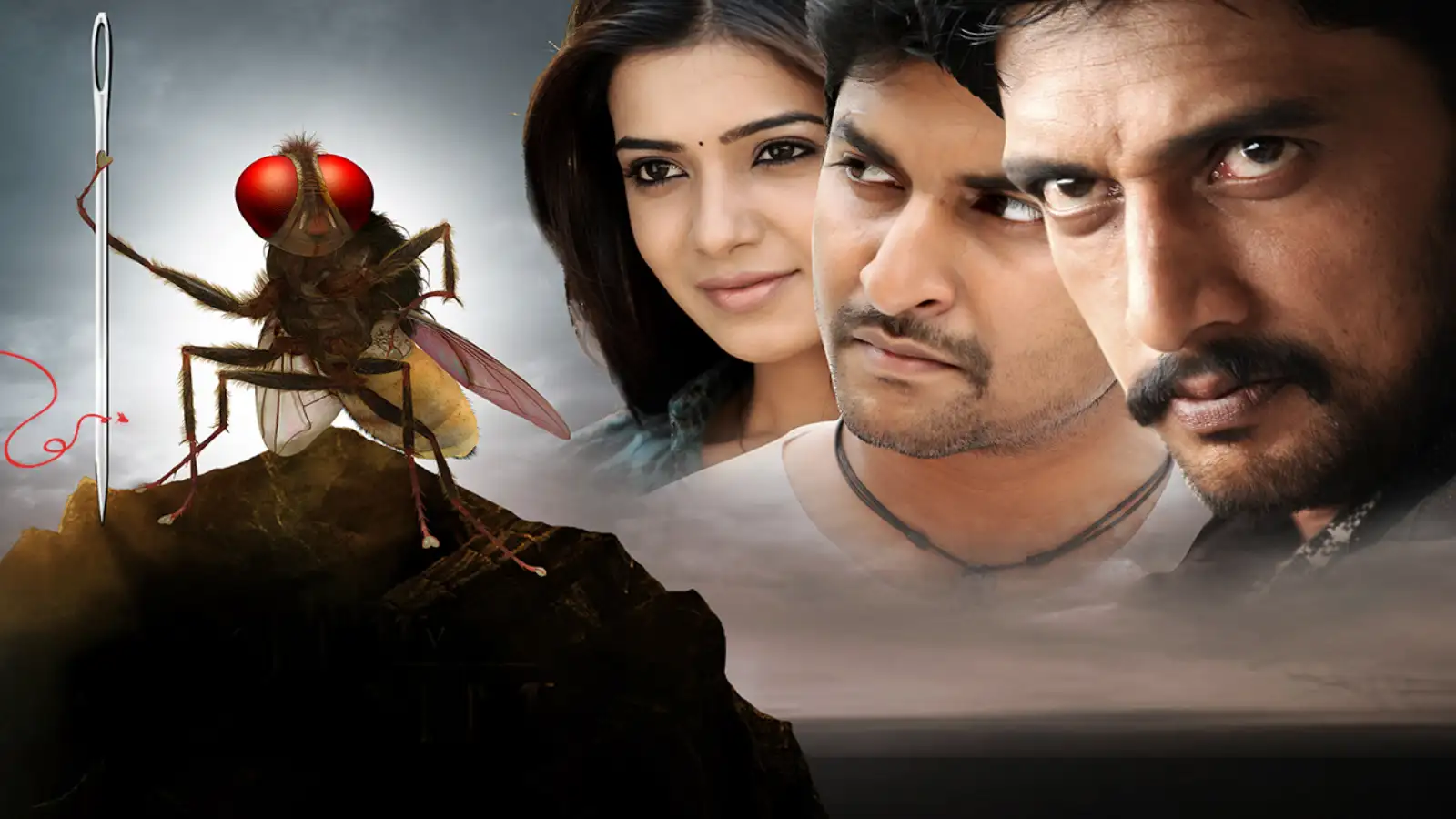
What if a movie asked the audience to cheer for a housefly, not as a joke, but as a real hero with a real mission? Eega (2012) takes that wild idea and commits to it with total confidence.
Directed by S.S. Rajamouli (known for big, crowd-pleasing swings), this Telugu fantasy action film is still recommended in 2026 because it feels fearless and oddly heartfelt. This spoiler-light Eega movie review covers the story setup, acting, visual effects, pacing, and who’s most likely to enjoy it.
Small Hero, Big Sting: Why Eega Still Feels Fresh
Cast and Crew
- Director: S. S. Rajamouli
- Producer: Sai Korrapati
- Written by: S. S. Rajamouli (Screenplay), V. Vijayendra Prasad (Story)
- Starring:
- Nani as Nani
- Samantha Ruth Prabhu as Bindu
- Sudeepa (Kiccha Sudeep) as Sudeep
- Music: M. M. Keeravani
- Cinematography: K. K. Senthil Kumar
- Visual Effects Supervisor: Pete Draper (Makuta VFX)
- Editor: Kotagiri Venkateswara Rao
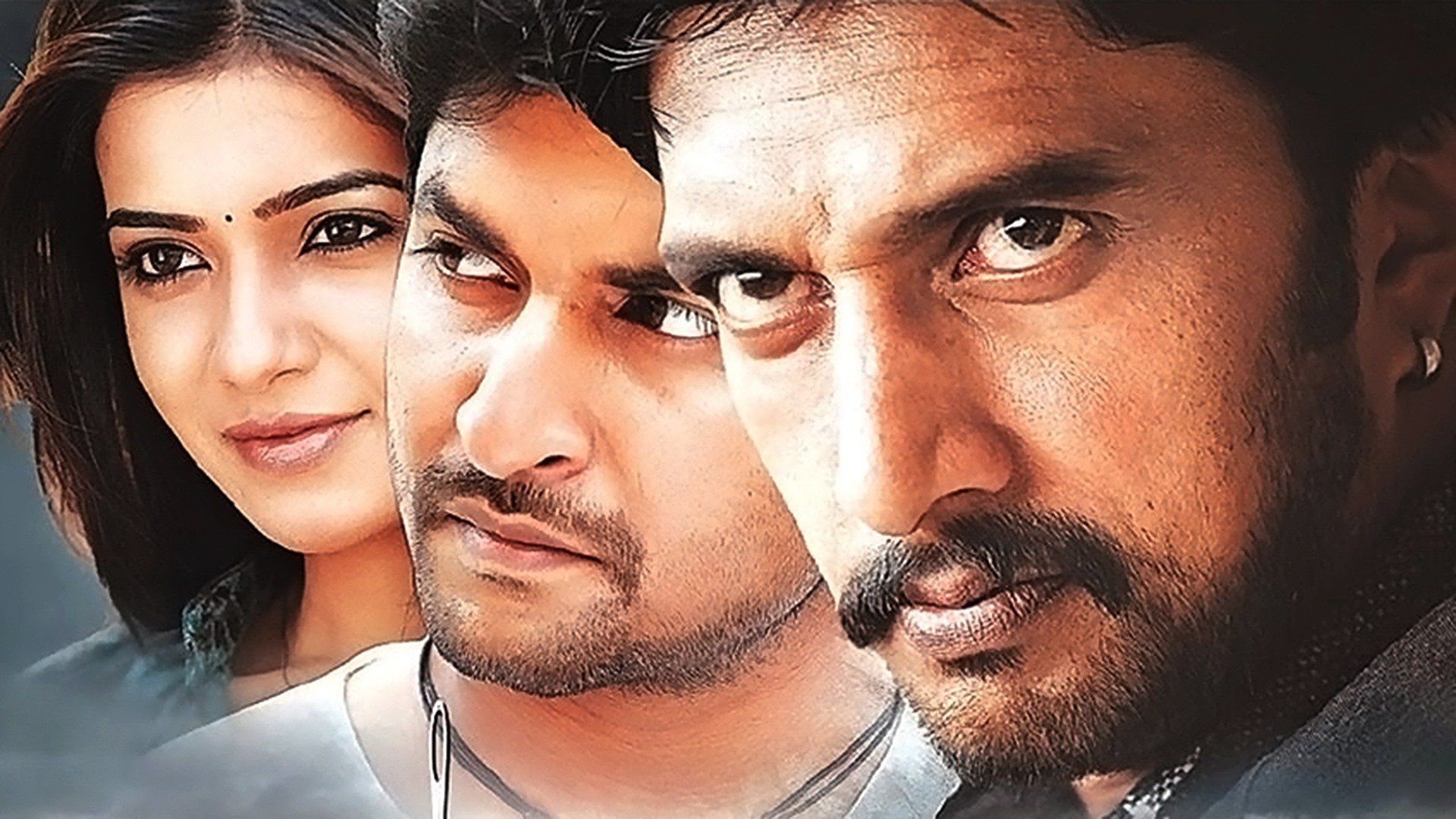
Movie Review: A Small Idea That Lands Big
Big action movies usually come with huge heroes. They punch through walls, race sports cars, and take down crowds of goons. Eega flips that whole setup. S. S. Rajamouli builds an action film around a regular housefly, and it works far better than it should. What sounds like a silly pitch becomes a bold, funny, and tense ride that stands out in Indian cinema.
The Plot: Romance, Loss, and a Very Personal Payback
At first, the story keeps things light. Nani is a cheerful young man who works with fireworks. He’s been into his neighbor Bindu for two years. Bindu is a micro artist who makes tiny designs on things like grains of rice. She likes him too, but she doesn’t make it easy. Their back-and-forth is sweet, playful, and full of charm.
Then Sudeep steps in. He’s rich, arrogant, and used to getting what he wants. When he figures out Bindu cares for Nani, he snaps and murders Nani without remorse.
That would end most movies. Eega takes a sharp turn instead. Nani is reborn as a housefly. He starts confused and helpless, but his memories return. From that point on, he has one focus: keep Bindu safe and make Sudeep pay.
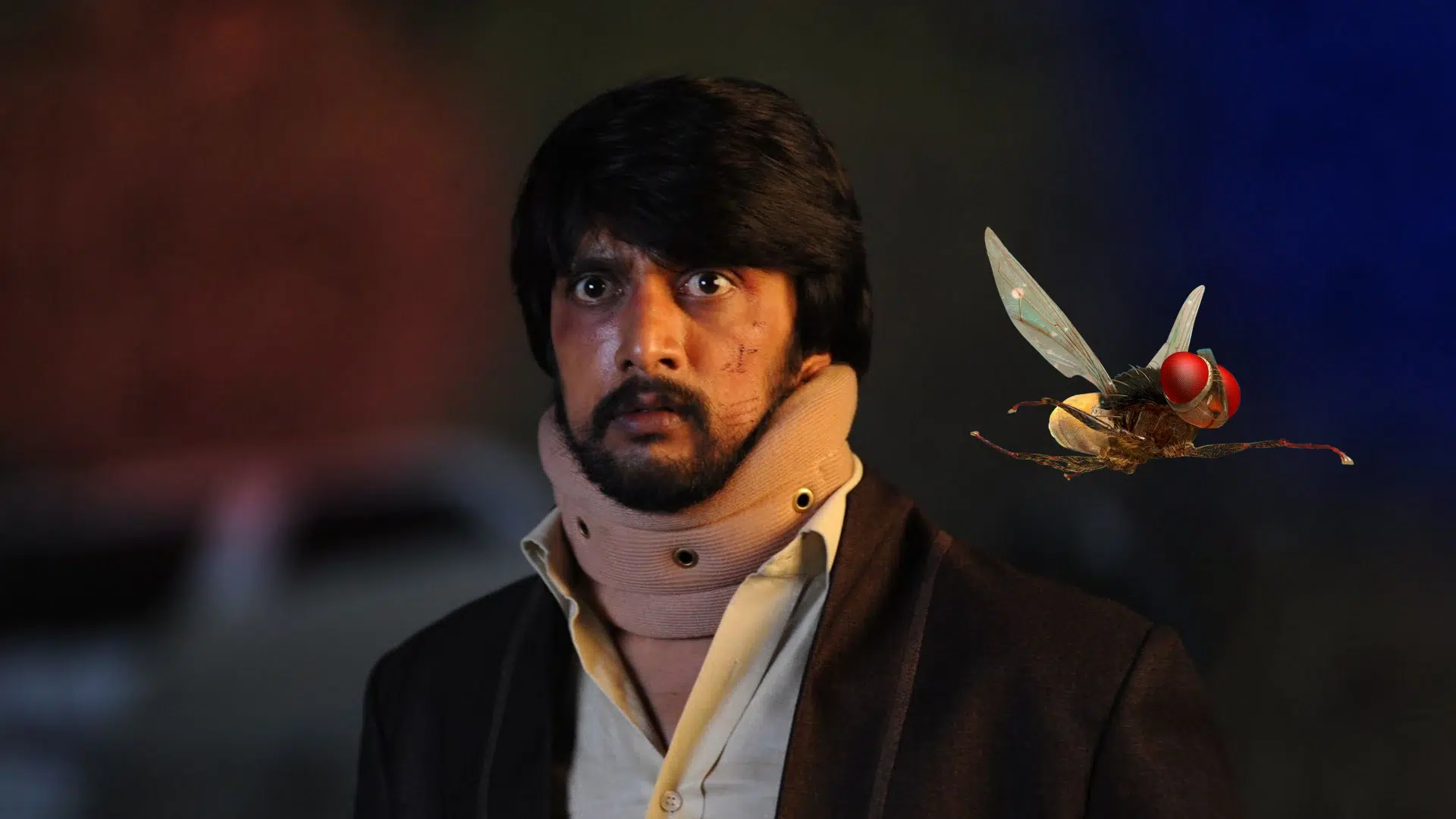
One Fly, One Villain, and a Lot of Damage
Once the fly takes charge, the movie really takes off. The fun comes from the mismatch. A fly can’t throw punches or kick down doors. It wins with timing, patience, and brains.
He begins with pure harassment. He ruins Sudeep’s sleep, wrecks his calm, and keeps pushing him closer to a breakdown. A simple buzz becomes a weapon. A tiny hit at the right moment becomes a big problem. The set pieces are staged with care, and the comedy lands because the villain’s frustration feels real.
A key moment comes when the fly shows Bindu who he is. Since she works with tiny tools, she can actually help him. She builds mini gear, including goggles for protection and small weapons that he can carry. Watching a fly train with a toothpick pull-up bar is ridiculous in the best way, and it somehow also feels motivating.
Acting That Sells the Fantasy
Even with a CGI lead, the people on screen do the heavy lifting. Nani doesn’t get long as a human, but he makes a strong first impression. He’s easy to root for, which matters once he returns in a new form.
Samantha Ruth Prabhu gives Bindu warmth and energy. She spends a lot of time reacting to a fly that isn’t really there during filming, and she still makes those scenes feel natural. Her bond with the fly becomes the heart of the film.
Sudeepa steals a lot of scenes as the villain. He plays Sudeep as threatening, then slowly unravels as the fly keeps winning small battles. His expressions shift from rage to panic to obsession, and he makes the one-sided “fight” feel intense.

Visual Effects, Camera Work, and Music That Do the Work
For a 2012 release, the visual effects hold up well. The fly looks believable in motion, and the animators give it just enough expression to show intent and emotion without turning it into a cartoon.
K. K. Senthil Kumar’s cinematography adds a lot to the experience. The movie often shows the world from the fly’s view, which makes everyday objects feel dangerous. A fan becomes a spinning threat. Bug spray turns into a doomsday weapon.
M. M. Keeravani’s music ties it all together. Since the fly can’t talk, the score carries his feelings and drives the momentum. The background music stays energetic and helps the action hit harder, especially in the final stretch.
Final Take
Eega mixes romance, comedy, and action in a way that feels natural. It’s creative without being confusing, and it stays entertaining from start to finish. It also has a simple message that lands: size doesn’t decide courage.
If you haven’t watched Eega, it’s still one of the most original Indian action movies of its time. It also shows Rajamouli’s skill years before Baahubali, and RRR made him famous worldwide.
Trending Movies:
Baahubali: The Beginning Review: Why It Still Holds Up in 2026