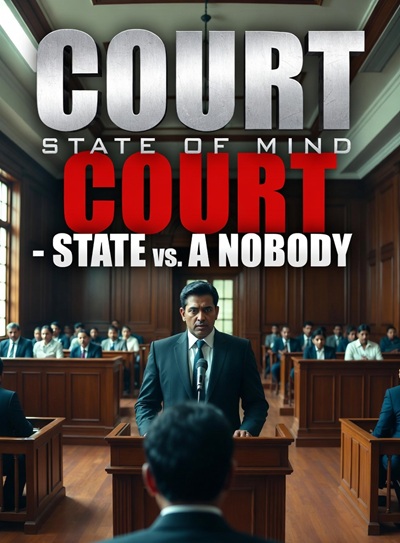
Court: State vs. A Nobody
Fun Facts of Movie
Court: State vs. A Nobody – A Gripping Tale of Justice, Prejudice, and Young Love
Released in March 2025 and now streaming on Netflix, Court: State vs. A Nobody is the first feature from director Ram Jagadeesh. Backed by popular actor Nani through his Wall Poster Cinema banner, this Telugu legal drama takes on tough topics, including the misuse of the POCSO Act, class inequality, and the messy side of the Indian court system.
Priyadarshi Pulikonda leads as Surya Teja, an upright defense lawyer trying to stay afloat. New faces Harsh Roshan and Sridevi Apalla play the young couple at the center of the case, adding warmth to a story that soon turns tense. Strong support from Sivaji, Sai Kumar, and Rohini helps the film rise above its familiar setup.
Plot Summary (No Major Spoilers)
Chandu (Harsh Roshan) is a 19-year-old from a modest family. He falls for Jabilli (Sridevi Apalla), a 17-year-old from a wealthy and influential home. What starts as a simple teenage romance quickly becomes dangerous when Jabilli’s uncle, Mangapathi (Sivaji), files harsh charges under the POCSO Act. The case turns into a public fight shaped by power, shame, and class.
Surya Teja (Priyadarshi) steps in as Chandu’s lawyer. He’s determined, short on money, and up against people who can bend the system. As the case moves forward, he has to face biased opinions, pressure from the family, and a legal process that doesn’t always feel fair.
The film is clearly split into two parts. The first half stays with the couple and their everyday world, keeping things soft and grounded. The second half moves into the courtroom, where the tone tightens and every detail starts to matter. That early focus on the characters makes the later conflict hit harder.
Performances That Stand Out
Priyadarshi Pulikonda carries the film as Surya Teja. Many viewers know him from lighter roles (including Balagam), but he’s strong here in a serious part. He starts off calm and controlled, then turns sharper as the case heats up. The courtroom moments work best when he picks apart testimony with clear logic.
Sivaji makes Mangapathi feel real and scary without shouting. His performance is quiet, firm, and full of threat, which fits a character used to getting his way. Sai Kumar and Harsha Vardhan bring weight to their scenes, and Rohini adds heart as Jabilli’s mother, torn between fear and guilt.
Harsh Roshan and Sridevi Apalla are easy to watch. Their bond feels young and sincere, and the film lets it stay natural instead of pushing it into heavy drama.

Direction and Screenplay
For a first-time director, Ram Jagadeesh shows a steady hand. He co-wrote the script with Karthikeya Sreenivass and Vamsidhar Sirigiri, and the writing avoids the loud style seen in many Telugu courtroom movies (including remakes like Vakeel Saab). The focus stays closer to real life, with delays, coached witnesses, and behind-the-scenes pressure that can shape a case.
Some viewers may find the first half slow. It spends time on daily routines and small-town moments. Still, that pacing helps later, because the courtroom stretch feels earned and personal. The second half is tighter, with strong exchanges and lines that land without feeling forced.
The film handles the POCSO theme with care. It raises concerns about misuse while still respecting why the law exists. It also touches on class bias and gender expectations, especially inside Jabilli’s family.
Vijai Bulganin’s background score builds tension well, even if a few moments lean too emotional. Dinesh Purushothaman’s cinematography keeps the rural setting believable, and it looks good for a modest budget.
Themes and Social Relevance
At its heart, Court: State vs. A Nobody is an underdog story. A small-time lawyer takes on a powerful family to defend someone society is quick to label as disposable. The film shows how protective laws can be turned into weapons when money and status get involved. It also pushes viewers to think about legal awareness, young relationships, and the double standards adults often hide behind.
The romance stays gentle, which makes the later cruelty feel even worse. The film also slips in smaller details, like the harsh judgment aimed at Jabilli, even from her own home. Those touches give the story more weight than a standard courtroom thriller. While it isn’t fully new, with shades of films like Article 15 and the 2014 Marathi Court, it still feels timely for Telugu cinema.
Many critics have responded well to its emotional pull and social angle, with average ratings around 3.5/5 from outlets like Times of India and OTTplay. A few reviews point out that parts are predictable and some scenes run long, but the ending leaves a clear message about justice, bias, and who the system protects.

Verdict
Court: State vs. A Nobody is an engaging Telugu courtroom drama with a strong second half. Ram Jagadeesh makes a confident debut, supported by solid writing and a cast that takes the material seriously. It has a slow build and a few convenient turns, but the payoff works, and the themes stay with you.
If you like grounded legal dramas like Jai Bhim or Section 375, this one is worth your time. It’s streaming on Netflix, and it gives you plenty to think about after it ends.
iBommaRating: 3.5/5
Trending:
HIT: The 3rd Case Movie Review: A Brutal Action-Thriller That Trades Puzzles for Punches