


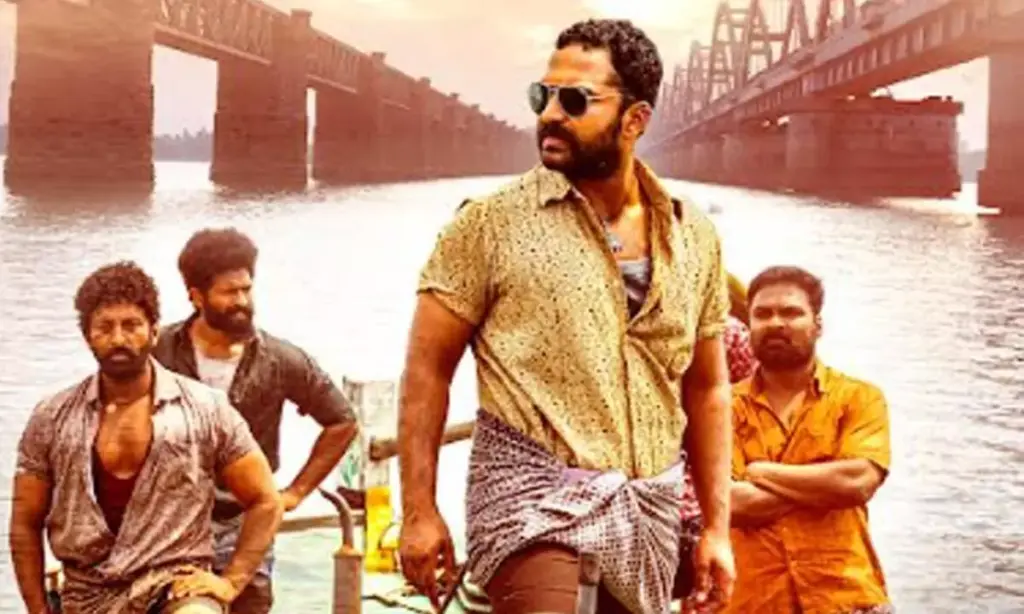
If you’re pressing play for Gangs of Godavari, expect a Telugu action drama that chases money, muscle, and political clout in equal measure. It’s loud, rough around the edges, and set against a coastal backdrop that feels sticky with heat, ego, and old grudges.
This review keeps spoilers out of the way. First comes the story setup, then performances and technical work, then what clicks and what doesn’t, and finally a clear watch or skip call based on what you enjoy. The film (released in 2024) is set around the Godavari and Eluru region, where ambition spreads like a rumor, fast and hard to control.
Gangs of Godavari quick facts (release date, runtime, cast, crew)
Here’s a tight snapshot before the deeper take.
| Detail | Info |
|---|---|
| Release date | May 31, 2024 |
| Runtime | 2 hours 13 minutes |
| Language | Telugu |
| Genre | Action drama, crime, political |
| Writer Director | Krishna Chaitanya |
| Music | Yuvan Shankar Raja |
| Cinematography | Anith Madhadi |
| Editing | Navin Nooli |
| Producers | Suryadevara Naga Vamsi, Sai Soujanya |
| Banners | Sithara Entertainments, Fortune Four Cinemas |
| Main cast | Vishwak Sen, Neha Shetty, Anjali, Nassar |
Story overview without spoilers: what Gangs of Godavari is about

At its core, Gangs of Godavari follows a man who wants more than his town will ever hand him. He’s sharp, impulsive, and ready to bend rules before life even asks him to. Money is the first hook, then status, then the bigger drug: power that comes from making others afraid to say no.
The rise-from-nothing angle gives the movie its fuel. The lead keeps climbing, and each step up comes with a cost, a new enemy, and a new compromise. Crime becomes less of a detour and more of a career plan. Politics enters as the next rung on the ladder, the place where street power turns into public control.
The setting matters here. The Godavari and Eluru vibe isn’t just pretty scenery; it shapes the story’s mood. The film keeps returning to images of water, boats, crowded streets, and local power circles that feel closed to outsiders. If you like gangster dramas where the hero’s choices keep tightening the noose, this one wants your attention. How far can a person go before they stop recognizing themselves?
Tone and themes: power, ambition, and the cost of violence
The movie’s mood stays gritty and restless. It’s not interested in softness for long, even in scenes that start calmly. Ambition drives almost every relationship, and loyalty often looks like a temporary contract.
Politics plays a big role, not as policy talk, but as a battlefield. People shift sides fast, favors get traded like currency, and the line between “leader” and “gangster” keeps getting thinner. The film also leans hard into violent moments, and it wants you to feel the weight of that world, even when it turns showy.

What works best: performances, action scenes, and standout moments
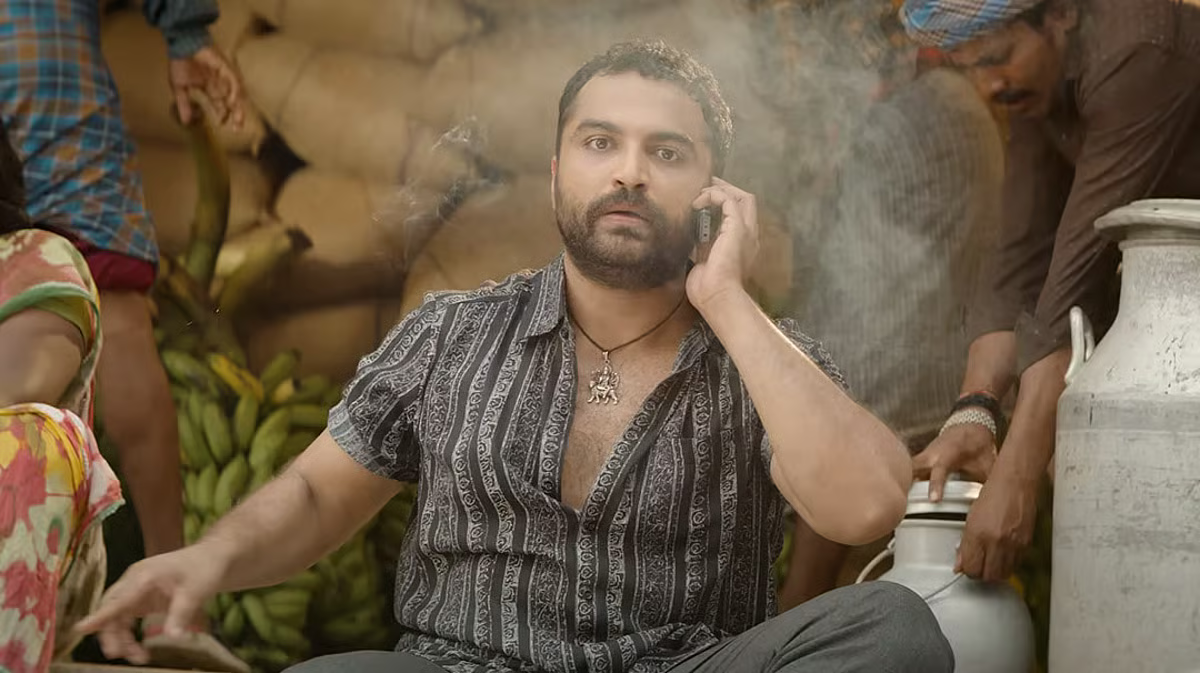
The biggest win is energy. Even when the story moves along familiar tracks, the film has a pulse that keeps you watching. It knows how to build swagger in a scene, how to stage confrontations with noise and attitude, and how to punch up the drama with heated exchanges.
A few moments land because they’re staged with confidence. The camera often stays close enough to faces to catch small shifts, like fear turning into bravado, or pride turning into rage. When the film is focused, it can feel like a series of tense pressure-cooker scenes that don’t need twists to be entertaining.
If you want a second source for cast and production credits, the IMDb page for Gangs of Godavari is a helpful reference.
Vishwak Sen’s performance and screen presence
Vishwak Sen is the engine. He doesn’t play the lead like a clean hero, and that choice fits the movie. His body language does a lot of work: the loose swagger when things go his way, the coiled anger when he’s cornered, the quick shifts that make him feel unpredictable.
He also sells the climb. Early scenes carry a hustler’s impatience; later scenes lean into control and menace. Even if you don’t approve of the character, you can track the transformation in the way he walks into a room, talks to allies, and sizes up threats.
Anjali and Nassar add weight in key stretches, especially when the story turns toward power games. Neha Shetty brings presence too, though the writing doesn’t always give her space to feel fully rounded.


Action and mass moments: why some scenes feel exciting
The action is built for fans who like big reactions in the theater. Several fight blocks are staged with a clear goal: make the lead look dangerous, make the opposition look cornered, and keep the rhythm loud enough that you don’t glance at the clock.
When it works, it’s because the film commits. The choreography favors force and impact over elegance, and the sound design pushes those hits forward. The “mass” flavor is there in the way scenes build to a punchline beat, a stare-down, or a sudden burst of violence that flips the power dynamic.
If your idea of a good time is a hero walking into chaos and walking out on top, this movie gives you that taste more than once.
What holds it back: predictable writing, thin characters, and uneven execution
The film also fights itself. It wants to be gritty and political, but it often falls back on well-worn turns. You can sense where certain arcs are headed long before they arrive, and that takes tension out of scenes that should feel risky.
Character depth is another issue. Some roles exist mainly to push the lead into the next conflict, rather than feeling like real people with clear motives. That can lower the emotional payoff, especially when the story asks you to care about betrayals or losses without earning them.
The execution can feel uneven, too. A few sequences are tightly put together, then the film jumps into a stretch that feels rushed or loosely connected, like it’s sprinting to the next big “high” instead of letting moments breathe.

Story and character depth: where it feels rushed or familiar
The rise-and-fall structure is classic gangster drama, and that’s fine. The problem is how quickly the movie sometimes moves past the “why” of a decision and straight into the “what happens next.” When the writing skips steps, the lead’s choices can feel more like plot triggers than human behavior.
Some tracks also feel routine. Romance beats don’t always add new layers, and revenge angles can play out in expected ways. You might still enjoy the ride, but you may not feel that gut-punch connection that stronger character building can create.
Violence, comedy, and the climax: does it all come together?
This is not a light watch. The film relies heavily on violence to keep the stakes high, and for some viewers, it can start to feel repetitive, even numbing. There are attempts at humor, but it doesn’t always land, and tonal shifts can feel abrupt.
The climax is where reactions may split. Without giving anything away, the ending stretch doesn’t feel as clean as the best parts that came before it. Some choices feel convenient, and the emotional wrap-up may not match the intensity the film spends so long building.
Conclusion: watch or skip?
Gangs of Godavari is worth watching if you’re in the mood for a rough, ambitious gangster tale powered by Vishwak Sen’s intensity and a coastal crime mood that looks and sounds lived-in. It’s not a neat film, but it has enough fire to entertain the right crowd.
Watch if you like: action-heavy Telugu dramas, political crime angles, Vishwak Sen in a dark, high-energy role.
Skip if you want: tight writing, deep character arcs, or a film that eases off violence.
My simple take: watch it for the performance and the punchy moments, not for a clean, surprising story. If you’ve seen it, share your take: Did the grit work for you, or did the messiness win out?