
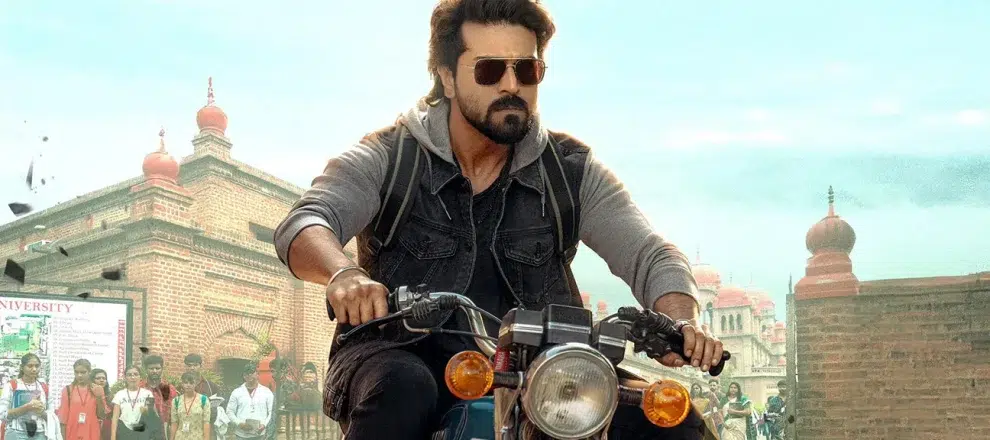
Game Changer Movie Review: Ram Charan Brings the Fire in Shankar’s Big, Messy Political Action Drama
Ram Charan returns after RRR with director S. Shankar for the political action thriller Game Changer. The film hit theaters on January 10, 2025, timed for Sankranti. It also marks Shankar’s first straight Telugu directorial and comes from producer Dil Raju under Sri Venkateswara Creations. With a reported budget crossing ₹400 crore, the buzz was huge for this pan-India release, thanks to its large-scale visuals, heavy action, and a corruption-in-politics theme.
The cast is stacked. Ram Charan plays two roles: IAS officer Ram Nandan and his father Appanna. Kiara Advani stars as Dr. Deepika. SJ Suryah plays the main villain, Bobbili Mopidevi. Srikanth appears as Chief Minister Sathyamurthy. The supporting lineup includes Anjali, Jayaram, Sunil, Samuthirakani, Naveen Chandra, and Nassar. Behind the scenes, Karthik Subbaraj is credited with the story, Sai Madhav Burra wrote the dialogues, S. Thaman handled the music, Tirru shot the film, and Shameer Mohammad and Ruben edited it.
Plot Summary (No Major Spoilers)
The story centers on Ram Nandan (Ram Charan), a sharp, no-nonsense IAS officer who becomes a district collector. He takes corruption head-on and runs into a wall of political power, scams, and backroom deals. The film keeps its focus on clean governance and fair elections, while showing how hard it is to fix a system built to protect the wrong people.
Alongside the political conflict, there’s a romance track with Deepika (Kiara Advani) and a set of flashbacks that explain what shaped the hero. The film mixes message-driven drama with commercial staples like action blocks, songs, comedy bits, and family emotion.

Performances: Ram Charan Leads from the Front, SJ Suryah Hits Hard
Ram Charan carries Game Changer with confidence. Ram Nandan stays intense and controlled, then flips into full force during confrontations. Those anger-driven moments give the film most of its punch. His second role as Appanna in the flashback portions lands even better. It’s emotional, earthy, and built for big crowd reactions.
Charan also looks fully at home in the dance numbers, especially in “Jaragandi,” where his energy sells the scale.
SJ Suryah is a major plus. As Mopidevi, he’s loud, sly, and threatening, and it works. He brings a strong push-and-pull dynamic with Charan, and their face-offs are the most gripping parts of the movie. Srikanth does well as the CM, and actors like Samuthirakani and Jayaram help in key scenes.
Kiara Advani looks great and shares fine chemistry with Charan, but the role doesn’t give her much to do beyond songs and emotional beats. Anjali appears briefly, but her portion connects to the film’s emotional thread. The rest of the cast, including Sunil’s comedy track, is serviceable, though many characters feel underused.
Direction and Screenplay: Big Scale, Weak Writing
Shankar brings what you’d expect from him: grand sets, loud set-pieces, and bold staging. The film goes big on action ideas, including showy sequences built for whistles. The production design looks expensive, and Thaman’s background score pushes the tension and hero moments effectively.
The main problem is the writing. The screenplay (based on Karthik Subbaraj’s story and written with Vivek and others) feels uneven and too safe. At 165 minutes, the film also runs long. The first half spends too much time on familiar setups and comedy detours that don’t add much. The second half moves faster, but it can feel cramped, with twists coming in quick and not always landing clean.
A few stretches feel stuck in older political-masala patterns, which makes the message feel less sharp than it should. Tighter editing could have helped a lot with pacing.
Visually, Tirru captures the scale well. The action choreography by Anbariv delivers in places, though the CGI quality changes from scene to scene.

Music and Technical Work
Thaman’s album is hit-or-miss. “Jaragandi” stands out with strong visuals and high energy. Some other songs feel placed because the format demands them, not because the story needs them. The background score, though, does steady work and lifts several elevation scenes.
On the technical side, the film looks costly. The sets are large, the staging is grand, and the VFX holds up in a few major blocks, even if it isn’t consistent everywhere. The overall finish helps justify the film’s scale, at least on the surface.
What Works and What Doesn’t
Strengths:
- Ram Charan’s strong dual-role performance
- SJ Suryah’s entertaining villain act
- Thaman’s BGM and a handful of solid mass moments
- A clear message about clean elections and politics
Weaknesses:
- Predictable beats and uneven screenplay
- Slow stretches and a long runtime
- Thinly written female roles
- Comedy that turns awkward and dated

Verdict: Watch It for Ram Charan
Game Changer aims high and looks expensive, but the writing can’t keep up with the scale. Ram Charan’s performance does most of the heavy lifting, and SJ Suryah keeps the conflict lively. The film is better than Shankar’s recent Indian 2, but it still feels like a familiar commercial package, not something fresh.
It opened well at the box office, then slowed after mixed reviews, and ended up falling short of expectations despite decent numbers in the Telugu states.
iBomma Rating: 2.75/5
If you’re a Ram Charan fan, the theater experience can still be fun for the big moments. If you want a tight political thriller, waiting for OTT makes more sense (streaming on Amazon Prime Video from February 7, 2025). Charan’s energy keeps it watchable, even when the film loses focus.