
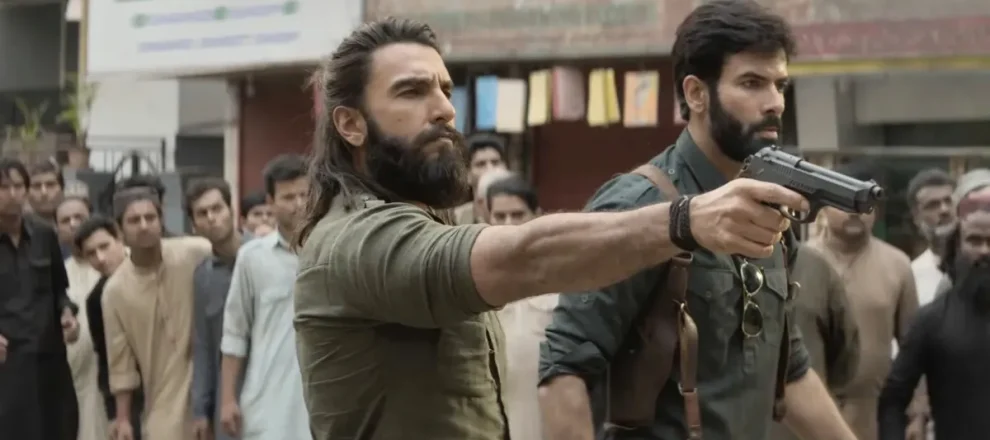
In an era saturated with jingoistic action narratives, Dhurandhar (The Stalwart) arrives not merely as a film but as a cinematic declaration. Helmed by Aditya Dhar, the director who redefined modern Indian patriotism on screen with Uri: The Surgical Strike, this spy action-thriller attempts to distill two decades of geopolitical conflict into a sprawling, often relentless, three-hour and thirty-four-minute epic. With a runtime of 214 minutes that immediately plants it as a monumental cinematic undertaking—one of the longest major Indian films in recent memory—Dhurandhar boldly attempts to be the definitive, gritty take on India’s covert intelligence operations.
The film is set against the ominous backdrop of pivotal historical flashpoints: the 1999 IC-814 hijacking and the 2001 Indian Parliament attack. These events serve as the fuel for the narrative engine, setting India’s Intelligence Bureau (IB) on a path of covert retaliation. The plot follows the shrewd and stoic IB Chief Ajay Sanyal, played with masterful, icy restraint by R. Madhavan, who embodies the calculated strategist inspired by real-life figures in India’s security apparatus. Sanyal’s mission is simple in scope but deadly in execution: infiltrate the crime and terror nexus operating out of Karachi’s volatile Lyari district and dismantle it from within.
To accomplish this, Sanyal finds his most unlikely and potent weapon in a young, rage-filled boy from Punjab, a character identified only by his lethal code-name: “The Wrath of God” (Ranveer Singh). The film’s core conflict is not just international; it is intensely psychological, charting the brutal transformation of this asset from a captive seeking personal vengeance into a highly effective, cold-blooded RAW agent. Dhar’s screenplay, also credited to him, is strongest here, focusing on the molding and internal anguish of its protagonist, though the sheer length occasionally sacrifices narrative tightness for world-building, particularly in the mid-section, where the operational detail risks overwhelming the emotional arc.
The ambitious runtime is both the film’s unique selling proposition and its Achilles’ heel. Dhar clearly believes the complexity of the true events and the necessity of establishing the geopolitical stakes demand this kind of cinematic commitment. For the most part, he succeeds, maintaining a compelling intensity throughout the first two acts. However, the pacing demands absolute focus, and one cannot help but feel that a tighter, more brutal hand in the editing room—namely by Shivkumar V. Panicker—could have shaved twenty minutes without compromising the narrative depth, turning intense viewing into truly breathless viewing.
Cast and Character Studies in Brutality
The ensemble features a star-studded lineup of Bollywood heavyweights:
- Ranveer Singh as Ajay Sanyal (Intelligence Bureau Chief)
- Sanjay Dutt
- Akshaye Khanna
- R. Madhavan
- Arjun Rampal
- Sara Arjun
The true strength of Dhurandhar lies not just in its explosive action choreography—courtesy of multiple international stunt teams—but in its staggering ensemble cast, an assembly of titans who lend credibility and weight to every scene.
Ranveer Singh delivers arguably his most intense and physically committed performance to date. Stripped of the hyper-flamboyance often associated with his roles, Singh embodies the grit and raw power required of a field agent existing in the moral grey zones. His transition into the designated “stalwart” is visceral; every snarl and calculated movement reflects the internal trauma of his undercover life. He dominates the screen, a crucial feat given the sheer talent surrounding him.
The supporting cast, however, is what truly elevates Dhurandhar from a standard action flick to a true cinematic spectacle. R. Madhavan is pitch-perfect as the shrewd tactician Sanyal, providing a necessary calm amidst the storm; his restraint makes his rare emotional outbursts all the more impactful. On the other side of the border, the antagonists are realized with horrifying menace. Akshaye Khanna, as the crime lord Rehman Dakait (“Apex Predator”), is outstanding.
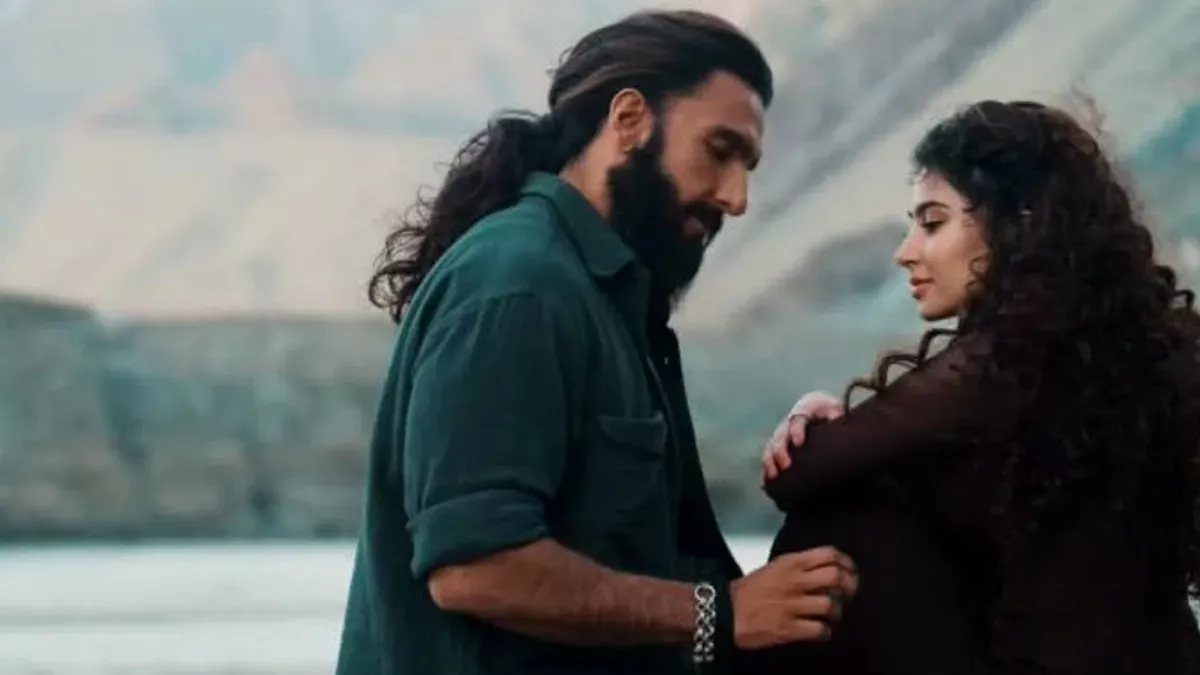
Khanna uses his famously unsettling stillness to portray a frighteningly composed sociopath, his performance standing out as a masterclass in controlled villainy that leaves a lasting chill. Equally chilling is Arjun Rampal as Major Iqbal, the ISI officer code-named “Angel of Death,” whose cold, calculating intensity ensures the threat feels immediate and personal, making his confrontations with Singh’s character the emotional high points of the second act.
Sanjay Dutt provides a weighty, anchoring presence as the Pakistani police officer SP Chaudhary Aslam, a character navigating the murky moral waters of the Karachi underworld. Newcomer Sara Arjun holds her own in a pivotal supporting role, adding a layer of youthful emotional connection to the central operative’s otherwise desolate journey.

The Technical Firepower
Aditya Dhar ensures that the technical specifications match the ambitious scale. Vikash Nowlakha’s cinematography is kinetic and often claustrophobic, utilizing a muted, gritty color palette that emphasizes the bleakness of covert operations across rugged terrains like Ladakh and the dense, dangerous urban landscape of Karachi (recreated through extensive filming in Thailand and Mumbai). The film’s visual style successfully marries the slickness of international spy cinema with the raw, visceral immediacy of mass-action thrillers.
The soundscape, composed by Shashwat Sachdev, is a pulsating character unto itself. Known for his aggressive scoring, Sachdev delivers a hybrid soundtrack that injects modern trap and hip-hop sensibilities into traditional Indian and Sufi musical motifs, creating a background score that is often anthemic and gives goosebumps, especially during the climactic sequences. The inclusion of the revisited Qawwali track, ‘Ishq Jalakar-Karvaan’, provides a momentary, soulful respite before the action explodes again.
Final Verdict
Dhurandhar is a film of cinematic excess, but its ambition mostly justifies its audacity. It’s loud, long, and undeniably a powerful theatrical experience that successfully blends patriotic fervor with the brutal, often ambiguous realities of espionage. While the script follows a somewhat familiar patriotic arc, Dhar’s presentation is stylish, bold, and unrelenting.
It is a film carried by the sheer force of its ensemble and the ferocious commitment of Ranveer Singh. This is a high-adrenaline patriotic action drama that hits hard from the very first frame, culminating in a climax that is both emotionally resonant and physically exhaustive. Though the runtime demands commitment, the payoff is a sprawling, high-stakes cinematic saga that cements Aditya Dhar’s position as a purveyor of large-scale, politically charged thrillers. It may be demanding, but Dhurandhar delivers on its promise of being a powerful and memorable—if occasionally exhausting—stalwart of the genre.