


Daaku Maharaaj (2025): A Slick, Star-Driven Action Entertainer That Works
In a time when big films often swing between heavy, concept-driven dramas and quiet, realistic stories, director Bobby Kolli’s Telugu action-thriller Daaku Maharaaj (2025) proudly stands as a full-on “mass commercial” film. Headlined by the tireless Nandamuri Balakrishna in a dual-shaded role and backed by Bollywood star Bobby Deol as the main villain, the movie serves up a glossy, high-energy spectacle. The story sticks to a familiar revenge template, but the slick style, strong technical work, and, most of all, Balakrishna’s commanding screen presence keep it engaging, especially for his loyal fans.

The Story: Old-School Plot, Fresh Packaging
We first meet Sitaram (Nandamuri Balakrishna), a sincere, straight-laced civil engineer. He lives a peaceful life with his wife, Kaveri (Pragya Jaiswal), working hard to improve conditions in a poor village. His honest efforts put him in direct conflict with the cruel Thakur brothers, led by the ruthless Balwant Singh Thakur (Bobby Deol). Their illegal business, a narcotics racket hidden behind marble mining, turns Sitaram’s life upside down. Pushed to the edge by corruption and brutality, Sitaram sheds his quiet persona and re-emerges as a fearsome outlaw, the dreaded dacoit known as “Daaku Maharaaj”.
The narrative then jumps several years ahead. The once-feared Daaku Maharaaj now hides in plain sight as Nanaji, a seemingly ordinary car driver. He looks after a young girl, Vaishnavi, and treats her and her grandfather (Sachin Khedekar) as his own family. Peace does not last for long. Balwant Singh Thakur returns to settle unfinished business, dragging Nanaji back into a violent world he once left behind. The story shifts into a tense cat-and-mouse setup, as the past collides with the fragile new life he has built.
At its core, the film sticks to a classic theme: the oppressed rising against a powerful oppressor when the system fails. The screenplay smartly ties Daaku Maharaaj’s emotional bond with Vaishnavi into his larger revenge arc, which adds warmth and sentiment to all the larger-than-life action scenes. The emotional beats mostly land, especially in the first half.
However, the story is very predictable. Most twists are easy to guess well in advance, and the final stretch, especially the pre-climax portions, feels long and a bit implausible. The second half follows the familiar mass masala checklist instead of trying anything fresh, which holds the film back from greater impact.

Star Power and Performances
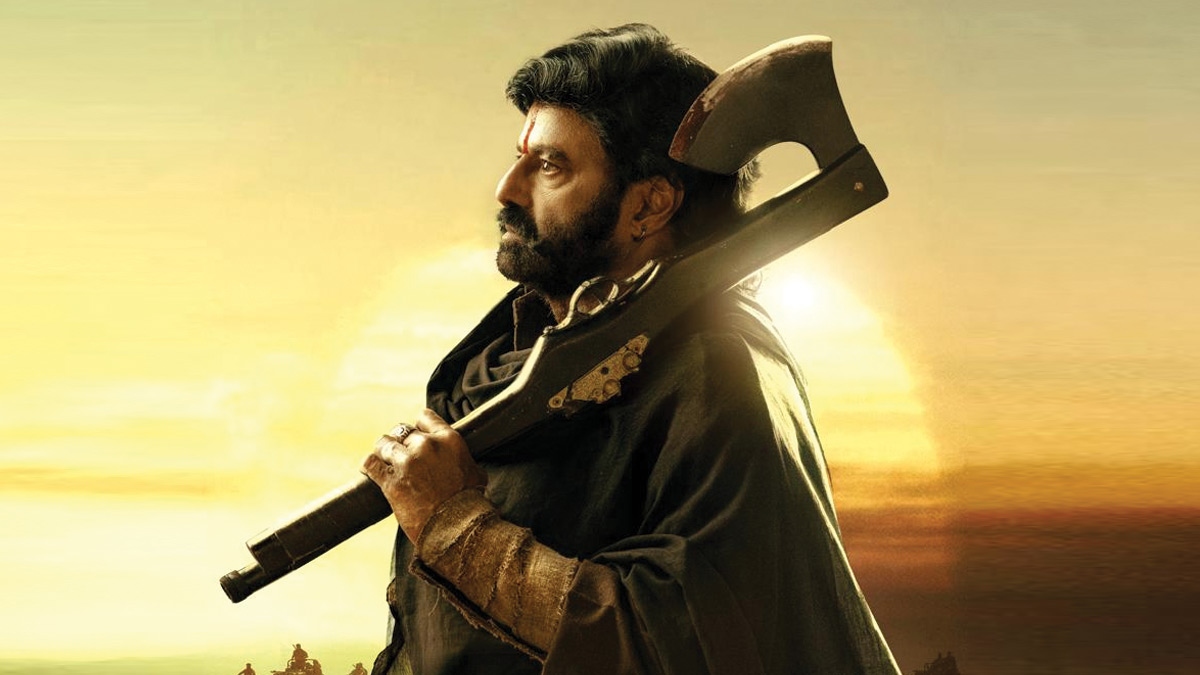
Daaku Maharaaj is built almost entirely around Nandamuri Balakrishna, and he fully owns that responsibility. As Sitaram, he brings a calm, controlled intensity that may surprise those used to his loud, punchline-heavy style. In many scenes, he dials down the volume and lets his eyes and posture speak, hinting at the storm brewing inside.
Once Sitaram turns into Daaku Maharaaj, the star image takes full control. The “God of Masses” mode kicks in. His dialogues are clearly written for fan frenzy and whistle-worthy moments, especially lines like claiming he has “done Masters in Murder”. His action scenes carry his trademark ferocity, with slow-motion shots and heroic poses staged to please the front-bench crowd. This double-shaded performance gives his fans exactly what they want and shows two distinct flavours of his screen persona within the same film.
On the other side, Bobby Deol makes a strong Telugu debut as the main villain, Balwant Singh Thakur. He cuts an imposing figure, with a cold, silent, gun-toting presence that fits the role well. His introduction scene is gripping, and each time he appears, he looks dangerous and unpredictable.
The problem lies in the writing of his character. Balwant is stuck with a fairly generic, template-driven villain track. There is hardly any detailed backstory or deeper motive beyond greed and cruelty. This limits the scope for a truly intense hero-villain clash and stops him from becoming a standout antagonist, despite Bobby Deol’s solid performance.
Among the supporting cast, Shraddha Srinath as Princess Nandini Thakur and Pragya Jaiswal as Kaveri do justice to their parts. They bring emotional heft when the script gives them space, especially in the early stages. However, their presence fades as the film moves into full action mode in the second half.
Urvashi Rautela’s appearance feels mostly cosmetic. Her role barely connects with the story, and her song looks like it exists only to add glamour value, rather than to move the plot forward.

Technical Brilliance: The Real Scene-Stealers
What lifts Daaku Maharaaj above many routine revenge dramas is its outstanding technical work.
- Cinematography: Vijay Kartik Kannan is one of the film’s biggest strengths. His visuals are stylish, sharp, and varied. He captures the lush greenery of Sitaram’s early life and contrasts it with the dusty, harsh terrain of the Chambal region where Daaku Maharaaj rules. The pre-interval stretch, in particular, stands out as a showpiece of striking frames and dynamic action staging. Many scenes feel like they were designed around his eye for detail and scale.
- Music and Background Score: S. Thaman’s background score is a powerhouse. He understands the star image he is scoring for and builds a loud, thumping soundscape around it. The BGM elevates almost every entry, slow-motion shot, and major action block, making them feel grander than they are on paper. The emotional scenes also gain extra weight from his music. The songs themselves are a mixed bag. “Chinni Chinni” is pleasant and hummable, while the rest are passable, but the background score clearly stands out as one of the film’s biggest assets.
- Action Choreography and Direction: The action scenes are cleanly staged, easy to follow, and packed with style. The stunts are mounted on a grand scale and framed to highlight Balakrishna’s larger-than-life image. Director Bobby Kolli adds a slick visual tone to the action, with a focus on scale and presentation.
Even with a formula-heavy script, he keeps the first half especially pacey and involving by spacing out the high points well. The emotional beats, interval block, and major confrontations come in at the right intervals, holding the audience’s interest till the more familiar portions of the second half set in.
The Final Verdict
Daaku Maharaaj is tailor-made for the Sankranti/Pongal festive season. It is crafted as a celebration of Nandamuri Balakrishna’s star persona, and on that front, it delivers with confidence. The film is visually striking, technically strong, and packed with action set pieces, punch dialogues, and a rousing background score.
The drawbacks are clear. The story is predictable, the villain is underwritten, and the second half leans too heavily on tried-and-tested commercial tropes. Those hoping for a fresh or layered narrative may come away underwhelmed.
For fans and for viewers who enjoy loud, massy action entertainers, though, Daaku Maharaaj works as a solid festival watch. It offers enough high-energy moments, theatrical hero shots, and emotional beats to keep you hooked, with Balakrishna’s fierce performance standing at the centre of it all. As a star-driven commercial entertainer, it does what it sets out to do and will likely leave his fan base more than satisfied.
iBomma Rating: 3.5/5 Stars