
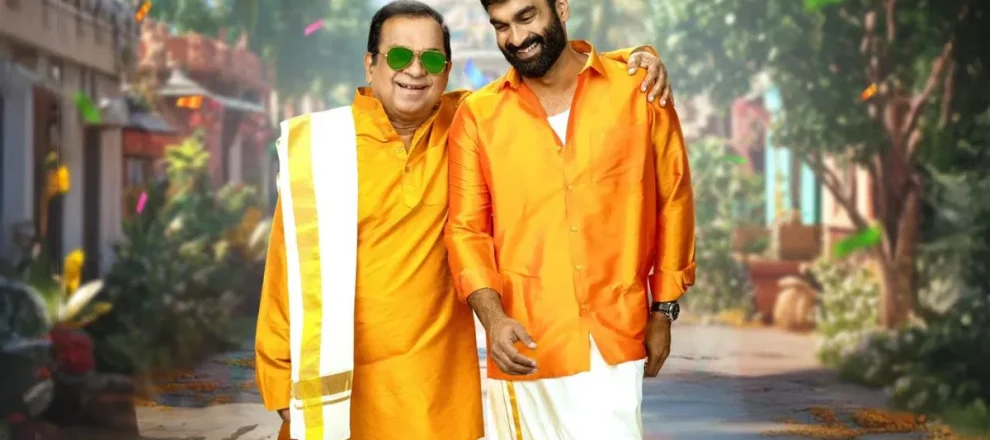
Brahma Anandam, the first film directed by RVS Nikhil, arrives with the promise of a warm, cross-generational dramedy. It has a big emotional hook, with legendary comedian Brahmanandam in a key dramatic role, acting alongside his son, Raja Goutham. At its core, the film has a strong idea: the struggles of an aspiring actor meet an estranged grandfather’s late-life search for companionship. On paper, it sounds rich and moving. On screen, it starts as a charming, character-led story but slowly loses grip on its tone, ending up as a half-cooked effort instead of the comforting experience it could have been.
The plot follows Brahma (Raja Goutham), a sarcastic, self-absorbed theater actor in Hyderabad, stuck in a loop of creative dreams and money problems. He needs 6 lakh rupees to stage the play he has poured his heart into. His messy life finds some balance through his loyal, sharp-tongued friend Giri (Vennela Kishore) and his rocky relationship with his girlfriend Tara (Priya Vadlamani). The story gains focus when Brahma reconnects with his grandfather, Anand Ram Murthy (Brahmanandam), who lives in an old-age home after being cast aside by the rest of the family.
Murthy, tired of loneliness and looking for comfort in his final years, offers to sponsor Brahma’s play by selling ancestral land. His only condition is that Brahma must travel with him to his native village, Burradupalem. Desperate for funds, Brahma agrees and heads out with Giri at his side. At the interval, the film drops its main twist.
Murthy’s real plan comes out: he is in love with Jyothi (Talluri Rameswari), a woman from the old-age home. Burradupalem is not their ancestral village at all. He has brought Brahma there to help him get married late in life. From here, the main question becomes whether this cynical grandson will help his grandfather find companionship and, in the process, repair their broken bond.
Strong Performances, Shaky Foundation
The film’s biggest asset is its acting, especially from the lead trio. Brahmanandam gives a tender, controlled performance, far removed from his usual loud comic style. He plays an elderly man hungry for affection and human connection, and that quiet ache in him feels honest. He lifts several scenes with small expressions and gentle reactions, and once again proves he is more than just a comedian.
Raja Goutham matches him well, playing a selfish, frustrated artist who is both annoying and believable. His dry humor, irritation, and helplessness feel real, especially when he is stuck between his dreams and his family mess. His interactions with Brahmanandam bring out the best in both of them.
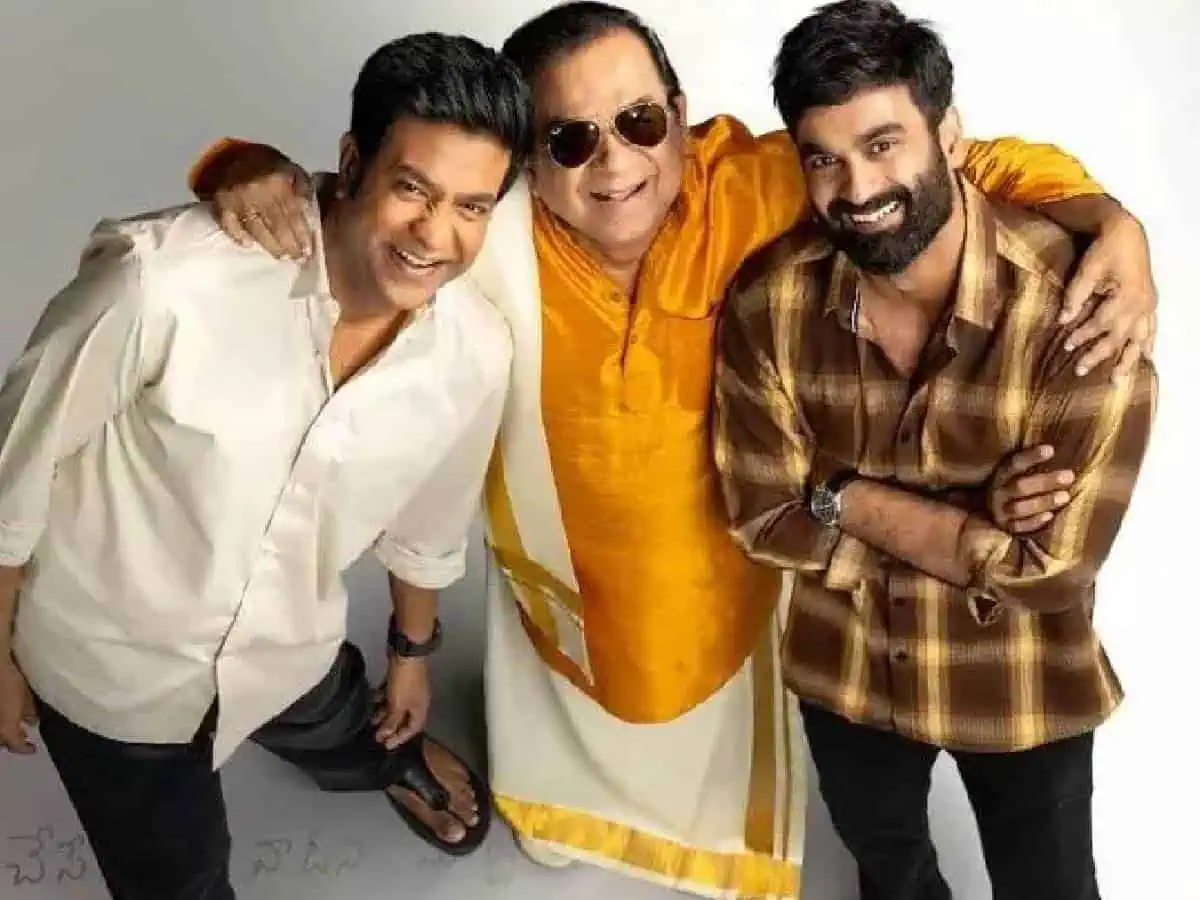
The real scene-stealer, though, is Vennela Kishore as Giri. He is the film’s energy booster. Every time the story slows down, his timing and throwaway lines bring it back to life. His comic timing is sharp, and his character adds easy, natural humor that never feels forced. The rest of the cast, including Priya Vadlamani and Talluri Rameswari, suit their parts and deliver solid work, even when the writing does not give them much to do.
Pacing Issues And Scattered Focus
Despite a heartfelt premise and committed performances, Brahma Anandam struggles with execution. The movie moves at a sluggish pace, especially after the interval, and stretches a simple, intimate story to 148 minutes. Director RVS Nikhil tries to cover too many subjects at once, such as the grind of aspiring actors, the decline of Telugu theater, the way families ignore older people, and romance in old age. None of these themes gets the time or focus it deserves.
The film never quite decides what it wants to be. It swings abruptly between loud, cartoonish comedy and quiet emotional drama, which makes the tone feel uneven. The bond between grandfather and grandson, which should be the heart of the film, stays shallow. Their relationship moves in the right direction on paper, but on screen,, lacks the depth and build-up needed for the final payoff. Key emotional beats, such as Brahma finally accepting his grandfather with genuine warmth, do not land with the impact they should because the scenes leading up to them are not strong enough.
The story also takes too long to reach its main conflict. By the time the characters reach the village, the momentum has already dipped. Once there, the film drifts into extra subplots that feel unrelated, like the track about Manohar’s struggles with exams. These diversions pull focus away from the main story. The older couple’s romance, which has the potential to be a touching, progressive idea about love and partnership in old age, never gets fully fleshed out. It feels rushed and underwritten, so the emotional payoff stays mild instead of memorable.
Technical Work And Final Take
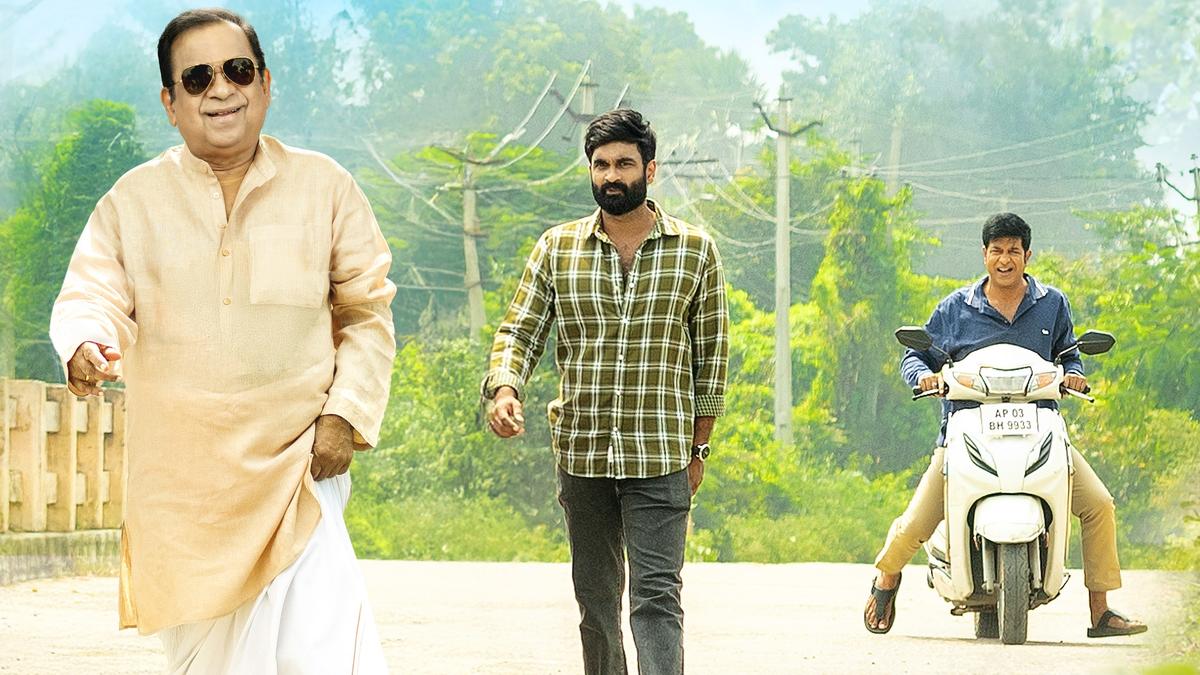
On a technical level, Sandilya Pisapati’s music is serviceable. The background score is catchy in lighter moments and adds some charm, but it does not lift the film’s heavier scenes the way it should. The emotional peaks feel oddly flat, partly because the music does not support them strongly enough. Mitesh Parvathaneni’s cinematography does a decent job of framing the contrast between the urban sprawl of Hyderabad and the slower pace of village life. The visuals are clean and pleasant, if not striking.
Editing is where the film clearly struggles. The second half, in particular, feels stretched and loose. Several scenes could have been trimmed or removed, which would have given the story more punch and clarity. A tighter cut might have helped bring out the emotional journey more clearly and kept the audience more engaged.
In the end, Brahma Anandam feels like a missed chance. You can sense the affection behind the project and see the strong core idea, a gentle story about second chances, family wounds, and late-life love. But the film tries to serve too many tastes at once, chasing commercial beats instead of fully trusting its softer, more human side.
Brahmanandam and Vennela Kishore make it worth a look, and some moments touch the heart, but the slow pacing, tonal shifts, and thin emotional writing stop it from becoming the warm, lasting family drama it wants to be. It stays a likable, uneven, one-time watch that simmers with feeling but never quite comes to a satisfying boil.
Trending:
Mazaka (2025) Movie Review: A Chaotic Comedy That Loses Its Grip