
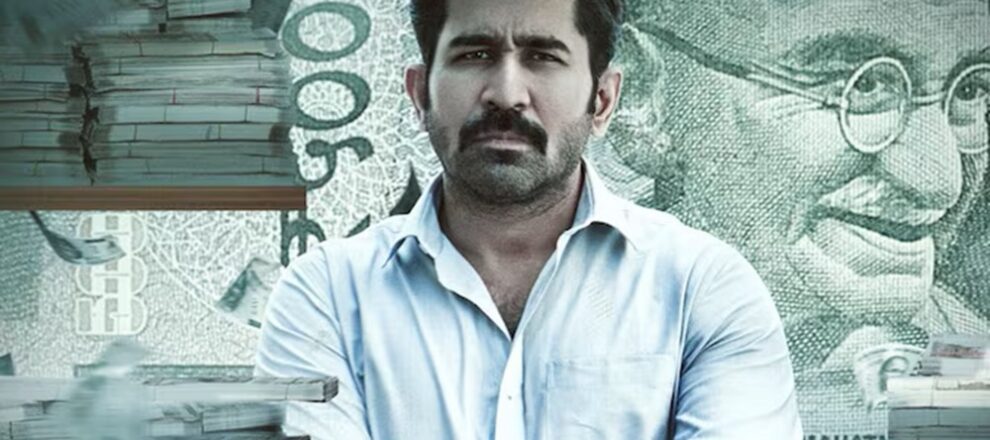
Bhadrakaali (2025): A Blazing Political Thriller Fueled by Ideology
Among recent Tamil political dramas, Bhadrakaali (2025) makes a loud, angry entrance. Directed by Arun Prabu Purushothaman, this is the Telugu-dubbed version of the Tamil film Shakthi Thirumagan. Running for 2 hours 37 minutes, it mixes gritty action with a strong attack on caste oppression and proudly carries Periyarist ideas at its core.
Fronted by Vijay Antony and produced by Vijay Antony Film Corporation and Mythri Movie Makers, the film released on 19 September 2025. Made on a modest budget, it reaches for something bigger, treating cinema as a weapon against structural injustice. The film is rough at the edges, but its fury is hard to ignore. With a 6.4/10 rating on IMDb and an average of about 2.75/5 from Telugu reviewers, it splits opinion. This is not a film that speaks softly; it roars.
Plot: A War Against a Rotten System
Bhadrakaali centres on Kali (Vijay Antony), a fierce activist from a marginalised caste. Scarred by the brutal killing of his mentor, a reformer inspired by Periyar, Kali sets out to crush the corrupt political machine responsible for the crime. The story takes place in rural Tamil Nadu, a place where caste rules every part of life and the powerful treat the poor as disposable.
The film opens with a disturbing lynching that shocks the viewer and triggers Kali’s journey from broken son to relentless avenger. As he moves closer to the centres of power, he builds fragile alliances and makes dangerous enemies. Sunil Kripalani plays his loyal companion, bringing bits of humour that release the tension without breaking the mood. Riya Jithu plays the love interest, adding emotional warmth without slowing the narrative.
The mid-section holds a key twist involving Kali’s family roots, which ties his personal pain to wider social injustice. The final act builds to a heavy, rain-soaked face-off that plays like a ritual cleansing of a rotten order. Arun Prabu’s script is packed with Periyarist thought and aims to challenge blind belief, caste privilege, and political hypocrisy. At times, the drama turns loud and theatrical, and a few confrontations stretch believability. Even so, the strong ideological core keeps the film from slipping into a standard revenge story; it plays like a social powder keg wrapped in the structure of a commercial thriller.
Cast and Performances: Vijay Antony in Ferocious Form
Vijay Antony, who also scores the music, holds the film together with what may be his most intense performance to date. As Kali, he blends seething rage with moments of quiet hurt. Much of his impact comes from his eyes, which reflect both personal grief and inherited trauma. This is a long way from his lighter roles; here, he moves like a brawler, and the fight scenes feel heavy and bruising. Reviewers praise his fiery speeches against inequality, although some feel his musical moments seem a little forced into the story.
The supporting cast brings solid weight. Vaagai Chandrasekar, as Kali’s ideological mentor, delivers a calm yet powerful performance that anchors the flashback portions. M. S. Bhaskar plays a crooked politician with chilling ease. His sly expressions and sharp, poisonous lines make him one of the film’s most memorable villains and show why he remains such a respected actor.
Riya Jithu avoids the usual helpless-heroine route. Her character is written as practical and brave, and she even picks up a machete when the story demands it. Trupthi Ravindra and Cell Murugan add texture as villagers who refuse to stay silent, helping to ground the film in everyday struggle. Vinodhini Vaidyanathan offers a striking turn as an ambitious antagonist who hungers for power, although her character could have used more screen time. As a whole, the casting choices serve the film’s political message rather than competing with it.
Direction and Technical Aspects: Raw Visuals and Thumping Score
| Aspect | Information |
|---|---|
| Release Date | September 19, 2025 (theatrical worldwide, including dubbed versions in Telugu, Malayalam, Hindi, and Kannada) |
| Director | Arun Prabhu Purushothaman |
| Lead Cast | Vijay Antony, Vaigai Chandrashekar (Kaliamamani), Riya Jithu, Master Keshav, Trupthi Ravindra, Cell Murugan, Sunil Kripalani, Kiran, Rini Bot |
| Genre | Action, Drama |
| Runtime | 157 minutes |
| IMDb Rating | 6.4/10 (user ratings vary; some sources list higher at 7.5/10 for dubbed versions) |
| Critic Ratings | 2.75/5 (123Telugu), 3/5 (Gadgets 360) – Praised for action sequences and Vijay Antony’s performance; critiqued for predictable plot twists |
| Languages | Original: Tamil; Dubbed: Telugu (Bhadrakaali), Kannada (Bhadrakaali), Malayalam, Hindi |
Arun Prabu Purushothaman directs with clear conviction. The camera work, handled by a cinematographer praised in several reviews though not widely credited by name, captures both the harshness of rural poverty and the heat of uprising. The villages and fields, shot in drained colours, contrast with intense action scenes lit like bursts of fire. The visual style might remind some viewers of films like Article 15 or Kaala, where the place itself becomes a character.
Editing in the first half is sharp and tense. The setup, early conflicts, and investigation into the political nexus move at a good clip. The second half slows down as the speeches and ideological debates grow longer. For viewers who enjoy political cinema, these scenes may feel bold and satisfying. For others, they may test patience.
Vijay Antony’s music powers much of the emotional impact. The title track has the energy of a folk protest song, while the background score mixes heavy drums with electric guitar to drive action and chase scenes. The soundscape keeps the anger alive even in quieter stretches. A couple of song placements feel like interruptions and may not sit well with Telugu audiences who prefer tighter pacing, but fans of Tamil mass cinema will find them familiar.
The visual effects during riot scenes and goddess-like visions are functional rather than flashy. They do the job without pulling viewers out of the story, which suits a film that tries to stay rooted in lived reality.
Themes and Politics: Ideas Take Centre Stage
Bhadrakaali wears its politics openly. It supports Periyar’s rationalist thought, argues against superstition, and attacks caste discrimination head-on. Several scenes show temples, rituals, and social practices being questioned or dismantled, and these moments have a clear emotional punch. One Telugu review even described the film as sparking a “wave of resistance”, and that captures the mood on screen.
The trade-off for this clarity is a lack of balance. Many of the villains feel exaggerated, almost like cartoons of corrupt power, with little shading or inner conflict. For viewers who already lean towards progressive politics, that directness may feel satisfying. For those who prefer more layered storytelling, the film might seem too preachy or heavy-handed. In a year filled with big, escapist blockbusters, its refusal to soften its message feels refreshing, even if subtlety often takes a back seat.
Conclusion: Fierce, Flawed, and Hard to Forget
Bhadrakaali is not the most refined political thriller out there. The pacing dips in the second half, some speeches sound like slogans, and a few scenes go over the top. Yet the film’s heart clearly beats for the oppressed, and that gives it a raw power that lingers.
Vijay Antony proves his range as both actor and composer, and Arun Prabu Purushothaman steps forward as a director who is not afraid to provoke. At around 650 words, this review lands on a rating of 3 out of 5. For viewers who enjoy socially charged action dramas that mix ideology with entertainment, Bhadrakaali is worth a watch, whether in cinemas or on OTT. It arrives with flaws, but it also arrives with fire.