
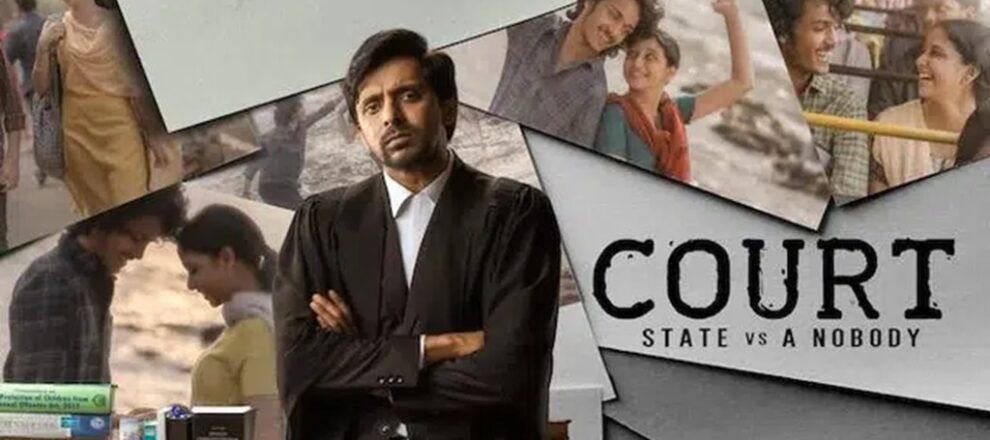
If you’re in the mood for a courtroom story that doesn’t treat justice like a clean, simple math problem, Court: State vs. A Nobody is worth your attention. It’s a 2025 Telugu legal drama (released March 14, 2025) built around a teenage relationship, a family’s panic, and a case that turns into a public moral trial long before a judge weighs in.
This review is for courtroom drama fans, Telugu film viewers, and anyone curious about stories involving POCSO-related accusations and how quickly a young person’s life can be crushed by rumor, class pressure, and power. It’s a heavy topic, and the film treats it like one, with raw emotions and a tense legal fight that keeps tightening its grip.
Here’s what you’ll get from this spoiler-light review: the basic setup, what to expect from the tone, which performances stand out, where the movie stumbles, and who it’s best for.
Court: State vs. A Nobody movie review in one glance (story, vibe, and what to expect)
This is a legal drama with thriller-like tension, a romance angle, and a strong social pressure theme. The runtime is about two and a half hours (commonly listed around 155 minutes), so it asks for patience, but it also uses that time to build stress the way real cases do, slowly, messily, and often unfairly.
At the center is a young lawyer who takes on a case where a teen boy is accused under false POCSO charges, tangled up in class differences, family honor, and a community that decides it already knows the truth. The movie’s vibe is tense and emotional, with a steady sense that one bad decision, or one loud lie, can ruin everything.
Quick plot setup, no spoilers
Chandrashekar is 19. Jabilli is 17. They fall in love with the stubborn confidence teens often have, the kind that feels pure to them and dangerous to everyone else. Jabilli’s family reacts hard, and that reaction is the spark that lights the legal fire.
From there, Court: State vs. A Nobody doesn’t stay in “first love” territory for long. The romance matters, but mostly because it becomes evidence, gossip, and a weapon. The real focus is the courtroom battle and the chain of bias around it: police pressure, social status, moral panic, and how easily people confuse outrage with facts.
If you like legal dramas where the case is the main engine, this one stays case-driven. The movie keeps circling the same question in different forms: when power speaks, who listens, and who gets erased?

Why this topic feels timely and sensitive
Stories about legal misuse and public judgment land differently now because we’ve all watched reputations get shredded in hours. This film points at that reality without turning it into a slogan. It shows how class power, reputation politics, and fear of “what people will say” can push adults into choices that hurt kids the most.
It’s also sensitive material. POCSO exists to protect minors and survivors, and it should be treated with seriousness. The film’s conflict is about an accusation being used as a tool in a specific situation, not about dismissing the law itself. If you plan to watch, it helps to go in expecting discomfort, not spectacle.
For another perspective on how the film balances familiar courtroom structure with strong intent, this review from Cinema Ramblings is useful context.
What works best: performances, courtroom tension, and emotional stakes
The strongest part of Court: State vs. A Nobody is how it makes the courtroom feel like a pressure chamber. The arguments aren’t just “gotcha” moments. They’re built from frustration, small humiliations, and that slow anger that comes from being ignored.
The performances help a lot here because the actors don’t play the case like a puzzle. They play it like it costs something. When a witness hesitates, it feels like fear. When someone raises their voice, it feels like control, not drama for drama’s sake.
A lot of courtroom films try to win you with one big speech. This one leans more on accumulation. Each exchange adds weight until it’s hard to breathe

Priyadarshi as Surya Teja, a lawyer you can root for
Priyadarshi’s Surya Teja works because he doesn’t feel like a superhero in a black coat. He comes across as a working advocate who knows he’s outmatched socially, and maybe even politically, but still shows up.
What stands out is his clarity in court scenes. He speaks like someone trying to cut through noise, not like someone performing for applause. Even when the script pushes emotion, he often plays it with restraint: a long look, a controlled pause, a measured question that quietly corners a lie.
Outside the courtroom, the character’s “human” side matters too. You see the stress, the calculations, the second-guessing. That makes the courtroom wins feel earned. Surya Teja also acts as the audience’s guide through unfair moments, which is important because the case can feel maddening by design.
Sivaji as Mangapathi, the pressure cooker villain
Sivaji’s Mangapathi brings a different kind of threat. He doesn’t need to punch anyone to feel dangerous. He’s the sort of person who can ruin lives by making calls, by being believed, by standing in the right rooms with the right confidence.
His performance is tight and intimidating, powered by pride and the need to control the story. Mangapathi doesn’t just want “justice.” He wants dominance, the kind that comes from deciding what truth is allowed to look like.
Because Sivaji plays him with such certainty, the stakes rise without the movie needing constant action scenes. You feel what it means to fight someone who has social permission to be cruel.

What could be better: pacing, predictability, and a few convenient turns
Even with strong acting, the film isn’t immune to familiar courtroom drama habits. At times, it leans on scenes that run a bit long, as if the movie is circling a point you already got. Some emotional beats also get loud in ways that can pull you out of the realism it’s working hard to build.
The runtime contributes to this. At roughly two and a half hours, any stretch of repetition becomes more noticeable. If you’re the kind of viewer who needs every scene to push the plot forward, you might feel the drag in the early portions.
Predictable beats vs. powerful moments
Some turns are easy to anticipate if you watch a lot of legal dramas. You can sense when a confrontation is being staged for maximum tension, and you can guess a few reveals before the film says them out loud.
Still, predictability doesn’t cancel impact. The movie earns several strong moments because the confrontations feel personal, not mechanical. Many viewers will find the second half more gripping, when the courtroom exchanges get sharper and the characters have fewer places to hide.
In other words, it may not surprise you at every step, but it can still hit hard.
How the romance and courtroom tracks fit together
Balancing teen romance with a heavy legal topic is tricky, and the film mostly keeps the case at the center. The love story is there to show how young and impulsive the leads are, and how adults can treat that impulsiveness like a crime.
At times, the romantic track risks softening the tension, especially when you want the story to stay focused on legal strategy and the systems around it. But the movie generally uses the romance as context, not as the “main event.” The case is always the looming shadow.
One thing the film does well is showing how quickly a relationship becomes a label. It stops being “two teens made choices” and becomes a public story with villains, saints, and scapegoats. That shift is one of the movie’s most unsettling ideas.
Themes and takeaways (without preaching): justice, class, and family honor
This movie sticks with you less because of one twist, and more because it shows how ordinary people help injustice happen. Not always through evil acts. Sometimes through silence, fear, or the urge to protect status.
It’s also a film about how “family honor” can become a weapon. In many scenes, honor doesn’t look like dignity. It looks like control, shame, and adults protecting their image at the cost of a young person’s future.
Power, class gaps, and who gets believed
The class element isn’t subtle, and it shouldn’t be. The case’s momentum depends on it. Wealth and reputation don’t just influence outcomes, they shape the story people are willing to accept.
Bias shows up in small, painful moments:
- The way certain characters assume guilt based on background.
- The way community judgment spreads faster than facts.
- The way “respectability” gets treated like evidence.
The film’s title choice also feels pointed. The “nobody” isn’t just one person. It’s anyone without a loud last name, anyone whose truth has to fight harder just to be heard.
What the movie suggests about the legal system
Court: State vs. A Nobody paints the legal system as human, which means flawed. It suggests that cases aren’t only about law on paper. They’re about influence, energy, persistence, and who can afford to keep showing up.
The film also respects the idea that good lawyering matters. It shows how careful questioning, steady pressure, and refusing to back down can change the shape of a case. That said, it’s still a movie, not a guide. If it leaves you angry, that’s part of the design.
As of December 2025, the film’s audience response has stayed strong, including an IMDb rating around 7.9/10 (with thousands of user ratings reported), which lines up with how many viewers describe it: intense, emotional, and worth at least one watch if you can handle the subject.
Should you watch Court: State vs. A Nobody? Final verdict and audience guide
This isn’t a “throw it on in the background” movie. It’s serious, tense, and sometimes upsetting, with a central accusation involving a minor. If that topic is too close to home, or if you’re not in the headspace for it, it’s smart to skip for now.
If you do watch, expect a case-driven story that builds pressure scene by scene, anchored by performances that rarely feel lazy.
Best for viewers who like grounded courtroom dramas
Court: State vs. A Nobody is a good pick if you want:
- Strong courtroom scenes that feel like real conflict, not just theatrics.
- Acting that sells fear, pride, and desperation.
- A plot that’s driven by the case, not by side comedy or random detours.
- Social commentary that’s present but not treated like a lecture.
If you tend to enjoy legal thrillers with a message, this should keep you engaged, especially in the later stretch when the courtroom battle tightens. For a quick public-reaction snapshot, you can also browse user reviews on Letterboxd’s film page.
Skip it if you want something light or fast-paced
You might want to pass if:
- You’re looking for a short runtime or brisk pacing.
- You prefer courtroom stories with constant twists.
- You don’t want a film centered on a POCSO accusation and the fallout around it.
Even if you like legal dramas, the movie can feel stretched in parts, and a few turns are convenient. It’s not empty drama, but it does ask you to sit with discomfort for a while.
Conclusion
Court: State vs. A Nobody works best when it trusts its actors and its courtroom tension, and it stumbles when pacing and familiar beats slow the momentum. Priyadarshi keeps the legal fight grounded, Sivaji brings real threat without cheap tricks, and the film’s class and honor themes add weight that lingers after the credits.
The single-line verdict: Court: State vs. A Nobody is a tough, watchable courtroom drama that hits hardest when it stays simple, human, and angry at the right things.
If you’ve seen it, did you prefer the realism, or do you like your legal dramas a little more high-voltage and theatrical?