


Varanasi (2027): Rajamouli’s Cosmic Epic Reshapes Telugu Blockbuster Cinema, A New Milestone for Telugu Cinema. For the first time in Telugu cinema, a production of unprecedented scale is taking shape. Director S.S. Rajamouli, known for Baahubali and RRR, returns with Varanasi, a film positioned as his most ambitious work to date.
The story spans ancient Kashi ghats, a 2027 asteroid impact, and battles rooted in Treta Yuga. Each frame is designed to show a world in motion, shifting between eras and continents.
As a Telugu film reviewer who has watched the industry grow from single-screen theatres in Vijayawada to international premieres, this project stands out as a turning point. Varanasi is presented not only as a film but as a large-scale cinematic event.
The film combines Hindu mythology and hard science fiction in a way that directly challenges global blockbuster standards. With a reported budget in the ₹1,000–1,300 crore range, a runtime of over three hours, and an IMAX-first approach, Varanasi aims to offer an immersive experience rather than simple entertainment.
The planned Sankranti 2027 release positions it as a flagship festival title for Telugu cinema.

Creative Team and Production Scale
Direction and Writing
At the centre of Varanasi is S.S. Rajamouli, who directs and shapes the screenplay.
He shares writing duties with his father, V. Vijayendra Prasad, the veteran storyteller behind Baahubali and several major mythological dramas.
This father-son team combines Ramayana-inspired story threads with a science fiction framework, turning a traditional mythic base into a global adventure narrative.
Producers and Banners
The film is produced by K.L. Narayana and S.S. Karthikeya under the banners Sri Durga Arts and Showing Business.
The banners are modest in name but carry a clear global intent, with a focus on international reach and large-format releases.
Music and Soundscape
Music is composed by Oscar-winner M.M. Keeravani, Rajamouli’s long-time collaborator and cousin.
His score mixes heavy percussion with electronic elements, moving between ancient war rhythms and futuristic sound design.
The track “Sanchaari”, performed live by Shruti Haasan at the launch event, has already gained viral traction online and serves as a key musical hook for the film.
Visuals and Technical Departments
- Cinematography: P.S. Vinod handles the camera, capturing locations in Kenya, Tanzania, Odisha, and studio-built environments with a mix of harsh realism and stylised spectacle.
- Production Design: Mohan Bingi designs elaborate sets, including detailed recreations of old Varanasi ghats and large-scale futuristic wastelands. The focus is on immersive environments that feel tactile and lived-in.
- Editing: Bikkina Thammiraju manages the edit, aiming to keep momentum in a narrative that runs for over three hours.
- VFX: V. Srinivas Mohan oversees visual effects, translating mythological imagery into large-scale cinematic sequences, including asteroid impacts and ancient wars.
Veteran actor Nassar also serves as dialect coach for Mahesh Babu, working to refine accent and delivery, especially for lines tied to Varanasi and historical settings.

Star Cast and Key Performances
Mahesh Babu as Rudhra
Mahesh Babu leads the cast as Rudhra, described as a global explorer with the intensity of Hanuman and the rugged energy of Indiana Jones-style adventurers.
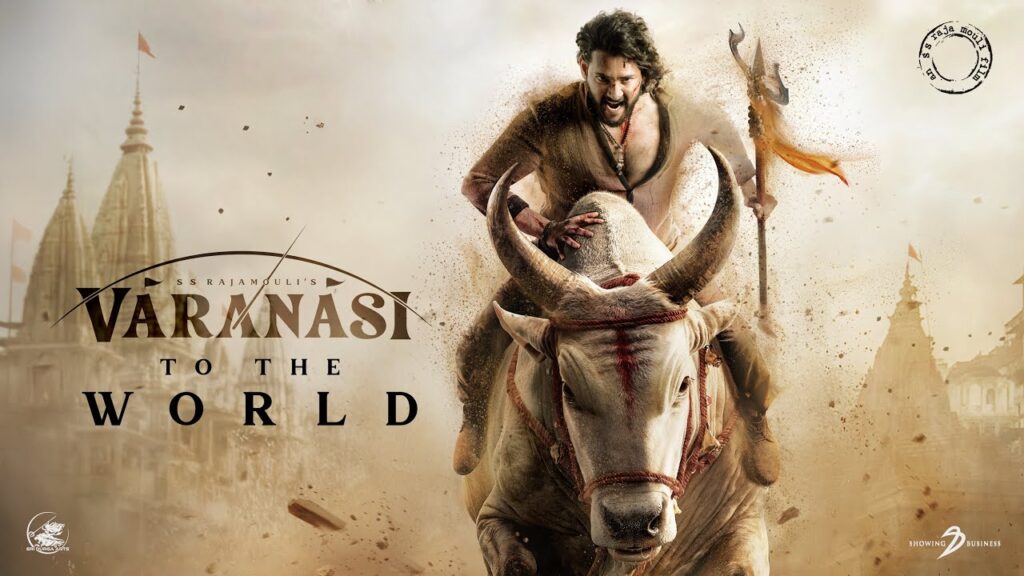
In the first-look teaser, he is shown riding a charging white ox, covered in blood, gripping a trident, with a fierce, almost mythic presence.
Mahesh began physical training in Germany in January 2024 to prepare for the part.
His look in the film is more muscular and weathered than in his earlier roles, with a performance style that leans into physical action and emotional gravity.
The character’s speech carries a Varanasi-influenced accent, coached for authenticity.
Although this is counted as his 29th lead role (often called SSMB29), Varanasi is framed as a reinvention of his on-screen image.
Priyanka Chopra Jonas as Mandakini
Priyanka Chopra Jonas plays Mandakini, an explorer who works alongside Rudhra and stands as a strong counterpart rather than a supporting presence.
This is her return to Telugu cinema after Thoofan (2013). Her international profile and experience in global productions bring a different tone to the ensemble.
Her character is shown as fierce and highly capable, with sequences that place her in high-tech chases and extreme environments, including set pieces in Antarctica.
Prithviraj Sukumaran as Kumbha
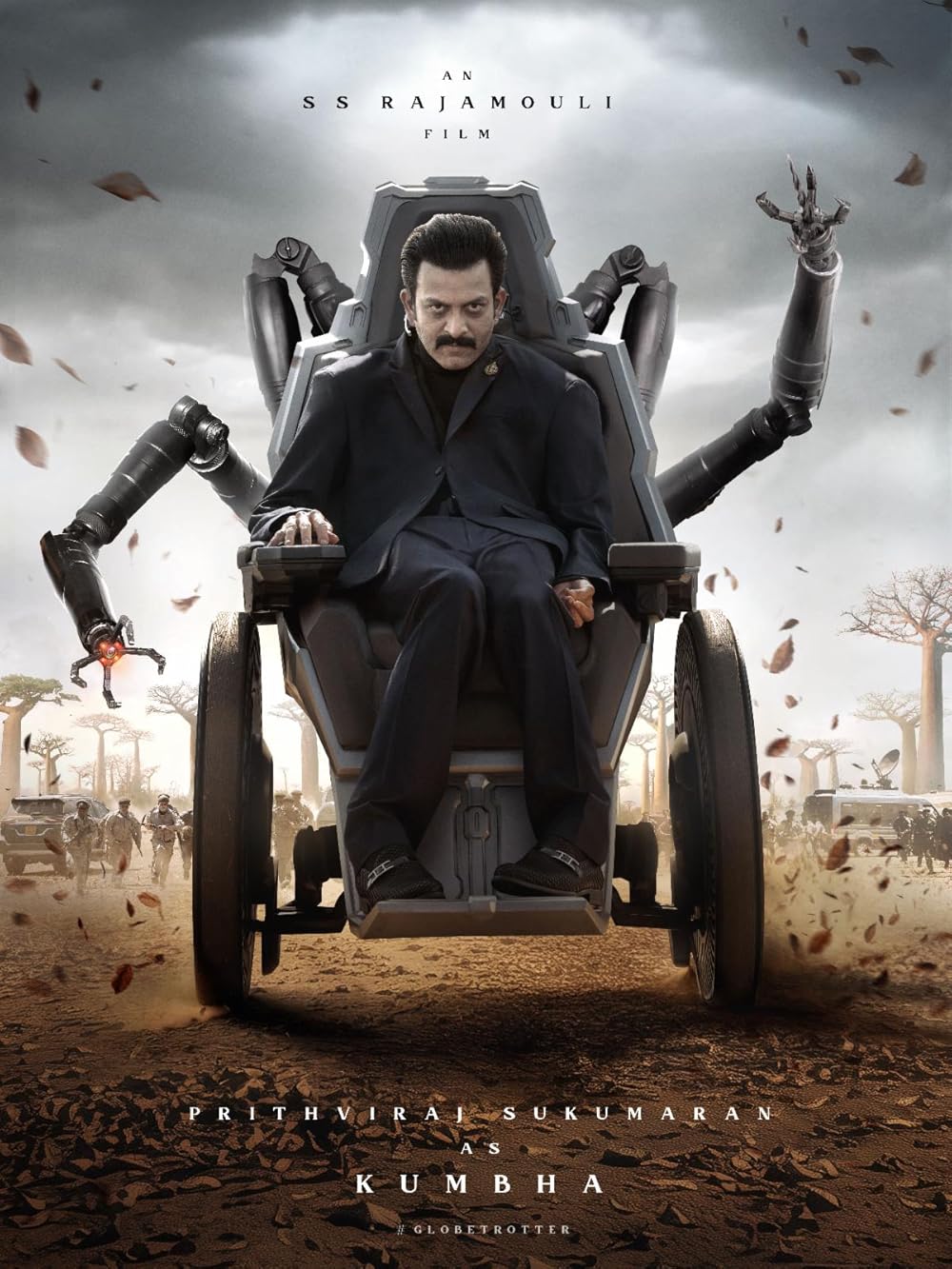
Prithviraj Sukumaran appears as Kumbha, the primary antagonist.
The character is positioned as a technologically advanced villain, using a cybernetic chair and mechanical arms reminiscent of comic book supervillains.
Following his intense turn in Salaar, this role pushes him into a more overtly menacing and larger-than-life space.
His conflict with Mahesh Babu’s Rudhra is marketed as one of the main attractions of the film.
Reports also suggest cameos and smaller roles for several prominent Telugu actors, although the core emotional and narrative focus remains on Mahesh Babu, Priyanka Chopra Jonas, and Prithviraj Sukumaran.
Story, Structure, and Themes
Non-linear Narrative
Varanasi uses a non-linear narrative and crosses several time periods.
The central plot revolves around a mysterious cosmic object that shapes events across centuries.
There are strong hints that this object could be linked to Ravana’s source of near invincibility or to the mythic Sanjeevani herb.
This relic appears during the Ramayana war, returns in 512 CE in Varanasi, and then impacts Earth again in 2027 through an asteroid named Shambhavi.
The modern-day impact threatens global survival and brings together science, mythology, and geopolitics.
Key Locations and Set Pieces
Rudhra and Mandakini travel across continents and time frames as they track the relic.
Important locations and sequences include:
- Frozen ships trapped in Antarctic ice
- Uggrabhatti caves set in 7200 BCE
- Prehistoric creatures and large-scale animal attacks, including a hippo stampede in Kenya
- Ancient kingdoms conducting yagnas tied to cosmic forces
One major sequence draws from the Ramayana episode of Hanuman burning Lanka.
In Varanasi, this is reimagined as a large VFX-driven destruction set piece, combining fire, war, and cosmic energy on an IMAX scale.
Filming, Security, and Launch Event
Production Timeline and Locations
Principal photography began in February 2025 in Hyderabad and then moved to international and domestic locations.
Key shooting spots include Tanzania, Kenya, and parts of Odisha, along with large indoor sets in studios.
Rajamouli reportedly enforced strict non-disclosure policies on location.
Mobile phones and unauthorised recording devices were restricted on major sets to prevent leaks of concept art, costume designs, and action set pieces.
Grand Launch at Ramoji Film City
The official launch event took place at Ramoji Film City on 15 November 2025.
The stage featured:
- A 110 x 130-foot LED screen
- Set pieces modelled on Varanasi ghats
- Fireworks and large-scale light effects
Sitara Ghattamaneni’s “Jai Babu” chant during the event became a viral highlight, widely shared on social media.
The launch was streamed on JioHotstar and YouTube and attracted record-breaking live view counts for a Telugu film announcement.
Scale, Spectacle, and Emotional Core
IMAX-first Vision
Varanasi is built for IMAX exhibition from the ground up.
Meteor crashes, large battle sequences, and cosmic visuals are composed to dominate giant screens and high-end sound systems.
The film relies on a mix of practical sets and heavy VFX to create a continuous sense of scope.
M.M. Keeravani’s score supports this approach, moving from quiet, spiritual passages to loud, orchestral and electronic peaks that fill the auditorium.
Mythology and Emotion
Despite the science fiction structure, the emotional core is grounded in mythology and Telugu cultural values.
Rudhra’s journey is not only about saving the world.
It is also about heritage, duty, and how he responds to the weight of history.
The character’s choices echo long-standing themes in Telugu cinema, including dharma, family pride, and sacrifice.
The film leans on that emotional base to balance the visual spectacle.
Criticisms and Minor Concerns
At this scale and length, some audience members may find the pacing uneven, especially in the middle sections of the three-hour runtime.
Priyanka Chopra Jonas’s accent and speech patterns in Telugu may not satisfy purist viewers, although her presence and screen command are likely to appeal to wider audiences.
Some viewers may also feel that the density of visual effects, shifting time periods, and large ensemble moments demands active attention throughout.
However, Rajamouli’s track record, from Baahubali’s iconic waterfall sequence to RRR’s large action set pieces, suggests that execution of major moments remains a strong point.
Place in Telugu Cinema History
Varanasi arrives in what many consider a golden age for Telugu cinema, from N.T. Rama Rao’s mythological classics to Prabhas-led pan-India blockbusters.
This film positions itself as Rajamouli’s defining work, combining scale, myth, and science fiction with a global vision.
It aims to respect regional roots while speaking to a worldwide audience through spectacle and universal themes.
Mahesh Babu takes a clear step into a new phase of his career, anchored by a role that demands physical risk, emotional range, and international appeal.
Rajamouli consolidates his reputation as a director who can align local stories with global expectations.
On early impression, Varanasi stands as a landmark project for Telugu cinema.
A rating of 4.5 out of 5 reflects its ambition, technical brilliance, and emotional reach, while allowing for minor issues in pacing and language.
For Sankranti 2027, Varanasi is positioned as a major theatrical event that calls for the biggest screen possible and reinforces the growing influence of Telugu cinema worldwide.